

Apple (AAPL) is roughly now a $900 billion company, the largest publicly traded company the world has ever seen (although if Aramco's IPO really does end up happening, Saudi Arabia's Aramco's oil-rich profits may see it post a $2 trillion valuation).
Even with its newly announced post-Q2 2018 dividend of 73 cents a share per quarter, up 16% from or 10 cents from 63 cents, based on the 5,024,877,000 (or 5.024 billion) basic shares outstanding that amounts to an incredible $3.165 billion in dividend payments for Q2 2018 and $3.67 billion per quarter in the future under the new dividend policy.
That's almost $15 billion a year in just dividends, although the recently announced additional $100 billion in share buyback authorization will reduce the amount of basic shares outstanding to a degree.
Apple also justifies its valuation however with the immense profit its raking in. In the 2017 fiscal year it brought in over $48.351 billion in net income for basic EPS of $9.27 a share. At the time of those earnings, in November 2017, Apple's price was about the same it was before Q2 2018 earnings - $170, with a resulting P/E of 18.3.
Apple's Q2 2018 EPS was $2.75, Q1 2018 EPS was $3.92, Q4 2017 EPS was $2.08, and Q3 2017 EPS was $1.68, for a total of $10.43 EPS for the past year. With Apple's post-market jump to around now around $175, that makes Apple's Price-to-Earnings ratio now about 16.8.
For many technology companies it may seem unusual to have such a lower price-to-earnings ratio, but even with all the growth factors for Apple at such an enormous size it becomes difficult to have such a high multiple, especially when it seems like there is no possible reasonable growth expectations to cause such an elevated multiple to contract at that level.
As I will discuss in a soon-to-be-released article, Apple remains in the ironic position of both being a mature dividend-paying behemoth, focusing on returning cash to shareholders in a fashion similar to traditional "Blue Chip" stocks from an era that seems increasingly long gone.
The Immense Opportunities In "Services" And "Other"
However Apple also faces enormous growth opportunities, particularly from the wide array of non-smartphone, iPad, or Mac products ranging from the still-rapidly growing Apple Watch (which CEO Tim Cook said on the post-Q2 2018 earnings call was still growing at 50% rates, although without specific numbers) to the rapidly growing Apple Pay for payment processing to even Apple TV.
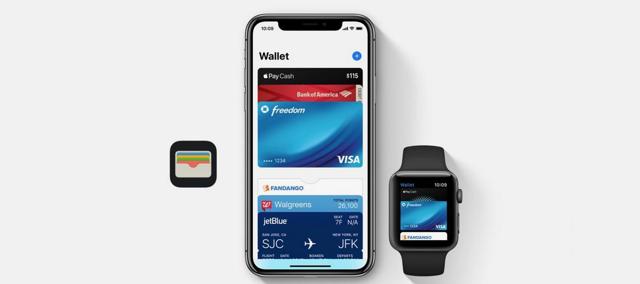
(Source: 9to5Mac)
Software, like Apple Cloud and iTunes, is now providing Apple in billions of revenue every quarter. Apple has announced they indeed intend to attempt revenue diversification, taking advantage of the massive brand loyalty, enormous network (active base of over 1.3 billion devices), and public respect to dig into other markets to supplement their sometime still volatile smartphone business.
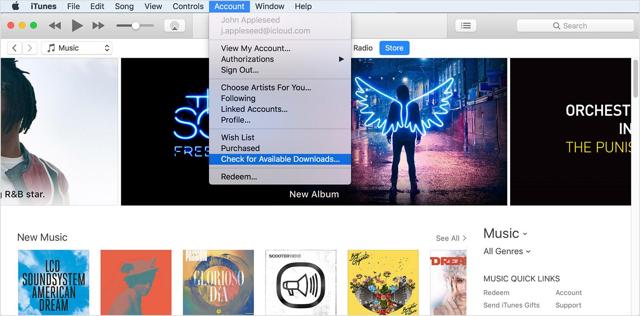
(Source: Apple.com)
It indeed appears to be working and not just in line but above Apple's announced trajectory for increasing its mix of those other services and products.
Revenue in services and other components came in at a total of $13.144 billion in Q2 2018, compared to $47.993 billion in the core smartphone, Mac, and iPad segments, or 21.5% of the total $61.137 billion in revenue in Q2 2018.
To compare, in Q2 2016 Apple's services and "other" revenue amounted to $8.18 billion, or 16.2% of the $50.557 billion in revenue that quarter and the $42.377 billion in core product revenue.
Apple's stock volatility in recent months has been in large part due to worries about smartphone market share, the disruption in iPhone sales due to the iPhone X's new functions and price point, and even trade worries affecting product cost considerations.
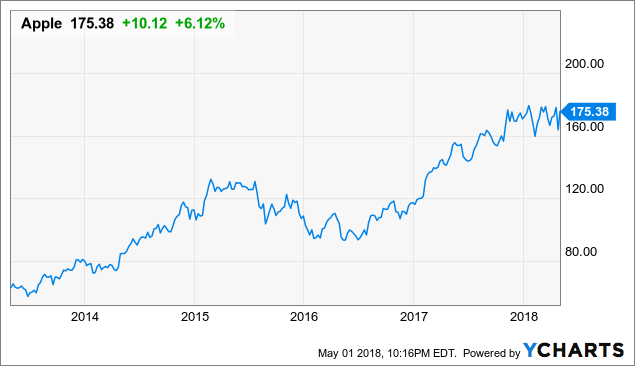
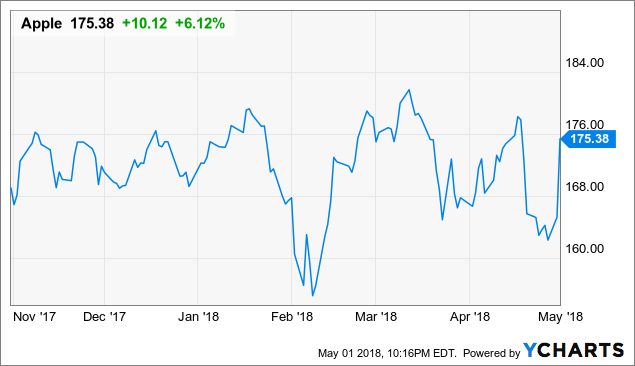
In the future, Apple will likely reduce much of this through increasing the cushion of other products it has in store. Just like how an investor can soften the volatility of their portfolio by adding more stocks or funds to it, Apple will be able to do so as well rather than relying on just the immediate one to five iPhone models they release each year.
I estimate it likely that Apple's cushion in these products will continue to grow. The only problem is that Apple does not release full or complete data on these products, besides vague obviously-promotional descriptions such as the Apple Watch's consistent 50% quarter-by-quarter growth.
If these products do get large enough, or Apple changes its reporting structure, we may see them included on future reports and be able to get a better specific estimation of Apple's revenues, growth rates, margins, and earning potential with them.
At the moment, it looks like Apple's P/E has stabilized as it still retains some growth aspects from its inherently innovative tech core but has reached such a size to be made to become a dividend-generating and shareholder-cash-back-giving mature company as well.
Until we get more detailed information on the segments in what is now simply categorized as "services" or even just "other," or they reach an even bigger mix than they currently are, there is no reason or even meaningful ability to change significantly how Apple is currently valued, which is based on adjusting its multiple to a moderate 16-20 range.
Based on the iPhone X's higher profit margins, which despite iPhone sales numerically only being up 3% year-on-year profits were up this quarter over 25% year-on-year, I estimate Apple will continue to grow its core sales at a solid rate as well.
A 12-Month Target of $221 A Share
If we assume the buyback authorization, combined with prior authorizations, does materialize in about $80 billion or so in actual buybacks this year, that is a reduction in shares outstanding, at an average of $185 a share based on averaged growth expectations, of 432,432,000 shares. Basic shares outstanding would fall to 4.592445 billion or 4,592,445,000.
If overall profit continues to grow at a steady rate and ends up 20% from its 2017 levels, that would be about $58.0212 billion in net income, meaning an EPS of about $12.6341 per share.
At a moderately elevated P/E of 17.5 based on slightly higher growth expectations, that is about $221.10 a share by the end of Q4 2018, or around November 2018.
Based on that, Apple's market capitalization would by then be $1.015 trillion. From the current price point of $175 a share, that is about a 26.3% rally from here, even after the post-earnings jump.
The dividend around then likely will still be about 1.5%, as even with dividend increases the sheer scale and growth of Apple makes its still over $260 billion cash hoard not as relatively big as it seems.
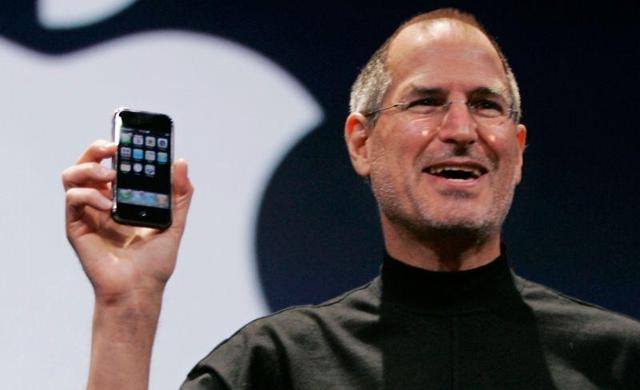
Ambitious? Yes. But as the late Apple co-founder Steve Jobs said, "we're here to put a dent in the universe."
That is my current case and prediction for Apple. Let's see how it works out.
(Source: Gizmodo)


Comments
Log in or sign up to join the conversation.