
Inventory is one of those problems that never fully goes away for a jewellery retailer. Tie up too much capital in finished rings and necklaces that don't sell, and cash flow tightens fast. Keep too little on hand, and a customer walks out the door because you didn't have what they wanted, in the size or style they needed, that day. It's a balancing act most retailers are still figuring out — and mountings, it turns out, are quietly one of the better tools for managing it.
The Problem With Stocking Finished Pieces
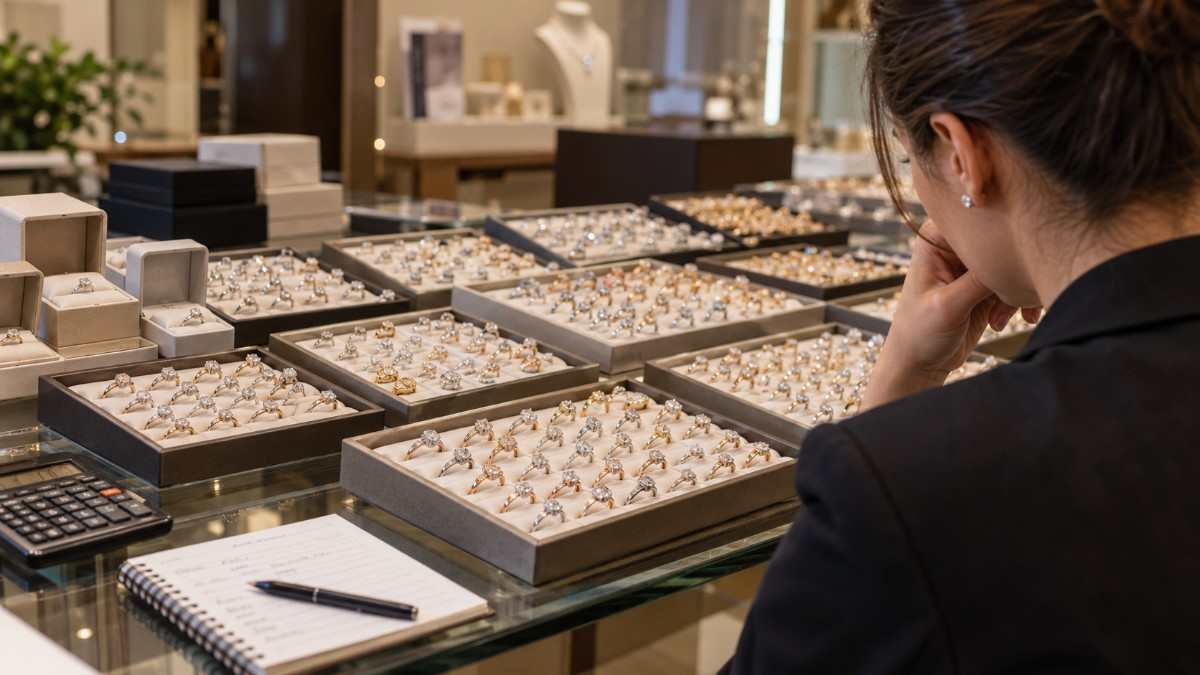
A finished ring is a finished decision. Once a stone is set into a specific mounting, in a specific metal, at a specific size, that piece can only really sell to one type of customer. Multiply that across shapes, carat weights, metal tones, and ring sizes, and a retailer ends up needing an enormous — and expensive — range of finished stock just to cover the basics.
Most independent jewellers simply can't carry that much variety and still keep their books healthy. Something has to give, and usually it's breadth of selection.
Why Separating Mountings From Stones Changes the Math
This is where jewel mounts come into play. When a retailer stocks mountings separately from finished stones, they're no longer locking capital into one fixed combination. A single mounting design can be paired with different stone shapes and sizes as orders come in, instead of sitting on a shelf as a finished piece that only fits one customer's exact request.
That shift alone can cut down significantly on dead stock — the pieces that sit in a case for months because they're the wrong size, the wrong metal, or paired with a stone shape nobody happens to be asking for that season.
Ordering Gets Simpler, Not More Complicated
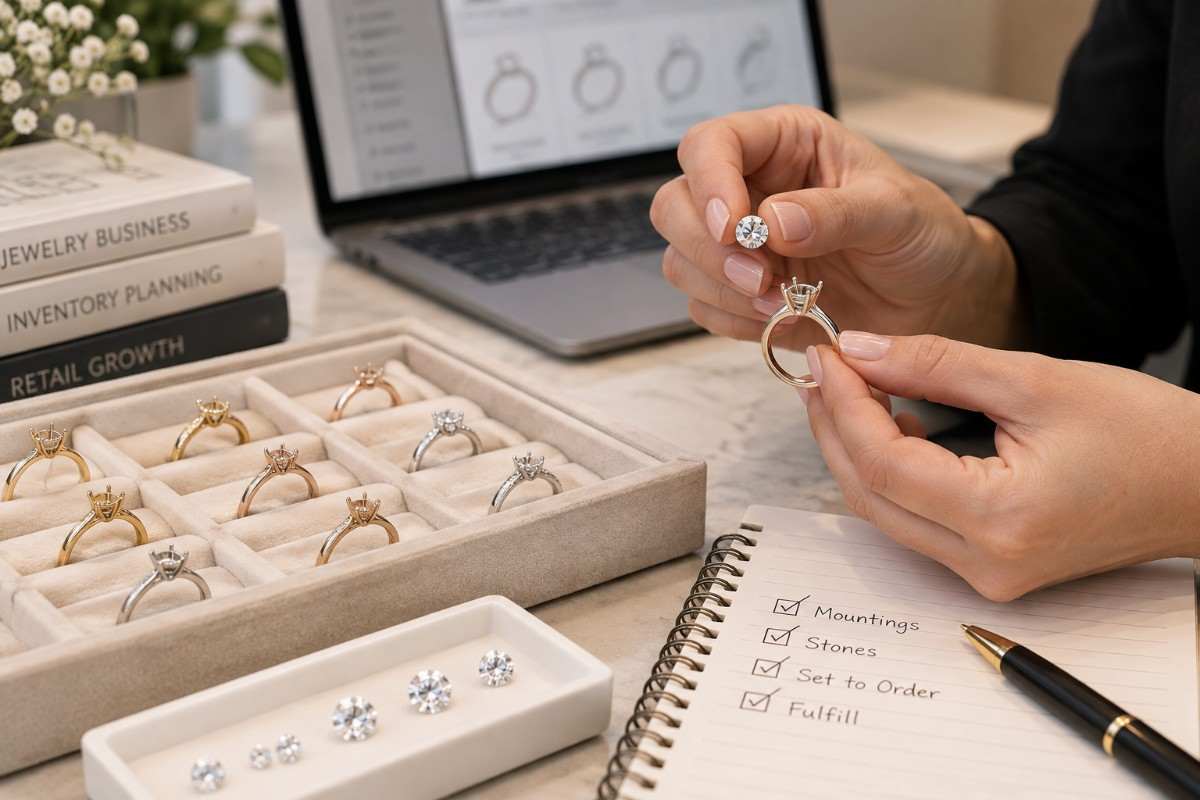
It might seem like managing mountings and stones separately would add complexity, but retailers who've made the switch tend to say the opposite. Reordering mountings in the styles that actually move is far more predictable than trying to forecast demand for fully finished rings months in advance. A retailer can keep a lean, reliable set of mounting styles on hand and set stones to order once a customer has actually committed.
That predictability matters more than it might seem. Forecasting is hard enough without also guessing which stone-and-setting combination will be popular six months from now.
Faster Turnaround Without the Overstock Risk
Keeping mountings in stock also means a retailer can turn around a custom order quickly, without needing to have guessed the exact finished piece in advance. A customer picks a stone, chooses a setting they already like the look of, and the retailer isn't starting from zero — they're assembling something from components that were already on hand.
That's a meaningful difference for a business trying to balance speed with the risk of overstocking. It lets retailers say yes to custom requests without the usual trade-off of tying up more capital to make that flexibility possible.
A Smarter Way to Think About Stock
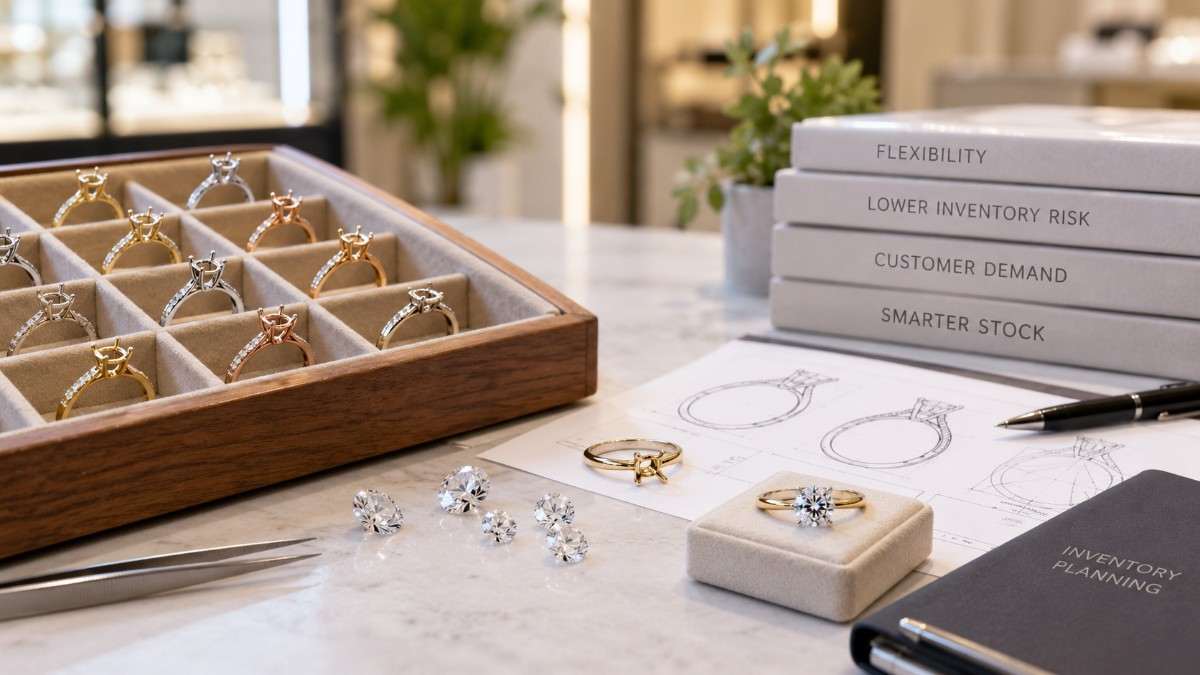
None of this is really about mountings themselves being clever — it's about what separating them from finished pieces allows a retailer to do. Less capital sitting idle in finished combinations nobody's asked for. More flexibility to meet actual customer requests as they come in. And a stocking strategy that's a lot easier to forecast than trying to predict exactly which finished ring will sell next.
For retailers rethinking how they manage inventory, mountings are turning out to be less of a background component and more of a genuine strategy.
Comments
Log in or sign up to join the conversation.