
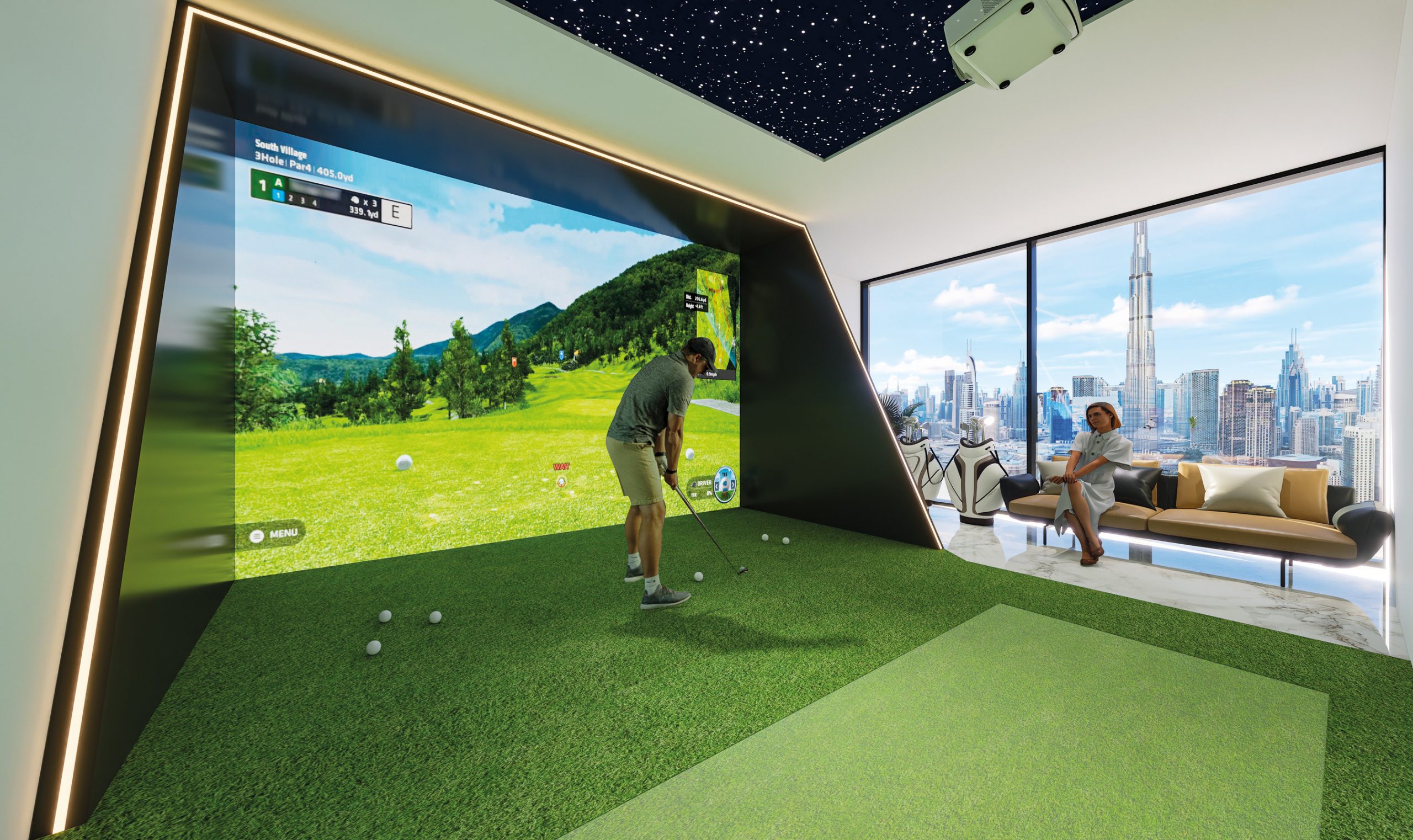
Golf facilities no longer need to rely exclusively on green fees, memberships, or outdoor playing conditions to generate income. Indoor simulation has created another commercial pathway, allowing businesses to turn available floor space into an experience that can attract golfers throughout the year.
The appeal is straightforward. Customers can practise, compete, socialise, or play virtual courses without needing several hours of daylight or favourable weather. For operators, the same technology can support multiple revenue models from one installation.
Turning Floor Space Into a Revenue-Producing Asset
A simulator bay can serve different customer groups throughout the day.
Morning hours might appeal to serious players looking for focused practice. Afternoons can accommodate lessons, corporate bookings, or casual visitors. Evenings may become particularly valuable for social groups and entertainment-oriented customers.
Pay-Per-Session Bookings
One of the simplest models is hourly or session-based pricing.
Customers pay for access to a bay for a predetermined period. This approach gives businesses flexibility because pricing can vary according to demand, time of day, duration, and special events.
Peak evening periods can command higher rates, while quieter daytime slots may be promoted through discounts or packages.
The model also lowers the barrier for occasional visitors who do not want a long-term membership.
Hospitality Venues Can Extend Their Operating Hours
Hotels, resorts, lounges, and mixed-use entertainment spaces can use simulation to introduce golf without requiring outdoor land.
A Golf Simulator can occupy substantially less space than a conventional golf facility while still offering customers a recognisable golfing experience.
This creates an opportunity to serve guests who may not have planned to play golf before arriving.
Memberships Create Predictable Income
Recurring memberships can provide more stable revenue.
Instead of paying every time they visit, regular customers purchase a monthly or annual package that includes a set number of sessions or access during specified periods.
Designing Attractive Membership Tiers
Different levels can serve different needs.
A basic plan might provide limited off-peak access. A higher tier could include more playing hours, priority reservations, or additional practice privileges.
The important point is to make the distinction meaningful. Customers should understand what additional value they receive when moving between plans.
Memberships can also encourage repeat visits, helping businesses build a dependable customer base rather than relying entirely on one-time bookings.
Lessons Add Another Revenue Stream
Simulation technology can support professional instruction particularly well because players receive measurable feedback alongside coaching.
A lesson can cover swing mechanics, distance control, club selection, or course strategy.
Data Makes Instruction More Specific
Rather than relying solely on observation, an instructor can examine measurable characteristics of the shot.
This can help identify patterns that may not be obvious from watching the swing alone. Students can then receive more targeted exercises.
For the facility, lessons create an additional service that can operate alongside ordinary bay rentals.
Corporate Events and Private Functions
Golf simulation can also move beyond individual practice.
Businesses can organise private events where participants compete in virtual challenges, play selected courses, or take part in team competitions.
The format works particularly well for groups because participants do not need to be equally skilled to enjoy the experience.
Packages Can Increase Average Spend
An operator can combine simulator access with refreshments, private-room hire, catering, or event coordination.
The simulator becomes part of a wider hospitality package rather than the entire product.
This approach can increase the value of each booking while making the venue more attractive for celebrations and corporate gatherings.
Tournaments Encourage Repeat Visits
Competition creates a natural reason to return.
Facilities can organise monthly challenges, seasonal leagues, or short-format competitions. Players can compete against others at the venue while results are tracked over time.
A well-designed tournament calendar can transform occasional visitors into regular participants.
Community Is Part of the Product
The social element should not be underestimated.
Golfers often enjoy meeting other players, discussing scores, testing equipment, and following competitions. A facility that creates a sense of community can encourage longer customer relationships.
Residential Technology Can Influence Customer Behaviour
Some facilities can also create demonstrations around residential systems.
A Home Golf Simulator may be of interest to customers who enjoy the experience and later want similar functionality in their own property.
The facility can educate visitors about room requirements, practice possibilities, and different installation approaches without making the experience feel like a conventional sales environment.
Maximising Each Bay
Revenue performance depends heavily on utilisation.
An attractive venue can still underperform if its bays remain empty for long periods.
Operators should monitor booking patterns, identify quieter periods, and design promotions that encourage customers to visit when capacity is available.
Multiple Uses Improve Utilisation
The same bay can support practice, lessons, competitions, social bookings, corporate events, and casual entertainment.
That versatility is one of the strongest commercial advantages of simulation technology.
Building Revenue Beyond the Simulator
Additional income can come from food and beverages, merchandise, coaching, club fitting, events, subscriptions, and equipment services.
The strongest facilities think of simulation as the centre of an ecosystem rather than an isolated machine.
Conclusion
Simulator technology gives indoor golf businesses more ways to monetise their space. Hourly bookings, memberships, lessons, tournaments, private events, corporate packages, and hospitality services can all contribute to revenue.
The real opportunity lies in versatility. A single well-planned bay can serve multiple audiences and purposes throughout the day, making indoor golf a potentially valuable component of a modern leisure business.
Comments
Log in or sign up to join the conversation.