

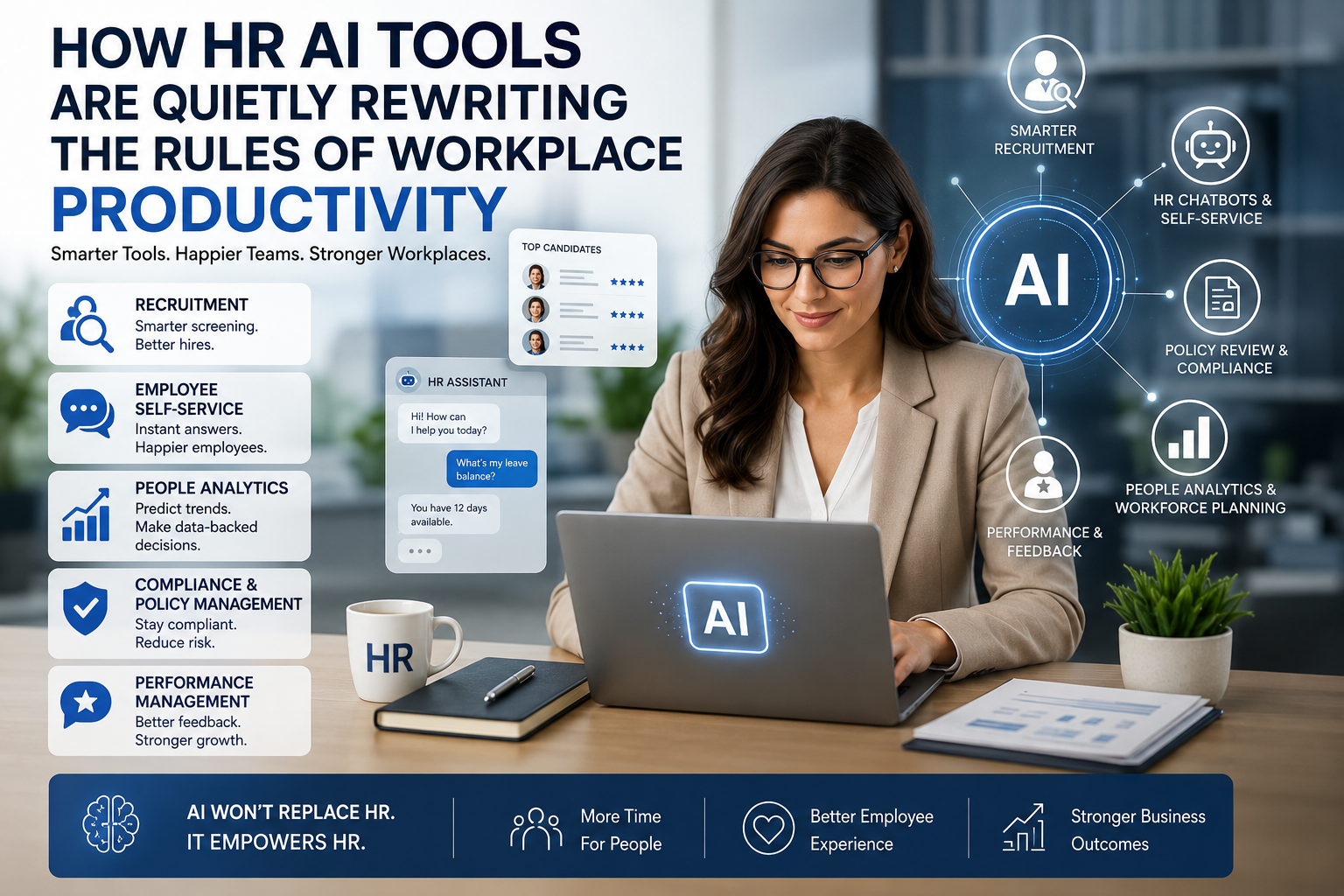
Human resources has always been a paperwork-heavy function — policies to draft, resumes to screen, compliance boxes to check, and employee questions to answer, often all before lunch. Over the past couple of years, a new category of software has stepped in to lighten that load: HR AI tools. These platforms use artificial intelligence to automate repetitive tasks, surface insights from employee data, and help HR teams focus on the human side of their job instead of drowning in spreadsheets.
This shift isn't just a trend — it's a structural change in how people teams operate. Below is a look at what's driving the adoption of AI-powered HR software, where it delivers the most value, and what to keep in mind before rolling it out.
Why HR Teams Are Turning to AI
The average HR professional juggles recruitment, onboarding, payroll queries, performance reviews, policy compliance, and employee engagement — often with a small team supporting hundreds or thousands of employees. Manual processes simply don't scale. AI-driven HR automation software helps close that gap by handling high-volume, rules-based work: sorting resumes, answering common employee questions, flagging compliance risks, and generating reports in minutes rather than hours.
Unlike older HR software that just digitized paper forms, today's AI recruitment and HR platforms actively reason over data — reading a job description and shortlisting candidates, summarizing a lengthy policy document, or drafting a first pass of an employee handbook update. That's a meaningful leap from digitization to genuine augmentation of HR judgment.
Where AI Delivers the Biggest Productivity Gains
Recruitment and talent acquisition. AI-powered applicant tracking systems can scan thousands of resumes against a job description, rank candidates by fit, and even draft personalized outreach messages. This cuts time-to-hire significantly and reduces the manual grind of first-round screening.
Onboarding and employee self-service. Conversational AI assistants and HR chatbots now handle a large share of routine employee questions — leave balances, benefits enrollment, IT access requests — freeing HR staff from answering the same question fifty times a week.
People analytics and workforce planning. Predictive HR analytics tools can flag attrition risk, identify skills gaps, and model the impact of compensation changes, giving leadership data-backed insight instead of gut-feel decisions.
Compliance and policy management. This is one of the areas generating the most interest right now. Large language models like Claude can be used to review policy documents against changing labor regulations, draft compliant offer letters, and answer nuanced compliance questions in plain language. Anthropic and partner organizations have even run dedicated sessions — such as the webinar "AI for HR Professionals: Using Claude to Improve Compliance and Productivity" — to show HR teams practical ways to apply AI to reduce compliance risk while speeding up daily workflows.
Performance management and feedback. AI tools can help managers draft structured, bias-aware performance reviews and summarize 360-degree feedback into clear, actionable themes.
Choosing the Right AI HR Software
With so many HR tech tools branding themselves as "AI-powered," it helps to evaluate a few things before committing:
Data privacy and security. HR data is among the most sensitive information a company holds. Look for vendors with clear data-handling policies, SOC 2 compliance, and options for enterprise-grade data protection.
Bias mitigation. AI recruiting tools trained on historical hiring data can inadvertently replicate past biases. Choose tools that are transparent about their models and allow human oversight at every decision point.
Integration with existing HRIS. The best AI productivity tools plug into your existing HR information system rather than requiring a rip-and-replace of your tech stack.
Human-in-the-loop design. The strongest implementations treat AI as a co-pilot, not an autopilot — it drafts, flags, and summarizes, but a person still makes the final call on hiring, terminations, and policy decisions.
The Road Ahead
As generative AI models become more capable of understanding nuanced organizational context, HR AI tools are moving from simple automation toward genuine decision support — helping HR professionals interpret labor law changes, model workforce scenarios, and personalize the employee experience at scale. Teams that build strong AI literacy now, including how to prompt and evaluate these tools responsibly, will be best positioned to use them well as the technology matures.
Used thoughtfully, AI won't replace HR's human core — empathy, judgment, and relationship-building — but it will free up the time HR professionals need to actually practice it.
Frequently Asked Questions
1. What exactly are HR AI tools?
HR AI tools are software applications that use artificial intelligence — such as machine learning and large language models — to automate or assist with HR tasks like resume screening, employee Q&A, compliance checks, and performance review drafting.
2. Can AI tools replace HR professionals entirely?
No. AI tools are best used to handle repetitive, data-heavy tasks, while judgment-driven decisions — hiring calls, disciplinary action, culture-building — still require human oversight and empathy.
3. Are AI-powered HR tools safe for handling sensitive employee data?
It depends on the vendor. Look for platforms with strong data encryption, clear privacy policies, and compliance certifications like SOC 2 before feeding them sensitive employee information.
4. How can small HR teams start using AI tools without a big budget?
Many AI HR platforms offer tiered or pay-as-you-go pricing, and general-purpose AI assistants like Claude can already help with drafting policies, summarizing documents, and answering compliance questions without a dedicated HR-tech budget.
Comments
Log in or sign up to join the conversation.