

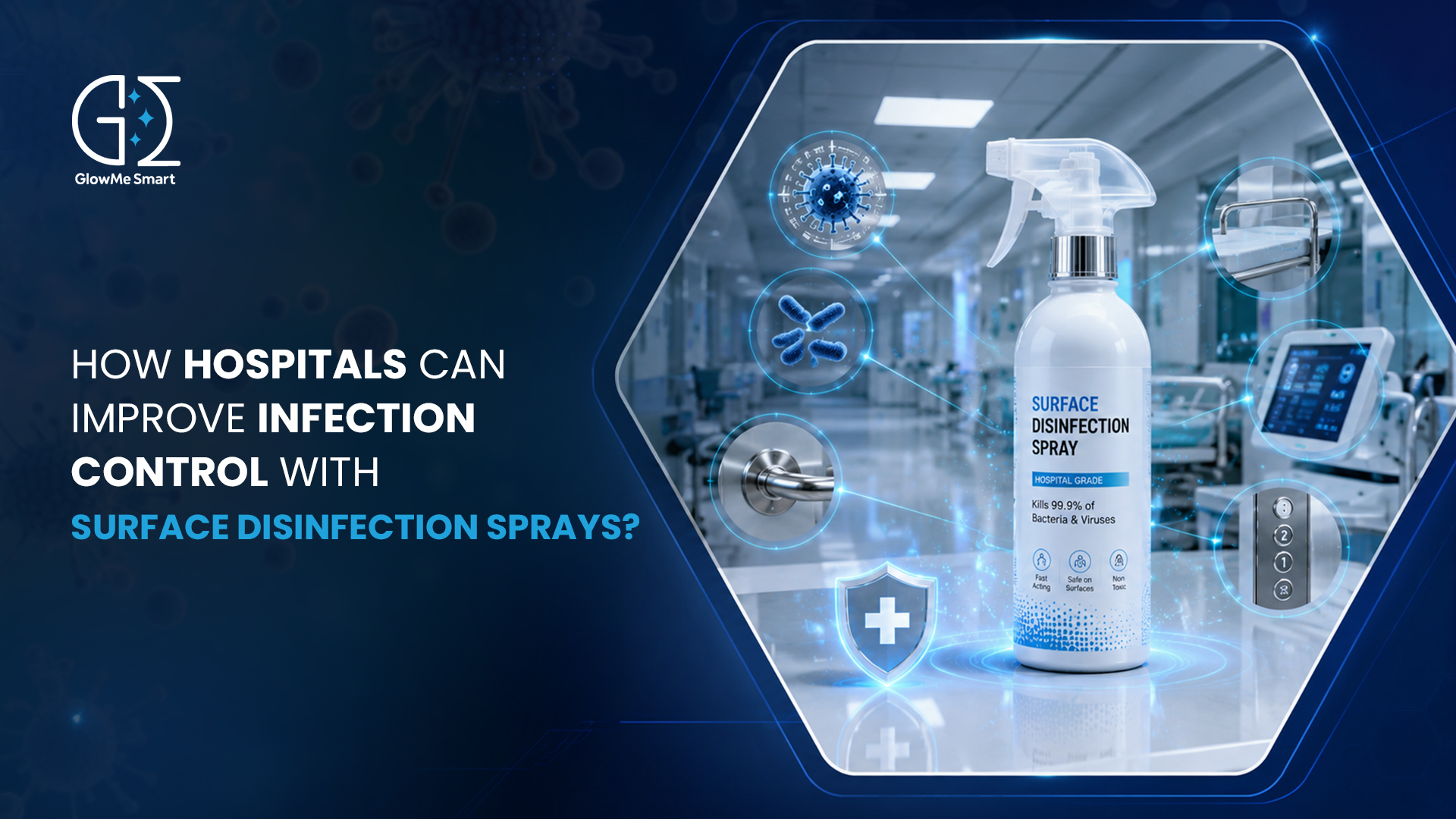
Effective infection control in hospitals depends on more than hand hygiene and instrument reprocessing. Every shift, bed rails, call buttons, shared workstations, IV poles, and counters accumulate contact from multiple hands — surfaces that scheduled housekeeping rounds alone cannot keep consistently clean.
Effective hospital surface disinfection sprays give clinical and housekeeping teams a practical layer between rounds — ready-to-apply, material-compatible, and residue-free on repeated use. Correct product selection, pre-cleaning, full contact time, and documented monitoring are what separate reliable disinfection from surface-level routine.
GlowMe Smart extends that coverage further. The company’s PureLine: plant-based, coconut-derived surface spray handles repeated application across high-touch clinical zones without harsh odour or synthetic residue.
These sprays are intended for facility hygiene teams that need residue-free, odour-controlled surface disinfection without harsh chemical film on high-contact areas.
Why Is Surface Disinfection Important in Hospitals?
The importance of surface disinfection in hospitals is that it helps reduce harmful pathogens on high-touch and environmental surfaces, creating a cleaner and safer healthcare environment. Effective surface hygiene supports hospital infection prevention by limiting contamination on frequently touched areas and helping maintain consistent infection-control practices.
Surface disinfection supports hospital infection prevention by:
Reducing pathogens on high-touch and environmental surfaces.
Supporting cleaner and safer patient-care environments.
Minimizing contamination on frequently handled surfaces.
Helping maintain consistent hygiene standards across facilities.
Promoting effective infection-control practices through proper surface treatment.
Improving disinfection outcomes when products are applied with adequate coverage and recommended contact times.
How Do Hospital Surface Disinfection Sprays Work?
Hospital Surface Disinfection Sprays distribute an active disinfectant formulation evenly across approved environmental and high-touch surfaces to help eliminate harmful microorganisms. Their effectiveness depends on several factors, including the disinfectant concentration, complete surface coverage, proper application technique, and adherence to the recommended contact time for effective pathogen inactivation.
What Are the Advantages of Using Disinfectants in Hospitals?
Hospital disinfectants help reduce the risk of healthcare-associated infections (HAIs) by eliminating harmful pathogens from high-touch surfaces and shared environments. They support safer patient care, protect healthcare workers, disinfect non-critical medical equipment, and strengthen infection prevention protocols through consistent and effective surface hygiene.
The following are the key advantages of using disinfectants in hospitals:
Broad-Spectrum Pathogen Control: Hospital disinfectants are formulated to eliminate a wide range of bacteria, viruses, and fungi from healthcare surfaces, helping maintain a hygienic environment.
Protection for High-Risk Patients: Regular surface disinfection helps create a safer care environment for patients with weakened immune systems and those at greater risk of infection.
Support for Infection Prevention: Effective disinfectants reduce surface contamination, helping limit the spread of harmful microorganisms and strengthening hospital infection control practices.
Safe for Healthcare Surfaces: Many hospital-grade disinfectants are designed for compatibility with frequently used medical equipment and healthcare surfaces while supporting routine cleaning protocols.
How Should Hospitals Select Disinfectant Sprays in India?
When evaluating Hospital disinfectant sprays in India, hospitals and procurement teams should assess the product's intended application, antimicrobial performance, contact time, material compatibility, residue profile, safety information, ventilation requirements, storage conditions, shelf life, and long-term supply availability. They should also consider whether the product supports consistent disinfection across frequently touched surfaces without leaving unwanted synthetic residue.
The final product selection should be reviewed and approved by the hospital's infection control committee to ensure it aligns with the facility's hygiene and operational requirements.
How Should Hospitals Use Surface Disinfectant Sprays?
Hospitals must apply hospital surface disinfection sprays without disrupting patient care or damaging sensitive equipment. Staff should avoid spraying products directly near patients, open wounds, medications, sterile supplies, oxygen equipment, or exposed electrical components.
For monitors, infusion pumps, keyboards, touchscreens, and diagnostic equipment, staff should apply the approved product by following the guidelines directed for use. They must prevent liquid from entering control panels, ports, vents, sensors, and cable connections.
How Does GlowMe Smart Support Hospital Surface Hygiene?
GlowMe Smart positions PureLine as a ready-to-apply surface disinfection range for suitable high-touch areas in hospitals, clinics, diagnostic centers, waiting rooms, and healthcare support zones. It also offers bulk supply and scheduled delivery arrangements for facilities that disinfect surfaces repeatedly.
Hospitals should review the product label, supporting documentation, surface compatibility, and internal infection prevention and control requirements before adoption.
PureLine remains separate from AquaMist, EucaMist, Marine Mist, and Anti-allergy Mist. GlowMe Smart formulates these liquids exclusively for its automated disinfection machines. Businesses should not apply machine-use liquids manually or substitute them for approved surface products.
Ready to strengthen Infection Control in Hospitals? Contact GlowMe Smart for advanced surface disinfection solutions that support safer, cleaner healthcare environments.
Comments
Log in or sign up to join the conversation.