

304 million people lived outside their home country in 2024. That's not a migration statistic; that's a business reality. Because every one of those people crossed a border, and every border they crossed came with a different tax system, a different labor law, and a different definition of what a company owes its workers, its customers, and its government.
Someone has to manage all of that. And increasingly, that someone has a very well-paying job.
Corporate governance used to be a fairly contained function. You made sure the company followed the rules, the rules of the country it was registered in, mostly. Then globalization happened. Not in a sudden, dramatic way, but slowly and then all at once. A clothing brand that once sold only in the UK suddenly had factories in Vietnam, customers in Germany, and a data team in India. Now it needed people who understood Vietnamese labor law, German data privacy regulations, and Indian tax treaty obligations simultaneously.
That shift didn't just change existing governance jobs. It created entirely new ones.
This article covers:
What actually changed in corporate governance because of globalization
The roles being created right now and why they exist
What they pay, with real numbers from 2026
The specific skills companies keep failing to find
How AI is changing the work (but not replacing it)
What Actually Changed- and Why It Matters
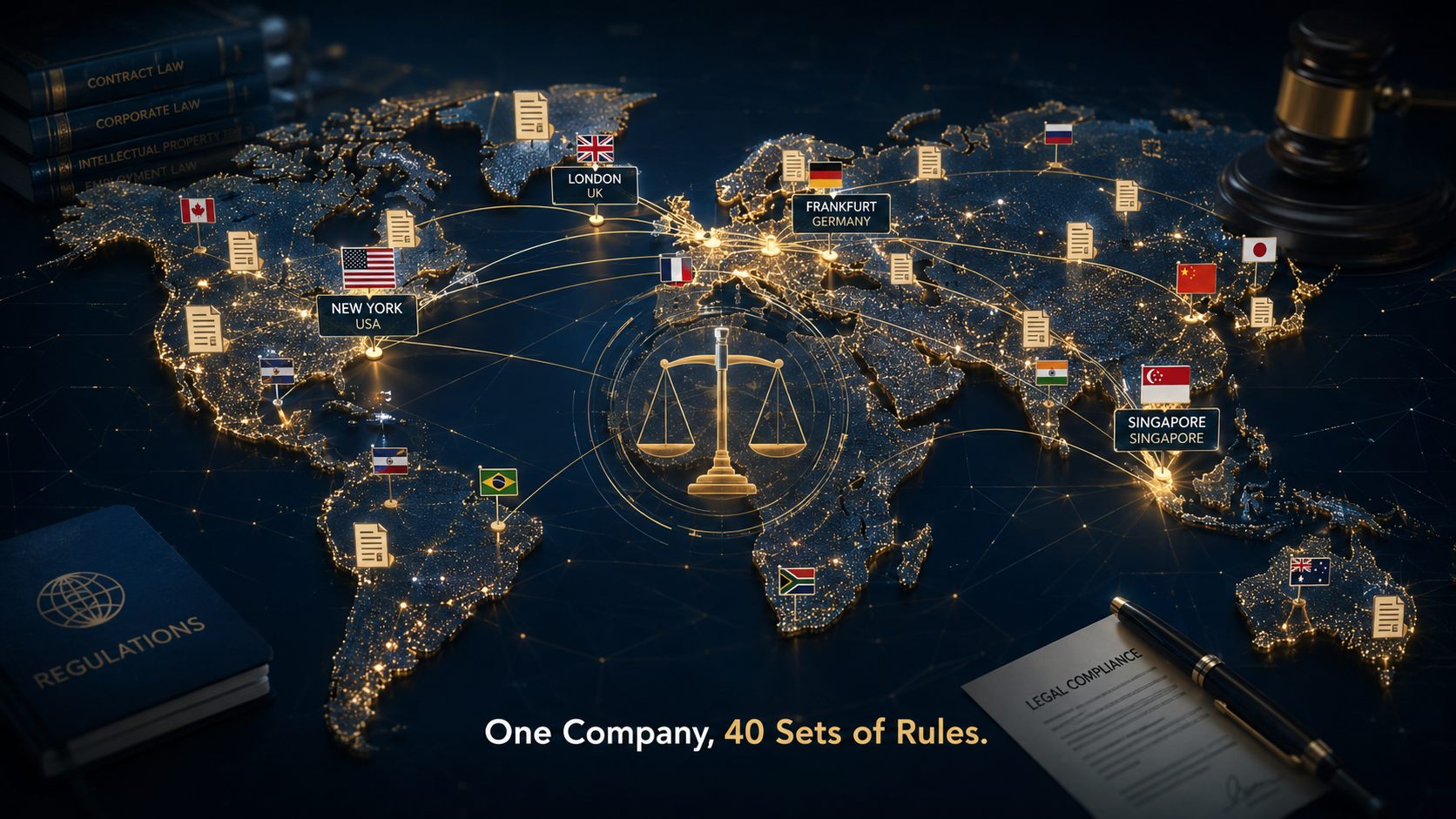
Here's the thing about governance work that most career guides skip over: the job is fundamentally about knowing which rules apply and making sure the company follows them. For professionals with a Doctor of Business Administration, this often means combining strategic business leadership with deep governance expertise. When a company only operates in one country, that's manageable. When it operates in 40, the complexity doesn't multiply by 40. It multiplies exponentially because the rules in those countries interact with each other in ways nobody fully anticipated.
Take data privacy. The EU's GDPR came into force in 2018 and immediately applied to every company anywhere in the world that processed personal data belonging to EU residents. Not just European companies, every company. California followed with CCPA. India passed its Personal Data Protection Act. Brazil enacted LGPD. As of 2026, more than 130 countries have data privacy laws on the books, and no two are identical.
A multinational with customers across those markets needs someone, usually several people, who can read all of those laws, understand where they conflict, and tell the business what it's actually allowed to do. That job didn't exist in its current form 15 years ago.
And data privacy is just one thread. Add anti-money laundering rules; anti-bribery legislation like the U.K. Bribery Act and U.S. Foreign Corrupt Practices Act; cross-border merger regulations; and ESG disclosure mandate regulations, which are legally required in the EU and increasingly expected by institutional investors everywhere else, and you start to see why corporate governance teams at large multinationals have grown so fast.
The World Economic Forum's Future of Jobs Report 2025 found that geoeconomic fragmentation is expected to drive business model transformation in 34% of surveyed organizations within the next five years. More than 20% of global employers already identified trade restrictions as actively reshaping their operations. Every single one of those restrictions creates a compliance requirement. And compliance requirements create jobs.
The Roles: What's Actually Out There
Career | What It Actually Involves | Why Globalization Built This Role |
Chief Compliance Officer | Owns the company's entire compliance program; sits at the executive table | Running compliance across dozens of regulatory regimes needs dedicated leadership |
GRC Analyst/ Manager | Tracks governance, risk, and compliance across the organization day to day | Fragmented global rules need someone watching them continuously |
Data Protection Officer | Makes sure the company handles personal data legally in every jurisdiction | 130+ countries now have privacy laws; large companies need dedicated oversight |
ESG Reporting Specialist | Produces environmental, social, and governance disclosures for regulators and investors | EU mandates now legally require detailed ESG reporting from large companies |
AML Officer | Identifies and reports suspicious financial transactions | Global banking integration means financial crime crosses borders constantly |
Third-Party Risk | Assesses vendors, suppliers, and partners for compliance and governance risk | Every supplier in a global supply chain carries potential regulatory exposure |
Cross-Border M&A Compliance Lead | Manages regulatory approvals when deals involve companies in different countries | International acquisitions require navigation of multiple antitrust and approval regimes |
What the Pay Looks Like in 2026:
Governance work pays well. That's not a vague claim; the numbers are specific, and they've been moving upward.
The median annual salary for a GRC professional in the U.S. sits around $95,103, with entry-level roles near $70,000 and senior specialists reaching $143,500, per Research.com's 2026 analysis. Move up to the Chief Compliance Officer level, and the figures change dramatically. Salary.com puts the average U.S. CCO salary at $234,401 as of July 2026.
At the top of the market, BarkerGilmore surveyed more than 260 CCOs and found the technology sector pays a median total package of $770,000 for that role. Life sciences comes in at $665,000 and energy at $578,000. Public company CCOs earn a median of $626,000 versus $350,000 at private companies — a gap that reflects exactly how much more complex compliance gets when you add SEC reporting, shareholder scrutiny, and cross-border stock listings.
Role | Entry-level | Mid-Senior | Senior/Executive |
GRC Analyst | ~$70,000 | ~$95,000–$110,000 | ~$143,500 |
Compliance Officer | ~$69,000 | ~$93,000 | ~$212,000 |
Data Protection Officer | ~$80,000 | ~$110,000–$130,000 | ~$170,000+ |
Chief Compliance Officer | ~$144,000 | ~$210,000–$255,00 | $626,000+ |
Glassdoor's data adds another useful data point: larger companies pay 18.17% more than smaller ones for compliance officers in the US. The bigger and more global the organization, the more it pays for the people keeping it on the right side of regulation.
The Skills Gap Nobody Talks About Enough:
There's a talent problem sitting at the middle of all this demand, and it's not the one most people expect.
Companies aren't struggling to find people who know one country's regulatory framework reasonably well. They're struggling to find people who know three or four simultaneously, can function comfortably in cross-cultural business environments, and still explain a complex compliance issue clearly to a broad audience that doesn't want to sit through a legal lecture.
That combination of regulatory depth plus cultural fluency plus executive communication is genuinely rare. A GRC professional who understands not just the rules but also how those rules are interpreted and enforced differently in Germany
Comments
Log in or sign up to join the conversation.