

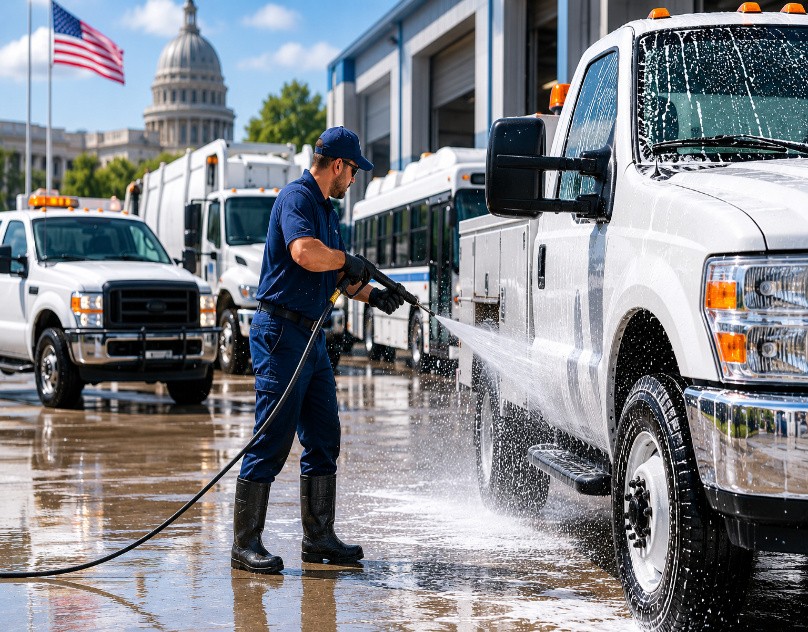
Municipal and government fleet operators deal with cleaning requirements that go well beyond basic appearance. Regular fleet wash cycles protect vehicles from corrosion, satisfy inspection standards, and keep public-facing assets presentable for the communities they serve.
Key Takeaways
Government fleets are subject to visible condition standards tied to public accountability
Road salt, hydraulic fluid, and diesel exhaust residue accelerate corrosion on municipal vehicles
Concentrated fleet wash formulas reduce water usage compared to diluted alternatives
A consistent washing schedule protects asset value and reduces long-term maintenance costs
Choosing the right product means matching chemistry to vehicle surface materials
Why Municipal Vehicles Require Specialized Cleaning
Public works trucks, transit buses, fire apparatus, and utility vehicles accumulate unique soiling loads. Road salt applied during winter operations clings to undercarriage components and accelerates metal fatigue. Hydraulic oil leaks from plow equipment leave residue that conventional soap cannot cut. Diesel soot from extended idling coats cab surfaces and reflective markings. These challenges require chemistry designed specifically for heavy-duty transport, not general-purpose cleaners.
Concentrated fleet wash solutions formulated for heavy transport work at the molecular level to lift road film, diesel exhaust deposits, and grime from painted, aluminum, and stainless steel surfaces without damaging seals or trim components.
Matching Product Chemistry to Vehicle Type
Different municipal vehicle categories require different approaches. Fire apparatus with polished aluminum panels needs a low-pH brightener-safe formula to preserve finish integrity. Refuse trucks with organic contamination require alkaline chemistry that breaks down grease and biological residue. Street sweepers with combined road debris and fluid contamination benefit from multi-action degreasers that handle both soil types in a single wash pass.
Using the wrong chemistry shortens finish life, strips protective coatings, and creates liability when reflective safety markings degrade prematurely. A professional-grade product line with formulas matched to substrate type prevents these outcomes and keeps vehicle appearance within municipal appearance standards.
Building a Compliance-Ready Washing Schedule
Compliance begins with frequency. Most public fleet managers follow a minimum weekly wash cycle for road-facing vehicles, with additional washes required after winter storm operations, off-road deployments, or any incident involving chemical or biological contamination. Documenting wash dates, products used, and wash technician sign-off creates an audit trail that satisfies inspection requirements and insurance documentation needs.
Wash bay setup matters too. Closed-loop wash water reclamation systems are increasingly required under local stormwater ordinances for facilities washing more than a set number of vehicles per day. Choosing a fleet wash concentrate that is compatible with reclamation filtration systems keeps operations within regulatory boundaries and reduces wastewater disposal costs.
Reducing Total Fleet Operating Costs Through Consistent Washing
Deferred washing is one of the most overlooked contributors to premature fleet vehicle retirement. Road salt and acidic atmospheric deposits that sit on metal surfaces for extended periods initiate corrosion at a rate far higher than vehicles maintained on regular wash cycles. Over a ten-year fleet lifecycle, consistent washing can reduce body repair costs substantially and extend the useful service life of vehicles by reducing structural corrosion.
Beyond metal protection, clean vehicles are easier to inspect visually. Technicians conducting pre-trip inspections identify fluid leaks, cracks, and component wear faster when surface contamination is absent. This translates directly into fewer missed defects and lower risk of roadside failures that carry significant cost and liability consequences for public agencies.
Selecting a Fleet Wash Supplier for Government Accounts
Government procurement requires vendors who can meet documentation requirements, provide Safety Data Sheets for all chemical products, and support volume ordering without supply interruptions. A domestic chemical supplier with 40-plus years of formulation experience carries a different level of reliability than an import brand with limited technical support resources.
Look for suppliers that offer site assessments and protocol development as part of their service model. A supplier willing to review your wash bay layout, evaluate your vehicle mix, and recommend product selections based on your specific soil loads is providing a service that pays returns far beyond the initial product purchase. Government fleet managers sourcing a reliable fleet wash concentrate for volume municipal use will find professional-grade options formulated for heavy transport applications.
For municipal and government fleet operators ready to evaluate their current washing program, Suppliers Chemical provides professional-grade fleet cleaning products backed by hands-on technical support and domestic manufacturing reliability.
Frequently Asked Questions
What makes fleet wash different from standard car wash soap?
Fleet wash is formulated with higher alkalinity and surfactant concentration to cut diesel exhaust, road film, and heavy grease that standard car wash soap cannot remove from commercial vehicle surfaces.
How often should municipal vehicles be washed during winter operations?
Most fleet managers wash road-facing vehicles after each winter storm event and maintain a minimum weekly cycle during active salting seasons to prevent chloride-driven corrosion from becoming established.
Can fleet wash products be used in closed-loop wash water reclamation systems?
Yes, professional-grade concentrated fleet wash products are generally compatible with reclamation filtration when used at recommended dilution rates. Confirm compatibility with your reclamation system vendor before selecting a product.
What surfaces are safe to wash with alkaline fleet wash concentrate?
Alkaline fleet wash is safe for painted steel, gelcoat, and fiberglass when used at recommended dilutions. Polished aluminum and bright trim typically require a pH-balanced or low-pH formula to prevent oxidation and etching.
Does washing frequency affect vehicle resale or trade-in value?
Yes, fleet vehicles with documented regular washing history show lower corrosion rates and typically achieve higher residual values at auction or trade-in compared to vehicles without consistent maintenance records.
#FleetManagement #FleetWash #GovernmentFleet #CommercialCleaning #VehicleMaintenance
Comments
Log in or sign up to join the conversation.