

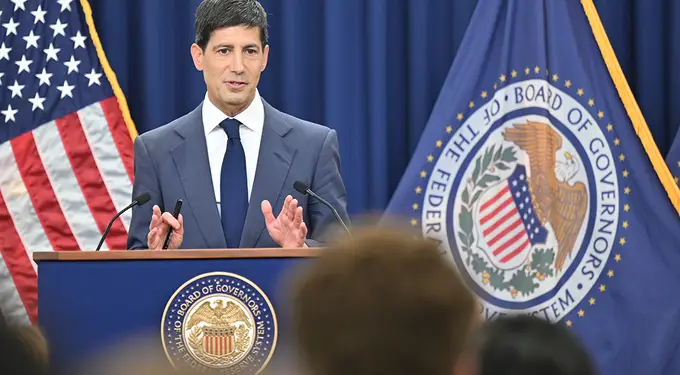
The Federal Reserve entered this week facing a market that had been pricing a meaningful chance of another interest-rate hike in October.
Five trading days later, that bet has almost disappeared.
Markets were pricing roughly a 70% probability of a 25-basis-point increase at the Fed's October 27-28 meeting on Monday, September 28, according to CME FedWatch data.
By Thursday, the probability had fallen to around 25%. After Friday's September jobs report, it dropped around 20%.
The move was not driven by one economic release. The repricing unfolded in stages.
Federal Reserve officials pushed back against the need for an immediate increase, inflation data came in softer than expected, and Friday's payrolls report delivered a sharp downside surprise.
Together, the developments shifted markets from pricing an October hike as the base case to treating it as increasingly unlikely.
Monday: markets were still heavily betting on a hike
The week began with Treasury yields rising and investors positioning for further Federal Reserve tightening.
On September 28, markets were pricing about a 70% probability of an October hike, while the two-year Treasury yield climbed to around 4.94%.
The move reflected concerns over persistent inflation, higher energy prices and evidence that the US economy remained resilient.
The 30-year Treasury yield also reached its highest level since 2004.
The market was effectively pricing a significant chance of a second consecutive rate increase, with inflation and resilient economic activity keeping pressure on the Fed to tighten further.
That assumption began to crack on Tuesday.
Williams starts the repricing
New York Fed President John Williams provided the first major catalyst.
In remarks at the University at Buffalo on September 29, Williams said, “With the policy action we took at our September meeting, there is no need for urgency, and we have time to gather more information.”
He nevertheless left the door open to one additional increase later in the year if the economy evolved broadly in line with his forecast.
The distinction mattered.
Williams was not ruling out another increase. He was arguing that policymakers had time to gather more information before deciding when — or whether — to act again.
Markets took that as a signal that October was less likely and that policymakers could wait for more evidence.
The probability of an October increase fell to roughly 50% from nearly 70% earlier that day, while the two-year Treasury yield declined.
Wednesday: softer inflation pushes October further away
The next leg came from the Fed's preferred inflation gauge.
August PCE inflation increased 0.3% month on month and 3.4% year over year, while core PCE rose 0.2% on the month and 3.0% annually.
Both monthly measures came in below expectations, while revisions also lowered some earlier readings.
Market pricing responded quickly. Estimates of the probability of an October increase moved into the roughly 35%-40% range during the session.
Goldman Sachs also moved its own forecast for the next Fed increase from October to December after the inflation report, according to a research note.
Chief economist Jan Hatzius said the combination of the PCE data and Williams' comments meant that “an October hike is unlikely” and that the firm was pushing the second hike in its forecast to December.
The market was therefore no longer treating October as the base case.
Instead, investors were beginning to ask whether the next move would come in December — or whether another increase would be needed at all.
Thursday: Jefferson reinforces the message
The repricing accelerated again on Thursday after Fed Vice Chair Philip Jefferson delivered a speech at the University of Virginia.
Jefferson said that “any future adjustments in policy should be determined by carefully examining trends in the data, the evolving outlook, and the balance of risks.”
He added that yields had risen since the September meeting as investors reassessed the macroeconomic outlook and said, “My colleagues and I will need to come to our own judgment, which may take more time.”
The message echoed Williams: another hike remained possible, but policymakers did not appear to be treating October as an urgent decision.
By Thursday, markets were pricing only about a 25% chance of an October hike, down from roughly 70% at the start of the week.
The combination of Williams, Jefferson and the softer inflation data had effectively washed away most expectations for a back-to-back increase.
That left Friday's payrolls report as the final major test.
Friday: payrolls deliver the final blow
The test was decisive.
The US economy added just 29,000 jobs in September, according to the Bureau of Labor Statistics, far below the roughly 90,000 increase economists had expected.
The unemployment rate rose to 4.2%, while average hourly earnings increased just 0.1% for the month and were up 3.0% from a year earlier.
The revisions were also weak. July payrolls were revised down from a 21,000 gain to a 10,000 decline, while August was revised from 162,000 to 133,000.
Combined, the revisions removed another 60,000 jobs from the previous estimates.
Market pricing moved again.
CME FedWatch pricing put the probability of an October hike at 13.8% after the release, down from 24.4% before the report.
The probability later rebounded above 20% as markets digested the report.
Jefferies chief US economist Thomas Simons described the report in a note as “the nail in the coffin for an October hike.”
Treasuries also rallied, with the two-year yield falling to around 4.72% and the 10-year slipping toward 5.17% after the report.
But the week's bond-market story is more complicated than the collapse in October hike pricing suggests.
On Monday, markets were asking whether another hike was coming in October.
By Friday, the question had become whether the Fed would wait until December — and whether the weakening labor market could eventually make even that move unnecessary.
The next major test will be September CPI on October 14. Until then, the market has moved decisively away from an October hike.


Comments
Log in or sign up to join the conversation.