
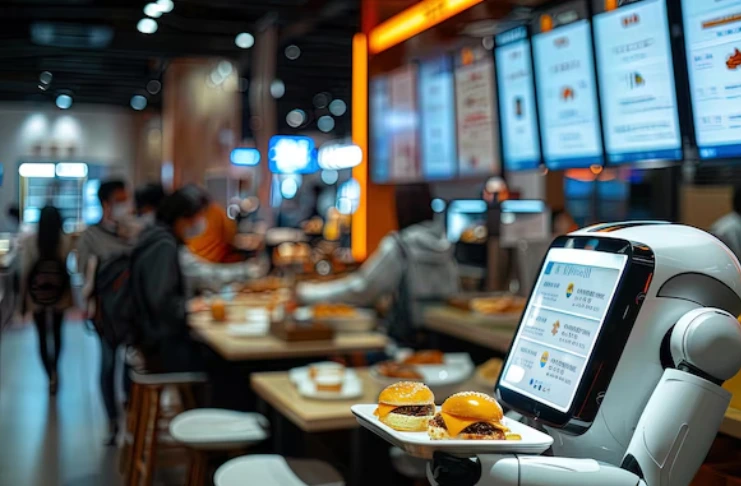
The food and beverage industry continues evolving as customer expectations change and businesses seek more efficient ways to operate. Restaurants today are expected to provide faster service, smoother customer experiences, and operational consistency while managing increasing competition. As technology becomes more integrated into restaurant management, F&B ordering solutions are becoming increasingly important for businesses aiming to improve efficiency and customer satisfaction.
Traditional ordering methods often depend heavily on manual workflows. During busy operating hours, these processes can become slower and more difficult to manage. Restaurants now look for smarter ways to streamline operations while maintaining service quality.
Technology-driven ordering systems are helping businesses modernize workflows and adapt to changing customer demands.
Why Digital Ordering Solutions Are Becoming More Important
Customer expectations continue changing across the restaurant industry. Consumers increasingly value convenience, speed, and flexibility when placing food orders.
Restaurant operators commonly experience challenges such as:
Longer waiting times
Order processing delays
Communication errors
High operational pressure during peak periods
Increased demand for service efficiency
Digital solutions help restaurants simplify operational workflows while improving service quality.
Businesses adopting technology often gain stronger operational visibility and greater flexibility in managing customer demand.
How F&B Ordering Improves Restaurant Efficiency
Restaurants implementing digital ordering technology often focus on improving both internal operations and customer experiences.
Faster Service Delivery
Speed remains one of the most important factors within food service operations.
Technology-supported ordering systems can help businesses:
Process orders faster
Improve operational flow
Reduce waiting times
Support more efficient customer handling
Faster ordering processes contribute to smoother service experiences and stronger operational performance.
Improved Order Accuracy
Manual order handling can sometimes create communication challenges.
Digital ordering workflows support better accuracy by creating more structured ordering processes.
Improved accuracy may help restaurants:
Reduce mistakes
Improve customer satisfaction
Strengthen service consistency
Operational reliability continues becoming increasingly valuable within highly competitive food service environments.
Better Workforce Optimization
Restaurant teams often manage multiple responsibilities simultaneously.
Digital solutions may help businesses allocate staff resources more effectively by reducing repetitive manual tasks.
This allows employees to focus more attention on:
Customer interactions
Food preparation quality
Operational support activities
Balanced workflows can contribute to stronger service outcomes.
Customer Experience Is Becoming a Major Priority
Modern diners increasingly expect convenience throughout the ordering journey.
Restaurants that improve customer experiences often strengthen long-term loyalty and satisfaction.
Several customer expectations continue shaping food service strategies.
Faster Ordering Processes
Customers value efficient service experiences.
Reduced delays and smoother ordering journeys can improve overall dining satisfaction.
Greater Ordering Flexibility
Many consumers appreciate flexible ordering options that support different preferences.
Modern systems often allow businesses to create more adaptable service environments.
Consistent Service Quality
Consistency remains an important part of customer retention.
Restaurants increasingly focus on building reliable operational standards that support positive guest experiences.
Data and Technology Are Reshaping Restaurant Management
Technology provides restaurant operators with greater visibility into business performance.
Operational insights help support stronger decision-making.
Better Business Visibility
Restaurants can better monitor operational performance through centralized management tools.
Areas frequently monitored include:
Order activity trends
Customer demand patterns
Operational efficiency indicators
Improved visibility supports more informed planning.
Workflow Optimization
Technology helps simplify operational coordination.
Restaurants continue improving internal processes to strengthen overall efficiency.
More organized workflows often contribute to:
Better staff productivity
Faster service delivery
Improved operational consistency
Future Scalability
Growing businesses increasingly prioritize systems that support expansion.
Scalable technology infrastructure may help restaurants adapt more effectively to future operational needs.
Businesses exploring modern restaurant technology may consider f&b ordering solutions to strengthen operational performance and improve customer experiences.
Future Trends Shaping Food Service Technology
Restaurant technology continues evolving rapidly.
Several trends are expected to influence future food service strategies.
Greater Automation
Restaurants increasingly seek opportunities to simplify operational processes.
Automation may continue improving:
Workflow efficiency
Service consistency
Resource allocation
More Connected Digital Experiences
Customers increasingly expect seamless experiences across different ordering channels.
Technology integration continues supporting operational improvements.
Increased Personalization
Modern businesses increasingly focus on delivering experiences aligned with customer preferences.
Personalized service models may continue becoming more important in future restaurant operations.
How Restaurants Can Improve Operational Performance
Businesses aiming to improve efficiency often focus on:
Process optimization
Service quality improvements
Technology adoption
Staff workflow efficiency
Customer experience enhancements
Long-term operational improvement continues becoming an important competitive advantage.
Frequently Asked Questions
1. Why are restaurants investing in digital ordering systems?
Restaurants increasingly adopt digital solutions to improve efficiency, reduce delays, and strengthen customer experiences.
2. Can technology improve restaurant operational performance?
Modern operational tools can help businesses improve workflow efficiency and support smoother service delivery.
3. Why is customer experience important for restaurants?
Positive customer experiences often contribute to stronger satisfaction and long-term business growth.
Conclusion
Restaurant operations continue changing as technology influences customer expectations and business strategies. Digital tools are becoming increasingly important for improving efficiency, strengthening service quality, and supporting operational growth. Businesses that continue adapting to evolving technology trends may position themselves more effectively for long-term success within competitive food service markets.
Comments
Log in or sign up to join the conversation.