

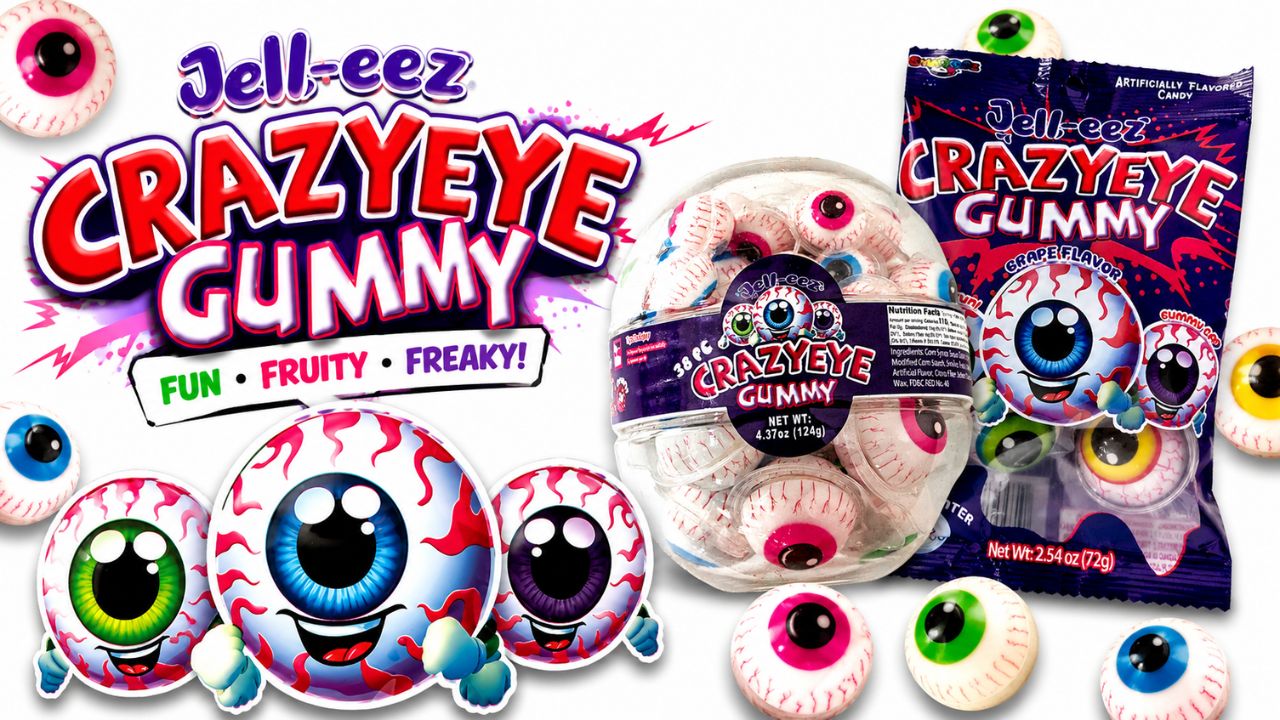
The eye-shaped gummy fruit is unique due to its playful design, colorful presentation, and intricate details. These gummies are designed to resemble real eyes or cartoon eyes, making them popular for parties, themed events, Halloween parties, and fun snack collections. Eye gummy candy gets its distinctive appearance through a combination of carefully chosen ingredients, coloring processes, specially designed molds, and multiple production layers.
The Shape Starts With a Special Mold
The first step in making eye gummy candy is to make the mold. Candy manufacturers use molds with intricate areas for the outside eye, the iris, the pupil and the rest of the visual part. The small details are where it becomes easy to have a recognizable look of an eye. The size and shape of the candy are also influenced by the mold. Some designs appear to be very realistic, others have exaggerated colours and cartoon features.
The mold must be well designed since:
It's more realistic thanks to the little details in the candy
The shapes have various visual effects
Correct molding is used to ensure uniformity between parts
The design has to still ensure the candy is soft and chewy
The mold is prepared and the candy mixture is added in various manners.
How Colors Create the “Eye” Effect
One of the most significant factors for these gummies being so fascinating is their color. Food-grade colours can be utilized to make various portions of the eye gummy candy. The common design might have a white background, a colorful iris and a darker centre.
The colors are generally added in a careful manner, so they stay in their desired location. More than one layer can be cast into the mold, depending on the design. This will create a more detailed look instead of it appearing as one solid colored gummy candy.
Popular color combinations are:
Blue (with black and white)
Dark green, dark brown or black in colour
Purple colored with white accents
Hexagon shape with red and black for spooky designs
Lively and vibrant stripes for fun designs
Colors can really alter the vibe of the final product.
The Role of Gummy Ingredients
The appearance is important, but the texture also affects how the candy feels and looks. Gelling agents, such as gelatin; sweeteners; flavors; food coloring; and other ingredients used to produce the desired texture are common gummy ingredients.
A balanced formula will help the candy retain its shape as soon as it is removed from the mold. If it's too soft, the eye detail may get lost. If it's too firm, the gummy might not have the familiar chewy texture that people are looking for.
The ingredients are thus required to combine to give structure and texture.
Why Layering Makes the Design Stand Out
Another crucial technique that can be used to make intricate gummy designs is layering. Candy makers may not need to fill the entire mold with one mixture, but can add various colors throughout the process.
A lighter layer might be the white part of the eye and a coloured layer for the iris, for instance. Then a darker mixture can be used to make the pupil. Once the layers have set, the gummy has a more detailed look and is multi-colored.
This process must be done accurately as each layer has to be placed in the right position. The timing is also key. One layer may not set properly and the next color may get in the way creating a less distinct pattern.
Flavor Adds Another Dimension
Flavor is an important element of the entire experience, as the appearance attracts the attention first. The gummies that are shaped like discs are fruity or sweet flavored, depending on the type of gummy you are getting.
Flavor profiles can be fruit, such as strawberry, cherry, blue raspberry, apple or mixed fruit. Other colors may sometimes be used to indicate different flavors, although this is not always the case.
The treat's unusual look paired with familiar fruity taste, makes it appealing to those who like playful candy designs.
How Texture Complements the Appearance
The gummy should be both good looking and good tasting. The chewy texture is a result of the formulation, cooking, molding and setting process of the candy mixture. Gummies can then undergo a controlled setting or drying process after the molding.
This enables them to reach their desired consistency, and keeps the design intact. The finished texture can vary from soft and tender to a bit firmer and chewier. It comes out different depending on the recipe and production process.
Why Eye-Shaped Gummies Are Popular
These gummies have an advantage over the normal gummies due to the unusual design. Fun-shaped candy is frequently used for special occasions because it brings a personality to a candy table or special event.
Eye designs are great for:
Halloween parties
Birthday celebrations
Candy buffets
Themed events
Party favors
Fun gift baskets
They are aesthetically pleasing even before you taste them.
Final Thought
The special process of manufacturing eye gummy candy involves a series of meticulously orchestrated steps, such as the use of specialized molds, food-grade colors, layered designs, balanced ingredients, and controlled setting. Every step of the process contributes to making a treat that has a unique appearance and remains soft and chewy, like gummies.
Pastel confections are just as popular as they are fun-shaped, offering candy lovers still more options. The same creativity is evident in the creation of products like unicorn gummy candy, which feature imaginative designs and are visually appealing due to their color.
Comments
Log in or sign up to join the conversation.