

Learn how a Torx screw works, explore different sizes and types, and discover its benefits, applications, and the right screwdriver for each fastener.
How Torx Screws Work: Types, Sizes, Benefits & Applications
When it comes to fastening components securely, choosing the right screw design can make a significant difference. Among the many fastening options available today, the Torx design is widely used in automotive, machinery, electronics, construction, and industrial applications.
Unlike traditional Phillips or slotted screws, this fastening system uses a distinctive six-point star-shaped recess. Its design allows better contact between the driver and fastener, making it suitable for applications that require reliable torque and reduced slipping.
What Is a Torx Screw?
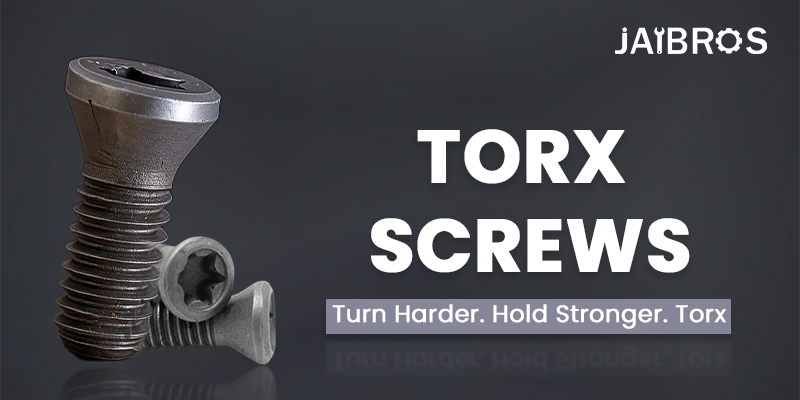
A Torx screw is a fastener featuring a six-point, star-shaped recess in its head. The matching driver fits directly into this recess and transfers rotational force to tighten or loosen the fastener.
The star-shaped design distributes driving force across multiple contact points instead of concentrating it on a few areas. This helps reduce the likelihood of the driver slipping out during installation.
Because of this design, Torx fasteners are commonly found in applications where consistent tightening and reliable fastening are important.
How Does a Torx Screw Work?
The working principle is relatively simple. A matching driver is inserted into the star-shaped recess of the fastener. When the driver is rotated, its six contact points engage with the internal recess and transfer torque.
The geometry provides a secure connection between the driver and fastener. This allows more rotational force to be applied with less risk of damaging the head.
For example, when a conventional Phillips driver is used with excessive force, it may slip and damage the recess. The Torx design reduces this problem because the driver engages more securely with the fastener.
This makes the system particularly useful for assembly operations involving power tools and controlled torque.
Understanding Torx Screw Sizes
Choosing the correct size is essential for proper installation. Torx screw sizes are generally identified using a letter "T" followed by a number, such as T10, T20, T25, T30, or T40.
The number indicates the size of the corresponding recess and driver. Smaller sizes are commonly used for electronics and small components, while larger sizes are frequently found in machinery, vehicles, and industrial equipment.
Using the correct size is important because an incorrectly sized driver may not engage properly and can damage the fastener.
Different Torx Screw Types
There are several Torx screw types designed for different applications. Standard versions are commonly used for general fastening, while security or tamper-resistant versions include additional features that prevent the use of ordinary drivers.
Some common variations include:
Standard Torx fasteners
Security Torx fasteners
Torx countersunk screws
Torx pan-head screws
Torx button-head screws
The correct type depends on the application, installation requirements, material, and level of security needed.
What Is a Torx Screwdriver?
A Torx screwdriver is a hand tool designed specifically to fit the six-point recess. Drivers are available in different sizes to match different fasteners.
Torx drivers can also be found as bits for electric screwdrivers, impact drivers, and power tools. When using a power tool, selecting the correct bit size is particularly important to prevent recess damage.
For professional assembly work, using the correct driver and applying the recommended torque can improve consistency and reduce fastening problems.
Benefits of the Star-Shaped Design
The six-point geometry gives this fastening system several advantages. The increased contact area between the driver and recess helps distribute torque more evenly.
A star head screw can therefore be useful in applications where higher tightening force is required. The design can also reduce cam-out, which occurs when a driver slips out of the fastener during rotation.
Other benefits include:
Better torque transfer
Reduced driver slipping
Lower risk of recess damage
Suitable for automated assembly
Available in many sizes
Useful for industrial applications
These characteristics have made the design popular across many industries.
Where Are Torx Fasteners Used?
Torx fasteners are used in a wide range of applications. Automotive manufacturers use them for various vehicle components, while electronics manufacturers may use smaller versions for compact assemblies.
They are also found in power tools, machinery, appliances, furniture, bicycles, and industrial equipment.
Their ability to handle consistent torque makes them particularly useful in manufacturing and assembly environments where repeatability is important.
Torx vs Phillips: Which Is Better?
Both designs have their own applications, but their driving characteristics are different. Phillips screws are widely available and suitable for many general-purpose applications.
Torx designs generally provide better engagement between the driver and fastener, particularly when higher torque is required. They can also reduce the risk of slipping during installation.
Therefore, the better choice depends on the application, required torque, available tools, and fastening specifications.
How to Choose the Right Torx Fastener
Before purchasing, consider the required size, head style, material, thread specification, and application. Make sure the driver or bit matches the fastener precisely.
For industrial applications, also consider factors such as corrosion resistance, operating conditions, tightening requirements, and expected service life.
Using the correct combination of fastener and driver helps improve installation efficiency and reduces the possibility of damage.
Conclusion
The torx screw design provides a practical fastening solution because its six-point recess allows secure driver engagement and efficient torque transfer. Its wide range of sizes and variations makes it suitable for everything from small electronic components to industrial machinery.
Understanding sizes, types, driver compatibility, and application requirements can help beginners select the right fastening solution. Whether you are working on automotive components, machinery, electronics, or general assembly, choosing the appropriate fastener can improve reliability and installation performance.
Comments
Log in or sign up to join the conversation.