
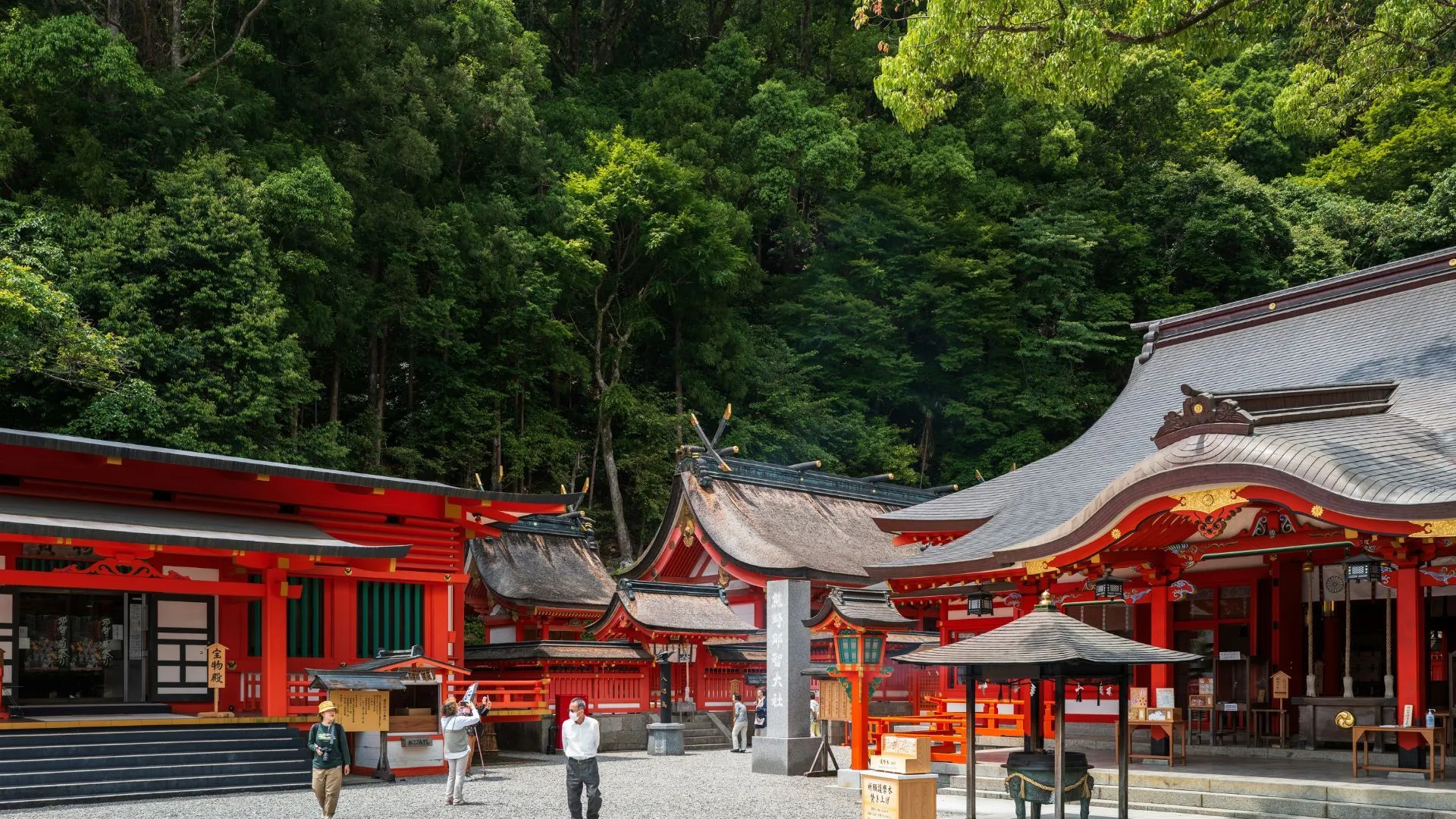
To hike the Kumano Kodo, you must choose a route across Japan’s mountainous Kii Peninsula, book traditional guesthouses well in advance, and prepare for multi-day trekking on ancient, forested stone paths.
The most accessible path for all hikers is the Nakahechi route, which winds past historic shrines and leads directly to the sacred heart of the region.
What Is the Kumano Kodo Trail?
Kumano Kodo Definition: The Kumano Kodo Trail is a network of ancient pilgrimage trails in Japan's Kii Peninsula. Designated as a UNESCO World Heritage site, these paths connect the three grand shrines of Kumano, known collectively as the Kumano Sanzan.
Why Is the Kumano Kodo Important?
The Kumano Kodo has served as a sacred landscape of spiritual healing for over a thousand years. Historically, everyone from emperors to commoners walked these paths to practice nature worship, syncretism (the blending of Shinto and Buddhism), and deep spiritual purification.
Today, it stands as one of only two pilgrimage routes in the world registered as UNESCO World Heritage sites—the other being the Camino de Santiago in Spain. Walking it offers a rare window into unchanged, rural Japanese heritage.
How Does the Kumano Kodo Work?
The trail system is not a single linear path. Instead, it consists of several sub-routes that converge at Kumano Hongu Taisha, the central shrine located in the mountains.
Hikers typically travel from west to east, moving between villages each day. Along the trail, you will stamp a special pilgrimage passport at small Oji shrines to track your progress and claim a "Dual Pilgrim" status if you have also completed the Camino de Santiago.
What Are the Main Kumano Kodo Routes?
Choosing the right trail determines your entire experience. Here is how the primary routes compare:
Route | Difficulty | Key Highlights | Best For |
Nakahechi | Moderate | Well-marked paths, frequent villages, iconic shrines | First-time hikers & solo travelers |
Kohechi | Strenuous | High mountain passes, isolated terrain, rugged peaks | Experienced trekkers |
Ohechi | Moderate | Beautiful coastal views, historic ocean vistas | Ocean lovers seeking fewer crowds |
Iseji | Moderate | Coastal scenery, bamboo groves, stone paths | Cultural enthusiasts |
What Are the Benefits of Hiking It?
Trekking through this sacred forest offers unique rewards:
Spiritual Disconnection: Unplug entirely among towering cedar trees and moss-covered stones.
Authentic Cultural Immersion: Stay in family-run minshuku (traditional guesthouses) and eat locally sourced meals.
Physical Rejuvenation: End each day soaking your sore muscles in natural hot springs (onsen).
What Are the Common Mistakes People Make?
Even seasoned hikers encounter unexpected challenges on these ancient paths.
1.Failing to book accommodation early:Action: 3-6 months out.
The mountain villages have very limited bedding. If you don't book your guesthouses months in advance via the local community bureau, you will have nowhere to sleep.
2.Underestimating the elevation changes:Action: Physical conditioning.
Do not let the word "pilgrimage" fool you. The trails feature steep, relentless stone staircases that can easily strain knees and ankles.
3.Arriving with too much luggage:Action: Use a shuttle service.
Trekking over mountain passes with a full suitcase is impossible. Use local luggage forwarding services to send your main bags ahead to your next destination.
How Can Beginners Get Started?
If you are new to the trail, following a standard four-day itinerary on the Nakahechi route is the safest approach.
Day 1: Kii-Tanabe to Takahara. Take a local bus to the Takijiri-oji trailhead and hike up to the misty mountain village of Takahara.
Day 2: Takahara to Tsugizakura-oji. Trek past beautiful stone carvings and through deep forests to reach your next overnight stay.
Day 3: Tsugizakura-oji to Kumano Hongu Taisha. Walk into the spiritual heart of the trail and explore the magnificent Grand Shrine.
Day 4: Hongu to Nachi Falls. Take a scenic bus or hike the Daimon-zaka staircase to view the iconic pagoda standing in front of Japan’s tallest waterfall.
Expert Tips for Better Results
Pack proper rain gear: The Kii Peninsula is one of the wettest regions in Japan. High-quality waterproof jackets and pack covers are non-negotiable.
Carry cash: Many small mountain villages do not accept credit cards or digital payments. Bring plenty of Japanese Yen for lunches and drinks.
Respect trail etiquette: Bow gently when entering shrine grounds and never step on the middle of the paths, as this space is traditionally reserved for the deities.
Real-World Case Study: The 4-Day Nakahechi Experience
Consider the journey of Sarah, a 32-year-old traveler who tackled the trail with minimal mountain hiking experience:
"I was terrified of getting lost or exhausted, but the Nakahechi route signs were incredibly clear. Staying in tiny villages like Chikatsuyu, eating home-cooked wild boar stew, and soaking in the bubbling waters of Yunomine Onsen made the physical strain of the steep climbs completely worth it. It felt like walking backward through time."
Frequently Asked Questions
When is the best time of year to hike the Kumano Kodo?
Spring (April to May) and autumn (October to November) offer mild temperatures and stunning foliage. Summers are extremely hot, humid, and rainy, while winter can bring snow to the higher passes.
Can you hike the Kumano Kodo without a guide?
Yes, the main Nakahechi route is heavily signposted in both Japanese and English, making self-guided hiking safe and straightforward for independent travelers.
What should I do if accommodations are fully booked?
Look for alternative lodging in larger nearby coastal towns like Tanabe or Katsuura, and use the reliable local bus network to travel to and from the trailheads each day.
Is the Kumano Kodo safe for solo female travelers?
Yes, Japan is incredibly safe, and the trail communities are exceptionally welcoming. Solo hikers frequently walk the paths without safety concerns.
How long does it take to walk the entire trail?
While individual sections take just a few hours, a standard multi-day trek on the popular Nakahechi route usually spans four to five days.
Conclusion
The Kumano Kodo is far more than a simple mountain hike; it is an unforgettable physical and spiritual journey deep into the historic soul of rural Japan. By picking the right route, securing your accommodations early, and packing for the weather, you ensure a seamless, transformative adventure.
Comments
Log in or sign up to join the conversation.