
Introduction
Pharmaceutical companies everywhere need to make sure their bottle caps are sealed properly. This is so the medicine stays safe for people who take it and nobody can mess with the bottles. Choosing a torque tester supplier in South Africa is a very important decision. You have to get this right because it affects the companies and the people who use their products. Pharmaceutical companies need to pick a “torque tester supplier South Africa” that helps them keep their products safe.
Torque testers guarantee bottle caps are sealed properly. Not all suppliers in South Africa are the same. For manufacturers, it is very important to work with a reliable torque tester supplier in South Africa. This is because they need to make sure their products are always of high quality. Working with a torque tester supplier in South Africa helps them do this.
Purpose of a Torque Tester
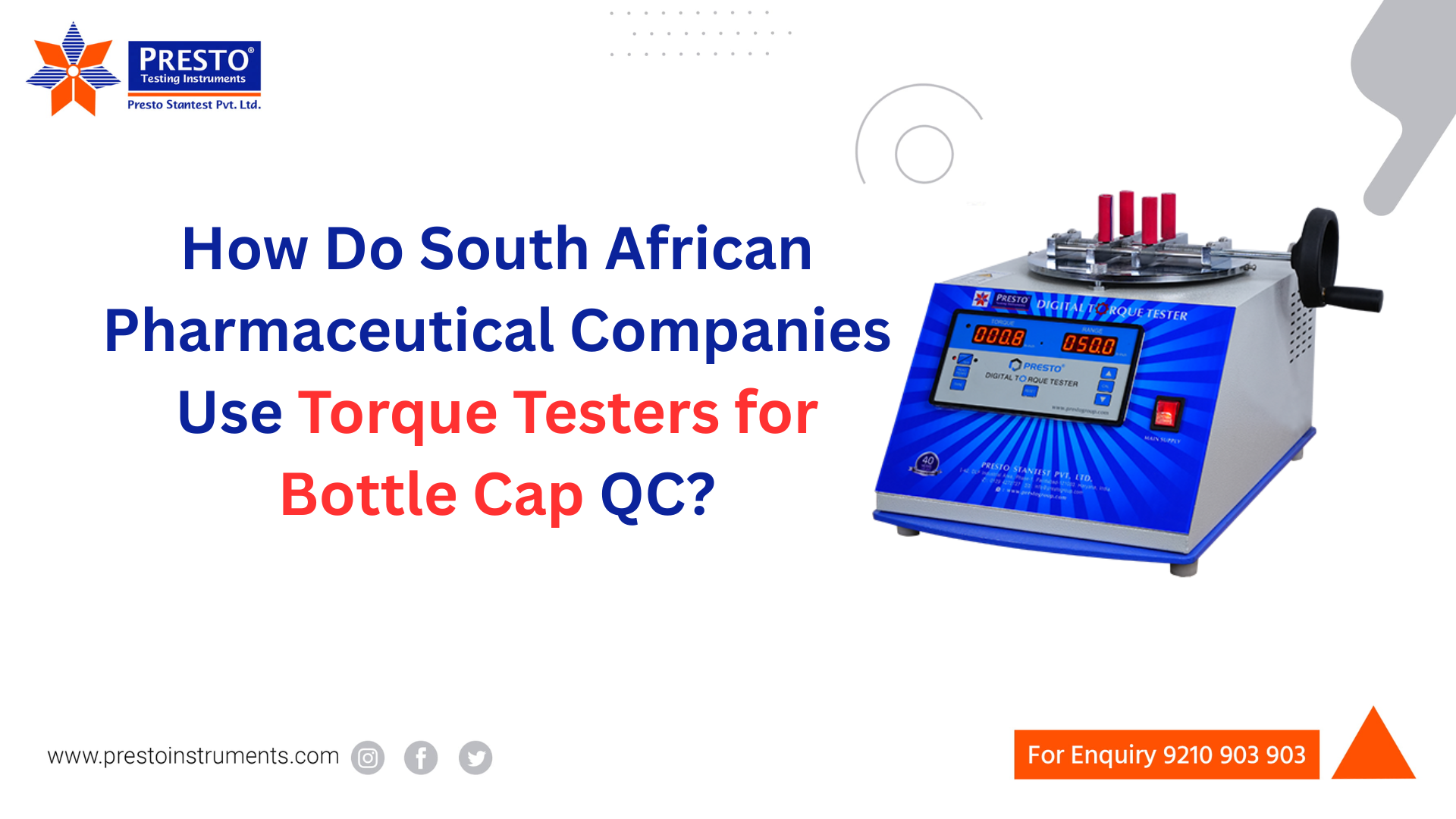
A torque tester is used to see how much force you need to open or close a bottle cap. This is really important for the labs that check the quality of these things. The torque tester helps them make sure that the packaging for medicine is safe for people to use and that it is also easy to open. The people who make medicine packaging use the torque tester to check the bottle caps.
Checking cap application force
The company wants the bottle cap to be easy to open and close. They make sure it is not too hard to open or too loose when it is closed. The company wants a cap that's just right.
Safety and Easy to Use
A bottle cap torque tester protects the medication inside. This is important for use, especially for tablets, capsules, and liquid medications. The caps and closures make sure medications stay safe. They are also easy to use every day.
Identifying under- or over-tightening
A digital torque tester makes sure caps are tightened right. The tester ensures caps are not too tight or too loose. This is a big deal because it makes the products a lot safer for the patients who use them.
How a digital torque tester works (pharmaceutical and cosmetics)
A torque tester for bottles is something that we use to see how tight the lids are on bottles and other things like that.
It is really important when we talk about PET packaging. Food and drink bottles come under this. These things need to stay fresh and safe when stored so one can move them around. Here is how it works:
Securing the sample
The bottle is held tight in a holder. This holder can be adjusted to fit bottles of different sizes. The holder keeps the bottle in place so the bottle does not fall over when you are using it for testing.
Applying rotational force
The tester turns the cap to check how much force is needed to either put on or take off the cap. The tester checks how much twisting force is required to apply or remove the cap.
Capturing the reading
A sensor records the torque and shows it on the screen. The sensor gives us the torque instantly.
Recording peak torque
The tester keeps the value in memory so we can look at it again. The tester stores this peak value for the tester to review later.
Storing multiple readings
You can save sample readings so you can look at the sample readings together and compare them. This way you can compare the sample readings easily.
Preventing overtightening
A safety lock pin is really important because it helps stop much force from being used. This is good because it prevents things from getting broken. The safety lock pin is a help when it comes to keeping things safe. It does this by stopping torque from being applied to something. The safety lock pin is a thing to have when you are working with tools or machines.
In-house calibration
Doing calibration on a regular basis helps keep the measurements accurate and consistent every time you take them. It is crucial because you can rely on the measurements from your equipment over time. Regular calibration guarantees that your measurements are always accurate and consistent.
How different industries benefit from this:
The pharmaceutical industry really needs a torque tester for medication bottle caps. This is so the caps are tightly sealed. This helps prevent contamination and tampering of the medication. At the time, the torque tester makes sure the caps are not too tight so patients can easily open the medication bottle caps. The pharmaceutical industry uses the torque tester to ensure the medication bottle caps are just right.
Cosmetics are something we all use. When it comes to cosmetics, we need to make sure that the caps on lotions and creams and other liquid products are secure. This means they should not leak when they are being shipped. At the same time, cosmetics should be easy for people to use. So cosmetics companies have to check that the caps on their products are just right. They have to be secure enough to prevent leakage during shipping. Still easy to open for people who buy cosmetics.
Why Choose the Right Torque Tester Supplier in South Africa
Choosing the supplier is not just about the machine. It is about getting results that're consistent and that you can really count on for every batch of something you do. If you pick any supplier, you might get a machine that gives you wrong readings. You might also get support after you buy the machine. The machine itself might not be good enough to handle the work you do in the lab every day. You need a machine that will give you results for every batch of something you do. The right supplier is important for the machine and for the results you get.
Accuracy
A digital torque tester gives us repeatable readings every time we use it. This is important because even tiny changes in torque can be a deal. For example, it can affect whether a medication is safe for a patient or if a food is still good to eat after a while. A pharmaceutical torque tester helps us get the results every time, which is really important when we are talking about digital torque testers and the work they do.
Compliance
Testers follow the rules that everyone agrees on, like ASTM D3474 and ASTM D2063, so the results are okay with the people who check things and the government during inspections. In South Africa, the packaging of medicine also has to be looked at by groups like SAHPRA, which is the South African Health Products Regulatory Authority, so it is really important to have torque data that follows the standards for easy audits and for people to say yes to products.
Industry range
This thing is good for different uses, like bottles that are made of plastic or glass that hold medicine containers, for makeup, and special lids that kids cannot open.
Wide capacity range
Since pharmaceutical bottles come in sizes and have various cap types, a good bottle cap torque tester manufacturer should provide many torque ranges. This way, they can handle vials and big liquid medication bottles.
If you are looking for a torque tester for pharmaceutical bottles in South Africa or if you are comparing prices of torque testers in South Africa, it is best to work with a supplier who has experience. They can give you results that meet the required standards.
Who Uses Torque Testers in South Africa?
Contract packaging companies
They check the bottle caps to make sure they are tightened right. This is called bottle cap torque testing. They do this before the products are sent to distributors and pharmacies. The contract packaging companies test the bottle caps to make sure they are not too loose or too tight. This is all part of the work that contract packaging companies do for pharmaceutical brands.
Cosmetics and personal care companies
Cosmetics and personal care companies need to make sure the products they sell are safe and easy to use. They use a torque tester for bottles to check if the closures on these plastic bottles are doing their job. The closures should protect the cosmetics and personal care products inside the plastic bottles. At the same time, the closures should be easy and safe for people to open and close the plastic bottles.
Third-party and accredited testing laboratories
They use a torque testing machine to check the bottle cap torque for pharmaceutical and packaging companies. This machine helps them give official proof that the torque is correct.
You need to make sure that the bottle cap tester or the company that supplies packaging testing equipment in South Africa follows the rules that are set by standards like ASTM D3474 and ASTM D2063. This is really important when you are looking at options or comparing prices for bottle cap testers or packaging testing equipment.
FAQs
1. What's the difference between a manual and digital torque tester?
A digital torque tester is really good at giving readings every time. It also automatically logs data for quality records. The way the operator uses the tester can be different each time, which can introduce inconsistency in the results. This means that a digital torque tester is better than a manual torque tester when it comes to getting consistent and accurate readings.
2. Do pharmaceutical companies need different torque testers for plastic and glass bottles?
Yes. A torque tester for bottles and a torque tester for glass bottles need different ways to hold the bottles in place. This is because the amount of force needed to turn the cap on a bottle is different from the force needed to turn the cap on a glass bottle. The type of bottle, the way the threads are designed, and the kind of cap used all affect how much force is required. So a torque tester for bottles and a torque tester for glass bottles have to be set up differently.
3. What is the average torque tester price in South Africa?
It depends on the torque range. It also depends on the features you want. What you plan to use it for is important too. So you should call the Presto Instruments team at +91 9210 903 903 to know the price.
4. Can a torque tester be used for child-resistant caps?
Yes. Torque testers can be set up to test closures that are hard for kids to open. This checks if they meet the force limits needed to be certified as child-resistant. At the time, these closures should still be easy for grown-ups to open.
Comments
Log in or sign up to join the conversation.