

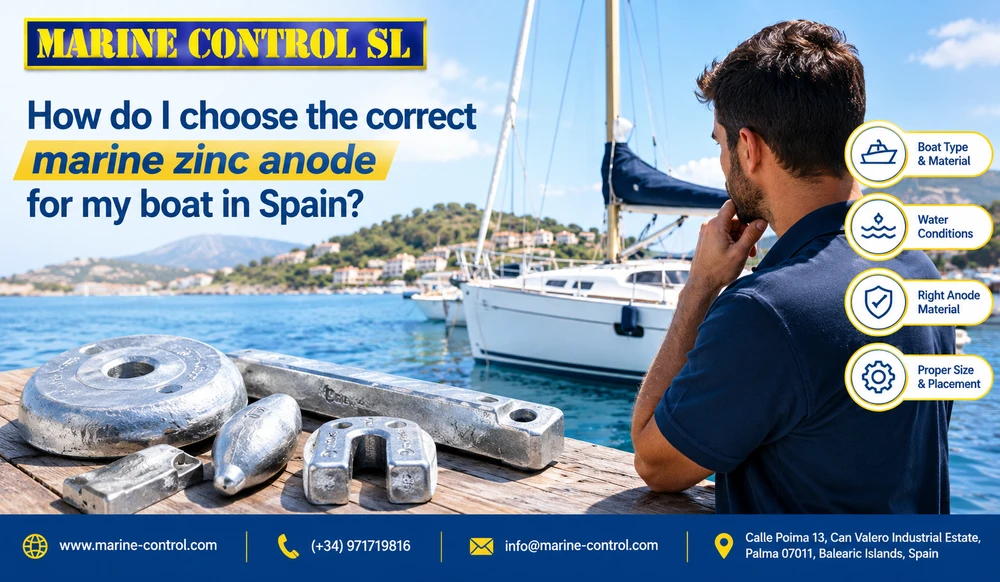
Choosing the right marine zinc anodes for your boat in Spain starts with a few simple checks. You need to know what water your boat uses, which metal parts need protection, and what size and shape of anode you need. Marine Control SL in Spain supplies Zinc Anodes for Yachts for boats that need help against underwater corrosion. The right anode slowly wears away and helps protect important boat parts such as propellers, shafts, rudders, and other metal parts.
1. Know Where Your Boat Is Used
The first thing to check while choosing Zinc Anodes for Yachts is the type of water around your boat. This is very important because anodes do not work in the same way in every type of water. Many boats in Spain are used in salt water. Boats around the Mediterranean coast and Atlantic coast are often exposed to salt water for long periods. Zinc is commonly used for many marine systems in salt water.
Fresh water is different. Zinc may not be the best choice for every fresh-water boat. Aluminum or magnesium anodes can be used for some boats, depending on the boat design and the metal parts that need protection. If your boat moves between salt water and fresh water, you should check the boat maker's instructions before choosing an anode.
A simple guide is:
Salt water: zinc is commonly used.
Fresh water: another anode material may be better.
Mixed water: check the boat and engine instructions.
Do not choose an anode just because it looks similar to your old one. The water type must also match.
2. Check the Parts Under Your Boat
Next, look at the metal parts that stay under the water. These parts can slowly be damaged by corrosion.
Common underwater parts include:
Propeller
Propeller shaft
Rudder
Trim tabs
Outdrive
Metal fittings
Other underwater equipment
When different metals are in water, they can create an electrical reaction. This can cause galvanic corrosion. A sacrificial anode is made to wear away first and help protect other metal parts.
For example, a boat may have a stainless-steel shaft and a metal propeller. The correct anode must work with that complete system.
This is why boat length alone is not enough to choose an anode. Two boats with the same length can need different anodes because their engines, shafts, propellers, and underwater metals can be different.
3. Choose the Correct Shape and Size
Anodes come in different shapes and sizes. Each shape is made for a different job.
A shaft anode is made to fit around a propeller shaft. A hull anode is fixed to the hull. A trim tab anode is made for a trim tab. These parts are not the same, so their anodes are not the same either.
Before buying, check these details:
Boat make and model
Engine or drive model
Propeller shaft size
Old anode size
Mounting hole size
Anode shape
Manufacturer part number
The old anode can be very helpful. If it has a part number, use the number to find the same approved replacement. For example, if your propeller shaft is 50 mm wide, you need a shaft anode that is made to fit a 50 mm shaft. A loose anode can move or make poor contact, while the wrong size may not protect the system correctly. The anode should also have enough surface area for the equipment it protects. Always follow the equipment maker's instructions when available.
4. Make Sure the Anode Has Good Contact
A correct anode still needs good contact to work properly. The area where the anode touches the metal should be clean. Dirt, rust, heavy paint, or a poor connection can cause problems. The anode should be fixed tightly and should not move around. Check the bolts, mounting area, and contact points during regular boat service. Never paint the working surface of the anode. Paint can block contact between the anode and water and can reduce its ability to work.
Also avoid changing the anode material without checking the boat manufacturer's advice. The correct material depends on the water, boat system, and metals being protected. Good installation is just as important as buying the correct anode.
5. Check Your Anode Regularly
An anode is supposed to wear away. This is normal and shows that it is being used. However, you should not wait until the anode is almost gone before checking it. Look at it during regular boat maintenance, especially when the boat is taken out of the water.
Check for:
Heavy wear
Cracks
Loose mounting
Broken parts
Uneven wear
Dirt or marine growth
If the anode is wearing very quickly, do not simply install another one and ignore the problem. Very fast wear can sometimes be linked to electrical problems, stray current, poor bonding, or local water conditions.
A marine professional can test the boat and find the cause.
Key Points to Remember
Check the water where your boat is used.
Look at all important underwater metal parts.
Choose the correct anode material.
Match the anode shape to the boat part.
Check the correct size before buying.
Keep the contact area clean.
Do not paint the working surface.
Make sure the anode is fixed tightly.
Inspect the anode during regular service.
Check the boat if the anode wears unusually fast.
FAQs
What do marine zinc anodes do?
They help protect underwater metal parts from corrosion. The anode slowly wears away while helping protect more valuable metal parts on the boat.
Are zinc anodes good for boats in Spain?
They can be suitable for many boats that operate in salt water. The correct choice depends on the boat, water type, underwater metals, and manufacturer instructions.
How do I find the right anode size?
Check the boat manual, engine manual, old anode, or manufacturer part number. For a shaft anode, measure the shaft and choose the correct matching size.
How often should I check my anode?
Check it during regular boat service and whenever the boat comes out of the water. Boats in different waters can have very different anode wear rates.
Can I paint my anode?
No. Do not paint the working part of the anode. Paint can stop proper contact and reduce its ability to protect the boat.
What if my anode disappears very quickly?
Fast wear can mean there is another problem. Electrical current, poor bonding, water conditions, or an incorrect setup can cause unusual wear. Have the system checked by a marine professional.
Should I use the biggest anode I can find?
No. Bigger does not always mean better. The anode should have the correct size, shape, material, and surface area for your boat system.
What is the easiest way to choose an anode?
Start with four things: water type, boat model, underwater metals, and old anode size. Then check the manufacturer's recommended part. This simple process can help you choose the right marine zinc anodes for your boat and keep important underwater parts better protected.
Comments
Log in or sign up to join the conversation.