

Image Source: Unsplash
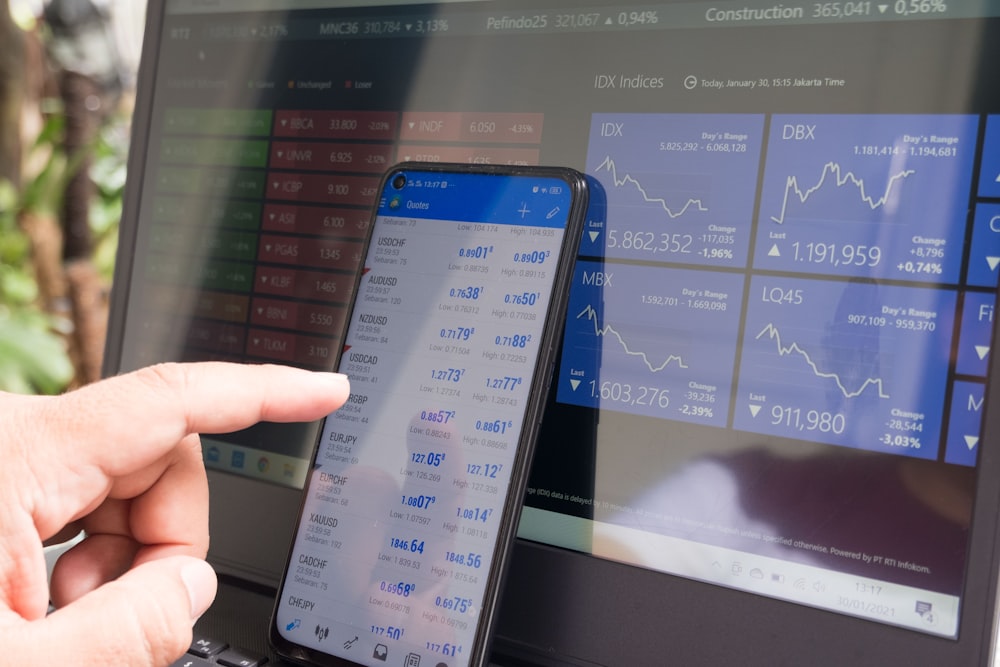
In recent years, the investment industry has undergone significant transformation, thanks to technological advancements, access to information and the emergence of commission-free trading platforms.
While the investment world was previously limited to particularly affluent individuals and institutional investors, the ways in which people invest their money have changed dramatically, allowing a much wider range of investors to start trading with much less capital than before.
The growing influence of retail investors
By removing the barriers to entry, a new wave of investors has emerged – many of whom have quickly become integral to the investment industry, but it wasn’t until the start of the pandemic that retail trading and investing started to boom.
With more time on their hands to educate themselves on the world of investment, and more capital to play with due to national lockdowns more nonprofessional investors were able to enter the markets.
It is estimated that retail investors contributed just 10% of the world’s daily equity share volumes back in 2010. 11 years later, however, this figure has more than doubled to 23%. According to the World Economic Forum, retail investors now command more than half of the world’s assets, and by 2030, this number is set to surpass 61%. So, it’s clear that the influence of retail investors will continue its upwards trajectory in the coming years – but what does this mean for the markets?
Arguably, this means greater volatility for individual stocks, as retail investors have demonstrated that they now have the ability to drastically influence the value of a company’s shares. For example, when hedge funds and institutional investors decided to short GameStop (GME) shares in January 2021, retail investors joined forces to boost the video game company’s share price from $19.94 on the 11th of January to $347.51 on the 27th.
Clearly, retail investors could see that the company was being undervalued by their institutional counterparts and saw the potential for big returns if they were able to force the short sellers to buy GameStop shares back at a higher price.
Stocks have benefited from the rise of retail investments
More generally, the growing influence of retail investors and commission-free platforms have benefited the stock markets. Indeed, the recovery of the stock markets post-pandemic was largely driven by this trend according to some analysts.
When the markets crashed in March 2020, retail investors contributed around 20% of the trading volume in the FTSE All Share as the markets bounced back in June and July, with 60% of their trades being buy orders. Despite the downturn in the stock markets, therefore, retail investors continued to support their stock market assets, demonstrating a preference for "buy the dip" strategies.
It has been observed that retail investors often tend to focus on the performance of individual stocks and have a preference for managing a collection of shares, rather than putting their money into indices. This is corroborated by BIS research, which shows that between 2017 and 2021, turnover for S&P 500 ETFs remained unchanged, whereas turnover for individual stocks consistently rose.
Finally, stocks’ performance has been greatly influenced by news events, social media announcements, and even celebrity actions. A prime example of this is the impact of Elon Musk's Twitter takeover on Tesla stocks (NASDAQ: TSLA), which led to a bear market as concerns emerged that dividing his attention between the two companies would have a negative impact on their value. Furthermore, BIS reported that a company's valuation unexpectedly soared when retail investors misinterpreted a social media post as an endorsement of the stock. This trend will be fascinating to observe as trading becomes more common in the years ahead.
Concluding thoughts
If the past few years are any indication, commission-free trading platforms will continue to disrupt the world of investment in the coming months and years. By removing the barriers to entry, they have already influenced the composition of the sector, and the rise of retail investors and their non-traditional ways of investing will continue to shape the markets to a greater extent. However, despite the numerous opportunities that these platforms present to new investors, its crucial for prospective investors to understand the potential risks associated with investing and choose a platform provider that will give them the certainty and security to invest with confidence.
Comments
Log in or sign up to join the conversation.