
Discover how CBN cutting tools improve machining accuracy, surface finish, tool life, and productivity in modern manufacturing and precision engineering.
What Are CBN Cutting Tools and How Do They Improve Machining Accuracy?
Precision is the foundation of the modern manufacturing process. No matter whether it is a part used in the automobile industry, aerospace industry, or any other industrial sector, every item manufactured in today’s world requires accurate dimensions to be able to function properly. Otherwise, this would lead to assembly problems, poor performance of products, and higher costs in the production process.
CBN machining is one of the most efficient techniques in the field. Being characterized by excellent hardness and high wear-resistance, CBN tools are becoming extremely popular in the context of rising standards of today’s market and ever-increasing productivity needs.
What Are CBN Cutting Tools?
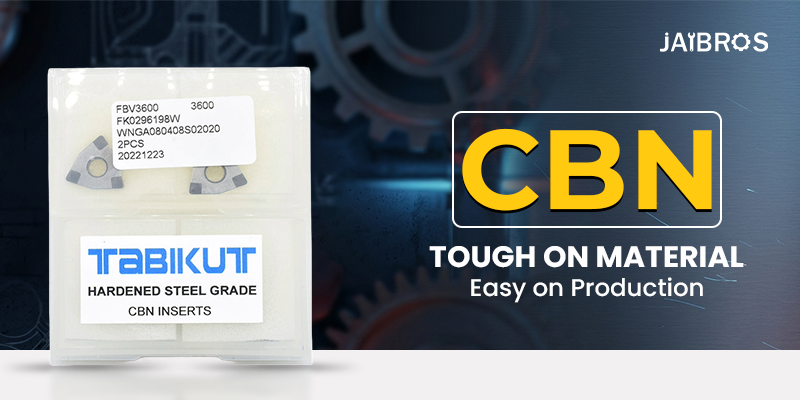
CBN stands for Cubic Boron Nitride. CBN is an artificial substance used in machining hardened steels and cast irons. In terms of hardness, CBN is among the most durable substances that can be applied in production and only loses to diamonds. Due to its peculiarities, CBN tools are actively used in many industrial applications where normal cutting tools would fail to operate properly.
CBN cutting tools are manufactured precisely for processing steel alloys, cast iron, and other metals that are hard to cut with normal cutting devices. The durability of these products and their capacity for resisting wear and tear make them highly efficient for machining applications.
In contrast to regular cutting tools that cannot work well in challenging conditions, CBN cutting tools ensure steady work.
Key Characteristics of CBN Technology
Exceptional hardness
High resistance to wear
Excellent thermal stability
Long service life
Reliable cutting performance
Superior dimensional consistency
These characteristics make CBN a preferred choice for industries that require high levels of accuracy and efficiency.
What Makes CBN Different from Traditional Cutting Tools?
Cutting tools have proven useful in most cases in the process of machining. However, the tools tend to suffer certain limitations especially when processing hardened metals. With increased temperature and tool wear, the accuracy that is expected is not maintained. As a result, there are poor measurements, poor finishes, and increased costs of production.
CBN Tool Materials are designed to work well under such challenging circumstances. The tool remains hard regardless of the amount of temperature and load used on it.
Higher Hardness
CBN is significantly harder than many conventional cutting materials. This hardness helps the cutting edge remain sharp for longer periods, reducing the chances of dimensional errors.
Better Heat Resistance
High temperatures can negatively affect machining performance. CBN maintains its cutting ability even under elevated temperatures, helping ensure stable machining conditions.
Longer Tool Life
Because of its superior wear resistance, CBN tooling typically lasts longer than many traditional alternatives. Longer tool life means fewer interruptions and more efficient production.
Consistent Performance
One of the biggest advantages of CBN technology is its ability to deliver consistent results throughout long machining runs. This consistency is critical when producing precision components.
How Do CBN Cutting Tools Work?
The working of CBN tooling is almost alike other cutting tools; however, due to the special characteristics of the material, it performs better during tough conditions in machining operations.
When the tool comes in contact with the part being machined, it cuts off the material using controlled cutting. In this process, a lot of heat and pressure are generated. While other tools may start to wear down quickly under such conditions, CBN will remain efficient in its performance.
Basic Working Process
The cutting edge engages with the workpiece.
Material is removed in a controlled manner.
Heat generated during cutting is managed effectively.
The cutting edge remains sharp and stable.
Accurate dimensions are maintained throughout production.
This ability to maintain stability during machining is one of the main reasons CBN technology is associated with high precision.
How Do CBN Cutting Tools Improve Machining Accuracy?
1. Better Dimensional Control
Machining accuracy depends heavily on the condition of the cutting edge. As tools wear, dimensional variations become more common.
Because CBN cutting tools resist wear exceptionally well, they help maintain consistent dimensions throughout machining operations. This allows manufacturers to produce parts that remain within specified tolerances.
Benefits include:
Improved dimensional consistency
Better tolerance control
Reduced measurement variations
Enhanced production reliability
2. Superior Surface Finish
Surface finish plays an important role in both appearance and functionality. Poor surface quality may require additional finishing operations, increasing production time and cost.
CBN tooling produces cleaner and smoother cuts because its cutting edge remains stable throughout the machining process.
Advantages include:
Improved surface quality
Reduced finishing requirements
Better component performance
Enhanced product appearance
3. Reduced Tool Wear
Tool wear is one of the leading causes of machining inaccuracies. As the cutting edge deteriorates, machining quality begins to decline.
The exceptional wear resistance of CBN allows manufacturers to maintain cutting performance for longer periods.
This results in:
Consistent machining quality
Fewer tool changes
Reduced production interruptions
Improved operational efficiency
4. Lower Vibration Levels
Vibration during machining can lead to dimensional errors and poor surface finish. Stable cutting conditions are essential for maintaining precision.
CBN technology helps reduce vibration by maintaining a strong and consistent cutting edge throughout the machining process.
Benefits include:
Better dimensional stability
Reduced chatter marks
Improved machine performance
Higher machining accuracy
5. Consistent Results During Long Production Runs
Many manufacturers operate high-volume production lines where maintaining accuracy over thousands of components is critical.
CBN cutting tools continue delivering reliable performance even during extended machining cycles. Their resistance to wear and heat helps ensure consistent quality from the first component to the last.
This consistency helps reduce:
Scrap rates
Rework costs
Production delays
Quality-related issues
Applications of CBN Cutting Tools
CBN technology is widely used across industries that require precision machining of hard materials.
Automotive Industry
Common applications include:
Transmission gears
Bearing components
Engine parts
Drive train components
Aerospace Industry
Manufacturers use CBN tooling for:
Landing gear components
Hardened structural parts
Aerospace assemblies
High-performance mechanical components
Tool and Die Manufacturing
Toolmakers benefit from:
Improved machining accuracy
Better surface finish
Reduced machining time
Increased productivity
Heavy Engineering
Heavy machinery manufacturers use CBN tooling to machine wear-resistant components that require high precision and durability.
Types of CBN Inserts Used in Machining
Different machining applications require different insert configurations.
Brazed CBN Inserts
These inserts are permanently attached to the tool body and are commonly used in precision machining applications.
Tipped CBN Inserts
These inserts offer flexibility and are suitable for a variety of machining operations.
Solid CBN Inserts
Among the most durable options available are solid cbn inserts, which provide outstanding wear resistance and excellent performance when machining hardened materials.
Their benefits include:
Extended tool life
Improved machining stability
Better dimensional accuracy
Consistent cutting performance
Factors to Consider Before Choosing CBN Tools
Selecting the right tooling solution is important for achieving optimal results.
Workpiece Material
CBN performs best on:
Hardened steel
Cast iron
Powder metallurgy materials
High-hardness alloys
Cutting Conditions
Manufacturers should evaluate:
Cutting speed
Feed rate
Depth of cut
Production requirements
Machine Stability
A rigid machine setup helps maximize machining accuracy and tool performance.
Quality Requirements
The desired surface finish and dimensional tolerances should also influence tool selection.
Benefits of Using CBN Technology in Modern Manufacturing
Manufacturers continue adopting CBN technology because it provides several operational advantages.
Key Benefits
Higher machining accuracy
Improved surface finish
Longer tool life
Reduced downtime
Greater productivity
Better process stability
Lower manufacturing costs
Many manufacturers also integrate monitoring systems with every cnc tool used in production to further improve process control and efficiency.
Conclusion
Precision machining necessitates tooling options that will ensure consistent and accurate operations. The reason why CBN machining tools are now considered crucial within manufacturing is because of their superior hardness, wear-resistance, and heat stability features. By ensuring sharp cutting edges, these tools help enhance dimensional accuracies and machining efficiency. Through the application of this technology in automotive, aerospace, tool & die making, among other industries, the quality machining performance has continued to improve significantly. As more developments happen within the manufacturing sector, there will be an increased need for efficient tooling and machining operations. At Jaibros, we have the right industrial tooling solutions for your business.
FAQs
1. What are CBN cutting tools mainly used for?
They are primarily used for machining hardened steel, cast iron, and other difficult-to-machine materials with high precision.
2. Why are CBN tools important for machining accuracy?
Their excellent wear resistance helps maintain a sharp cutting edge, resulting in consistent dimensions and better surface quality.
3. Can CBN tools reduce production costs?
Yes, their long tool life and stable performance help reduce downtime, tool replacement costs, and scrap rates.
4. Which industries commonly use CBN tooling?
Automotive, aerospace, heavy engineering, and tool and die manufacturing industries commonly use CBN technology.
5. Are CBN tools suitable for high-speed machining?
Yes, their exceptional thermal stability and wear resistance make them highly effective for many high-speed machining applications.
Comments
Log in or sign up to join the conversation.