
How can advanced metal materials help manufacturers produce stronger and more reliable components? As additive manufacturing continues to evolve, industries are looking for materials that can withstand demanding mechanical, thermal, and environmental conditions. 3d printing nickel powders provides an effective approach for producing specialized components with excellent strength, corrosion resistance, thermal stability, and durability. Nickel-based materials are increasingly relevant to aerospace, energy, automotive, industrial, and other engineering applications where material performance is critical.
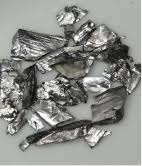
What Makes Nickel Powders Valuable for Additive Manufacturing?
Nickel and nickel-based alloys are known for their ability to maintain useful mechanical properties under challenging operating conditions. They can provide resistance to high temperatures, oxidation, and corrosion, making them suitable for applications where conventional materials may have limitations.
When nickel alloys are manufactured in powder form, they can be processed using compatible metal additive manufacturing technologies. The quality and consistency of the powder are important because characteristics such as particle size, morphology, flowability, and chemical composition can affect the printing process and final component performance.
For manufacturers, selecting a suitable powder is therefore an important part of developing a reliable additive manufacturing workflow.
How Does Nickel Powder Work in Metal 3D Printing?
Metal 3D printing generally creates components layer by layer from a digital design. In powder-based processes, an energy source selectively melts or fuses material to form each layer. Repeating this process produces a complete three-dimensional component.
Nickel powders can be used in suitable additive manufacturing systems to create complex parts with detailed geometries. This approach can reduce the need for traditional tooling and provide engineers with greater design freedom.
Manufacturers can explore lightweight structures, internal channels, intricate features, and component consolidation. These capabilities can be particularly useful for industries producing specialized or performance-critical parts.
Which Properties Should Quality Nickel Powders Provide?
What should manufacturers look for when selecting nickel powder? Several material characteristics can influence additive manufacturing performance.
Consistent Particle Size
Particle size distribution can affect powder spreading, packing behavior, and processing stability. Consistent particles can help support predictable layer formation.
Excellent Flowability
Powder flowability influences how effectively material can be transported and spread across the build area. Suitable flow characteristics can contribute to uniform powder layers.
Controlled Chemical Composition
The composition of a nickel alloy determines many of its physical and mechanical properties. Manufacturers should ensure that powder specifications match the intended application.
Suitable Particle Morphology
Particle shape and surface characteristics can affect powder handling and processing. Carefully produced powders can provide more consistent behavior during manufacturing.
Where Can Nickel-Based 3D Printing Be Used?
Could nickel-based materials support some of the most demanding industrial applications? Their combination of performance characteristics makes them valuable across several sectors.
Aerospace
Aerospace components can experience high temperatures, mechanical loads, and corrosive environments. Nickel-based alloys can be suitable for selected components where heat resistance and durability are important.
Energy
Power-generation and energy systems often require materials capable of performing under elevated temperatures and challenging environmental conditions. Nickel alloys can support applications where thermal and corrosion resistance are essential.
Automotive
Automotive manufacturers are adopting additive manufacturing for prototypes, specialized components, tooling, and performance-oriented applications. Nickel materials can be considered when strength and thermal performance are required.
Industrial Engineering
Industrial equipment often operates under significant mechanical, thermal, or chemical stresses. Nickel-based materials can help engineers develop durable components designed for demanding environments.
How Can Nickel Powders Support Better Component Design?
One of the major advantages of additive manufacturing is design flexibility. Engineers are not always restricted to the geometric limitations associated with conventional machining and manufacturing processes.
Using suitable nickel-based powder materials, designers can develop complex structures and optimize components for specific applications. Part consolidation can also reduce the number of individual components required in certain assemblies.
Additionally, additive manufacturing can produce components closer to their final geometry, potentially reducing machining requirements and material waste in suitable applications.
What Should Manufacturers Consider Before Selecting Nickel Powder?
Choosing the correct material requires an understanding of both the application and the manufacturing process. Engineers should consider the required mechanical properties, operating temperature, corrosion environment, additive manufacturing technology, and post-processing requirements.
Powder specifications should also be reviewed carefully. Information about particle size distribution, chemical composition, morphology, flowability, and quality-control procedures can help manufacturers make informed purchasing decisions.
Working with an experienced metal material supplier can further support material selection and process development.
Frequently Asked Questions
What are nickel powders used for?
Nickel powders are used in various advanced manufacturing applications where properties such as strength, corrosion resistance, thermal stability, and durability are required.
Can nickel powder be used for metal 3D printing?
Yes. Suitable nickel and nickel-based alloy powders can be processed with compatible metal additive manufacturing technologies.
Why is powder quality important?
Powder characteristics can influence layer formation, melting behavior, process consistency, and the quality of the final component.
Which industries use nickel-based additive manufacturing?
Aerospace, energy, automotive, industrial engineering, and other sectors can use nickel-based materials for demanding applications.
What factors should buyers evaluate?
Important factors include chemical composition, particle size distribution, morphology, flowability, quality consistency, manufacturing compatibility, and application requirements.
Conclusion
Can advanced nickel materials help shape the future of high-performance manufacturing? As demand increases for durable components capable of operating in challenging environments, 3d printing nickel powders offers manufacturers opportunities to produce complex and performance-focused parts. With continued innovation in powder engineering, alloy development, and additive manufacturing technologies, nickel-based materials can remain an important solution for aerospace, energy, automotive, and industrial applications.
Comments
Log in or sign up to join the conversation.