
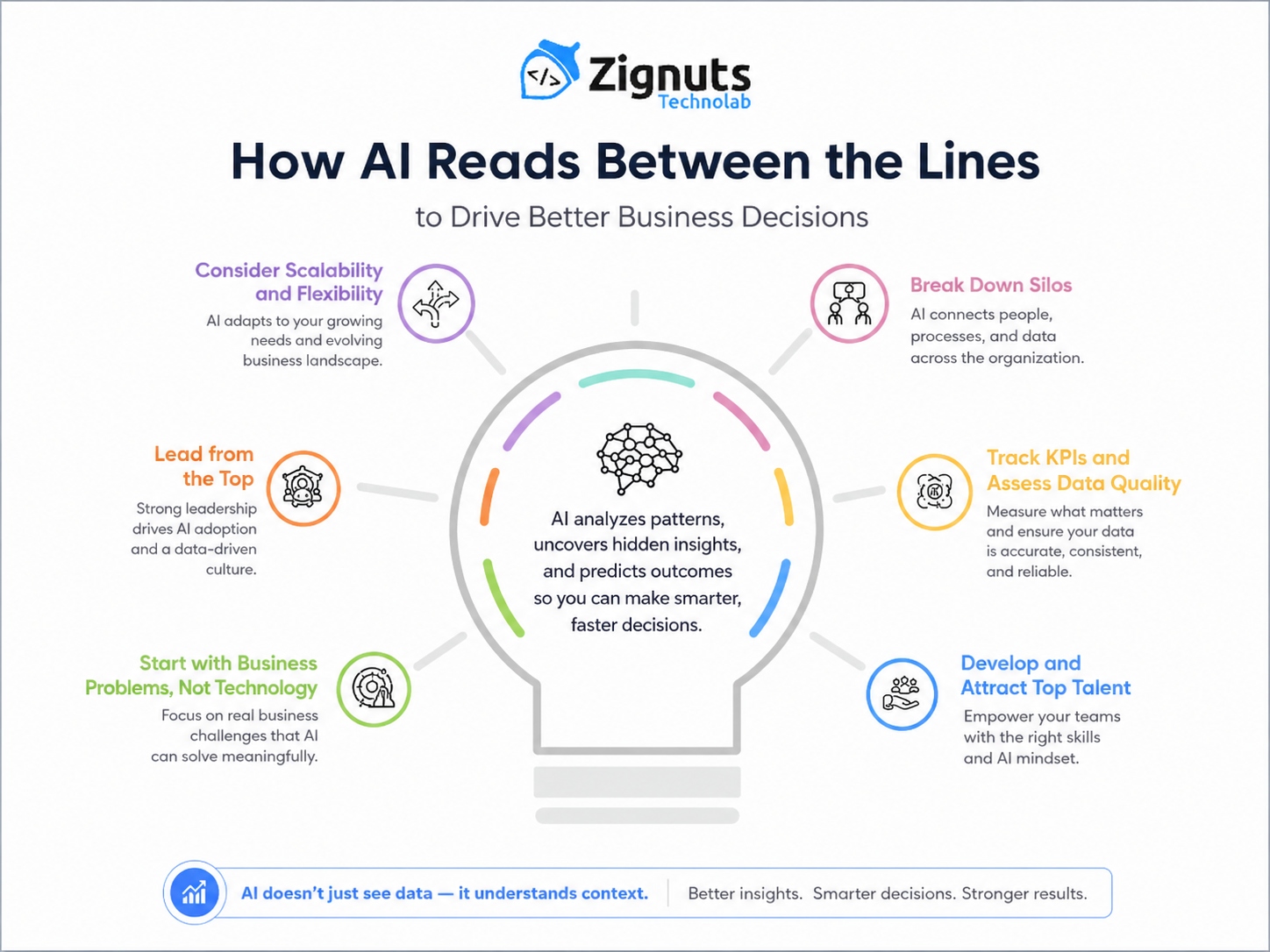
Most enterprises are drowning in information yet starving for actionable insights. Over the last decade, organizations spent millions building vast data lakes, believing that centralizing information would automatically clarify decision-making. The reality has been far different. While corporate databases grew exponentially, the actual velocity of strategic execution remained constrained by human cognitive bandwidth. Executives do not suffer from a lack of reports; they suffer from a lack of synthesized truth.
The fundamental flaw in early enterprise digital transformation strategy was the assumption that data availability equals data utility. The vast majority of corporate knowledge lives in the messy, unstructured spaces between spreadsheet rows: in customer emails, legal contracts, regulatory updates, and internal messaging channels. Traditional systems can catalog these assets, but they cannot comprehend them.
True competitive advantage no longer belongs to the company with the largest repository, but to the organization that can connect disparate dots at scale. By deploying enterprise AI reasoning, forward-thinking leaders are finally moving past simple keyword searches and rigid database queries. They are enabling systems to understand the unwritten nuances of their operations, effectively reading between the lines to transform passive information into proactive corporate strategy.
Industry Context: The Evolution of Search to Synthesis
The enterprise technology landscape is undergoing a massive shift from information retrieval to contextual synthesis. For years, the gold standard of knowledge management was semantic search, which allowed employees to find documents based on intent rather than exact phrasing. While helpful, search engines still required a human operator to read the retrieved documents, extract the relevant variables, and synthesize a recommendation.
Today, intense market pressures are squeezing operating margins across every major sector. Customer expectations for personalization and instantaneous resolution have never been higher. At the same time, regulatory compliance grows more complex by the quarter, forcing digital transformation teams to monitor shifting legal landscapes across multiple jurisdictions.
In this hyper-accelerated environment, relying on manual synthesis is an existential risk. The competitive landscape is shifting away from software that simply stores or visualizes corporate metrics. The new paradigm centers on systems capable of understanding the relationships between those metrics, providing leadership teams with the predictive foresight required to pivot ahead of market disruptions.
Why Traditional Thinking Falls Short
The core bottleneck in modern business operations is not legacy software architecture; it is legacy thinking. Many organizations still operate under the assumption that complex processes must be managed via rigid, step-by-step workflows. This structural philosophy assumes that business environments are stable and that data will always arrive in a clean, predictable format.
This assumption introduces several severe operational risks:
Siloed Operational Visibility: Because traditional systems cannot easily cross-reference unstructured data from different departments, supply chain leaders rarely see how a minor logistical delay impacts customer service sentiment until the churn has already occurred.
The Subject Matter Expert Bottleneck: Critical institutional knowledge is frequently trapped in the heads of a few senior operators. When these experts spend hours manually auditing files or resolving transactional anomalies, strategic growth grinds to a halt.
Reactive Decision Cycles: When information must be manually aggregated, normalized, and reviewed, the resulting reports are effectively historical artifacts. Leaders are forced to make future-focused bets using rear-view mirror perspectives.
Chasing perfect data cleanliness before launching advanced analytics initiatives is a losing game. The data will never be completely pristine. Waiting for flawless inputs before executing on modern automation strategies simply guarantees that agile competitors will outpace you.
Modern Business Strategy: From Raw Data to Contextual Insights
To build an organization capable of continuous adaptation, technology leaders must integrate reasoning capabilities directly into their operational architecture. This transition radically redefines the relationship between software and human teams. Instead of acting as basic data entry repositories, modern systems serve as intellectual force multipliers.
When applied to decision intelligence, advanced contextual software dramatically expands an enterprise's capacity for strategic automation. Rather than merely alerting an operations manager that a supplier is underperforming, a system equipped with advanced reasoning can cross-reference the vendor contract, analyze historical delivery variations, assess real-time market alternatives, and draft an optimal renegotiation strategy automatically.
This level of automation directly impacts financial performance by accelerating the timeline between problem identification and resolution. By delegating high-volume cognitive processing to scalable infrastructure, executive teams elevate their workforce, freeing human capital to focus on creative problem-solving, relationship management, and long-term strategic execution.
The AI Value Stack Framework
Successfully embedding contextual intelligence into an enterprise requires a structured architectural approach. Leaders can visualize this journey through the AI Value Stack, a framework that outlines how raw operational elements are refined into high-impact business outcomes.
             ┌─────────────────────┐
             │   Business Impact   │
             └──────────▲──────────┘
                        │
             ┌─────────────────────┐
             │ Intelligent Actions │
             └──────────▲──────────┘
                        │
             ┌─────────────────────┐
             │ AI Reasoning Layer  │
             └──────────▲──────────┘
                        │
             ┌─────────────────────┐
             │ Data & Knowledge    │
             └──────────▲──────────┘
                        │
             ┌─────────────────────┐
             │ Business Processes  │
             └─────────────────────┘
Business Processes
This foundational layer represents the core, day-to-day operations of the enterprise. It includes transactional workflows, customer touchpoints, and supply chain logistics. Without clearly defined, stable processes, higher levels of the stack lack the practical context needed to deliver value.
Data & Knowledge
At this level, the unstructured and structured telemetry generated by business processes is captured and stored. This includes enterprise resource planning records, customer relationship databases, emails, PDF reports, and regulatory documentation. It serves as the raw fuel for the enterprise intelligence engine.
AI Reasoning Layer
This is the transformative engine of the modern stack. Here, systems move beyond pattern recognition to evaluate context, deduce intent, cross-reference historical precedents, and assess multi-variable scenarios. The reasoning layer acts as an automated analyst, interpreting the data gathered from the layers below.
Intelligent Actions
Once the reasoning layer synthesizes the information, it triggers targeted, automated responses. These actions can range from dynamically routing high-value customer disputes to auto-generating compliance reports or updating complex supply chain procurement schedules in real time.
Business Impact
The peak of the stack represents the tangible, audited financial and operational returns realized by the enterprise. This includes measurable margin expansion, minimized operational risk, accelerated speed-to-market, and significantly elevated customer lifetime value.
Real-World Applications Across Industries
Healthcare: Clinical Trial Acceleration
Business Problem: A clinical research organization struggled to match eligible patients with highly specific oncology trials, resulting in costly timeline extensions and delayed go-to-market schedules.
Technology Approach: The organization deployed an advanced processing engine to analyze unstructured clinician notes, pathology reports, and historical treatment plans across millions of patient records simultaneously.
Implementation Challenge: Normalizing highly fragmented medical acronyms and hand-written clinician inputs while maintaining strict data privacy compliance across separate health systems.
Measurable Business Outcome: Patient identification velocity increased by 42 percent, shaving months off the trial enrollment phase and saving an estimated 3.4 million dollars in administrative overhead per study.
Finance: Automated Commercial Credit Risk Assessment
Business Problem: A commercial lending institution experienced significant operational backlogs in their underwriting department because assessing mid-market corporate loan applications required manual reviews of diverse financial statements and local market reports.
Technology Approach: The bank integrated an enterprise AI reasoning engine to evaluate applicant documentation alongside unstructured macroeconomic trend data and changing sector-specific risk profiles.
Implementation Challenge: Ensuring the model outputs remained completely auditable and clear of hidden algorithmic biases to satisfy strict external regulatory compliance frameworks.
Measurable Business Outcome: Average loan turnaround times dropped from nine business days to under four hours, expanding loan origination volume by 18 percent without altering the bank's conservative risk parameters.
Manufacturing: Predictive Supply Chain Remediation
Business Problem: A global automotive component manufacturer faced frequent production halts due to unannounced logistical delays from Tier-2 suppliers and fluctuating geopolitical shipping constraints.
Technology Approach: The operations team deployed a contextual engine that constantly monitors global maritime logs, international trade news, and localized weather patterns to project potential supplier delays before components ship.
Implementation Challenge: Connecting disparate external data feeds with rigid, legacy on-premise Enterprise Resource Planning systems that lacked modern API structures.
Measurable Business Outcome: Factory downtime caused by parts shortages decreased by 31 percent, yielding an annual operational savings of 5.2 million dollars.
Professional Services: Automated Contract Auditing
Business Problem: A global consulting firm spent thousands of expensive associate hours manually reviewing multi-year service level agreements during corporate restructuring audits to find hidden indemnification liabilities.
Technology Approach: The firm instituted a cognitive processing layer trained to parse complex legal language, cross-reference internal compliance manuals, and flags anomalous risk clauses automatically.
Implementation Challenge: Overcoming internal resistance from senior legal partners who doubted an automated system could reliably identify complex legal nuances.
Measurable Business Outcome: Document review cycles accelerated by 65 percent, allowing the firm to scale their transaction advisory practice capacity by one-third without increasing headcount.
Strategic Decisions and Business Value Matrices
When evaluating technology investments, executive teams need frameworks that map technical capabilities directly to corporate priorities and implementation risks.
Business Value Matrix
Business Capability | AI Readiness | Expected Business Value | Implementation Difficulty | Priority |
Contextual Customer Intent Analysis | High | High (Reduces churn, increases cross-sells) | Low (Utilizes existing CRM and email logs) | Immediate |
Cognitive Compliance Monitoring | Medium | High (Prevents multi-million dollar penalties) | Medium (Requires deep integration with legal data) | High |
Automated Underwriting & Risk Assessment | High | Transformational (Accelerates core revenue generation) | High (Requires rigorous validation and governance) | High |
Autonomous Supply Chain Re-routing | Low | High (Protects manufacturing margins) | High (Depends heavily on volatile external telemetry) | Medium |
Enterprise Knowledge Synthesis | High | Medium (Improves internal workforce productivity) | Low (Quick implementation via secure internal intranets) | Quick Win |
Executive Decision Matrix
Decision Area | Questions Leaders Should Ask | Risk if Ignored | Success Indicator |
Core Value Realization | Does this system solve a specific operational bottleneck, or are we buying generic technology capability? | Wasted capital expenditure; widespread organizational cynicism regarding digital transformation projects. | A verifiable reduction in process cycle times within 90 days of initial deployment. |
Data Governance & Security | Where does our intellectual property live, and how do we ensure our operational data never trains external public models? | Irreversible leaks of proprietary corporate strategies; severe regulatory compliance fines. | Total compliance with corporate data boundaries verified by third-party security audits. |
System Integration Strategy | Can this technology interface cleanly with our existing core systems, or does it require a full rip-and-replace approach? | Multi-year software implementation delays; costly data fragmentation across departments. | Real-time, bi-directional data flow operating between new reasoning modules and legacy systems. |
Change Management & Adoption | Have we designed our workflows around the end users, or are we forcing operators to adapt to an unnatural interface? | Low internal user adoption; workers reverting to manual spreadsheets, rendering the software useless. | Over 80 percent of targeted operations teams actively utilizing the new platform weekly within six months. |
Quantifying the Benefits of Cognitive Automation
Deploying advanced contextual analysis tools provides far more than incremental gains in processing speeds. The strategic benefits ripple across the entire financial ledger.
Dramatic Reductions in Manual Work
By handing high-volume analytical tasks over to cognitive automation systems, organizations experience an immediate drop in manual errors. Humans excel at empathetic problem-solving and creative design, but are poorly suited for cross-referencing thousands of data points across separate systems for hours at a time. Automating these tasks lets your teams handle a higher volume of business without a corresponding increase in operational overhead.
Radical Accelerations in Decision Velocity
In competitive business landscapes, timing is everything. Organizations that take weeks to analyze market data, approve credit applications, or clear vendor disputes miss out on premium opportunities. Context-aware systems evaluate multi-faceted situations instantly, allowing leaders to confidently approve capital deployments, issue quotes, or alter strategic directions in minutes instead of days.
Unprecedented Operational Scalability
Traditional corporate expansion typically requires a linear increase in headcount to handle the corresponding administrative workload. Cognitive systems break this dependency. Because a reasoning layer can scale its processing capacity up or down instantly on cloud infrastructure, an enterprise can double its transaction volume while maintaining a lean, highly efficient corporate center.
Navigating the Challenges of Enterprise AI Deployment
While the strategic value of contextual processing is clear, implementing these platforms successfully introduces distinct organizational hurdles that leadership teams must actively mitigate.
              ┌──────────────────────────────────────────────┐
              │          Enterprise AI Barriers              │
              └──────┬───────────────┬───────────────┬───────┘
                     │               │               │
        ┌────────────▼────┐   ┌──────▼─────┐   ┌─────▼──────────┐
        │ Data Quality    │   │ Adoption   │   │ ROI Metrics    │
        └─────────────────┘   └────────────┘   └────────────────┘
Overcoming Pervasive Data Quality Hurdles
A reasoning engine is only as effective as the context it consumes. If an organization's internal data is deeply fractured, filled with duplicate records, or missing key transactional details, the system will output skewed recommendations.
Mitigation Strategy: Do not wait for a perfect enterprise-wide data cleanup. Instead, isolate a specific business process, clean the narrow stream of data required for that exact application, and scale outward incrementally from there.
Managing System Integration Complexity
Enterprise architectures are often a complex maze of cloud platforms, localized legacy applications, and bespoke databases. Dropping a modern cognitive layer into this environment without a clear integration blueprint can lead to fragmented workflows.
Mitigation Strategy: Prioritize modular, API-first architecture solutions. Deploy reasoning tools as microservices that interact with your core systems via stable data pipelines, rather than attempting massive, disruptive end-to-end platform overhauls.
Accelerating Frontline Employee Adoption
The most technically advanced platform will fail to deliver ROI if frontline workers distrust its outputs and quietly return to their legacy manual workflows.
Mitigation Strategy: Involve end-user operators early in the design and training phases. Position the system as an automated assistant designed to eliminate their most frustrating administrative tasks, and provide clear transparency into how the software reaches its conclusions.
Executive Best Practices for Implementation
To maximize the return on strategic technology investments, digital transformation teams should follow a deliberate, value-first implementation playbook.
Anchor Initiatives to Concrete Business Challenges: Never launch a technology project simply because a capability is modern or trending. Begin by identifying a specific, documented operational bottleneck that directly impacts your quarterly operating margins.
Establish Clear, Audit-Ready ROI Baselines: Before writing a line of code or signing a software contract, document your existing performance metrics. Measure current process cycle times, error rates, and human labor costs precisely so you can clearly quantify your post-deployment efficiency gains.
Build Agile, Cross-Functional Innovation Teams: Break down departmental silos by designing project teams that combine deep technical expertise with frontline business experience. A cross-functional team ensures that technical designs remain deeply aligned with practical everyday operational realities.
Focus on the Core Security Perimeter First: Ensure your enterprise security teams review the data handling boundaries of any new platform before deployment. Implement strict access controls and robust encryption architectures to ensure your valuable corporate data remains completely secure and under your operational control.
Frequently Asked Questions
What exactly is enterprise AI reasoning and how does it differ from traditional search?
Traditional enterprise search functions look for specific keywords or close semantic matches within indexed files, leaving the task of reading and interpreting that content to human workers. In contrast, enterprise AI reasoning evaluates the underlying context, deduces intent, cross-references historical precedents, and synthesizes complex informational patterns across disparate data sources to actively generate strategic recommendations.
Why should enterprise technology decision makers prioritize this capability today?
Organizations are dealing with massive volumes of unstructured data alongside tightening operational margins and accelerating market cycles. Relying entirely on manual synthesis creates operational bottlenecks that slow down your response times. Integrating cognitive reasoning layers into your workflows allows you to make decisions faster, scale your business efficiently, and outpace less agile competitors.
How much does implementing an advanced reasoning system typically cost?
Total deployment investments vary significantly based on your operational scale, data complexity, and integration requirements. Mid-market pilots focusing on a single, isolated business process typically range from 150,000 to 350,000 dollars. Full-scale enterprise deployments across multiple global divisions can require investments scaling into the millions, which are offset by long-term structural cost reductions.
How do finance and technology teams accurately measure return on investment?
ROI should be measured by auditing specific operational metrics before and after deployment. Key evaluation criteria include measurable reductions in process cycle times, lower transactional error rates, hours of manual labor reclaimed, and direct expansions in operational capacity without increasing headcount. Most successful deployments aim for full capital payback within twelve to eighteen months.
What is a realistic timeline for an enterprise deployment?
A targeted prototype or proof-of-concept focused on a narrow dataset can often be launched in six to ten weeks. Scaling that solution into a fully integrated, production-grade system across an entire business unit typically requires four to eight months, depending on the complexity of your legacy architecture.
What critical mistakes must executive leadership teams avoid during rollout?
The most common error is launching massive, poorly defined data transformation initiatives without linking them to specific operational bottlenecks. Other frequent pitfalls include failing to involve frontline employees early in the design phase, neglecting data privacy protocols, and choosing opaque systems that offer no clear visibility into how they generate their analytical conclusions.
Turning Context into Competitive Advantage
The boundary separating market leaders from fading enterprises is defined by the speed and quality of their decision-making. As corporate data landscapes continue to grow in complexity, relying on manual processes to extract, normalize, and analyze information is no longer a viable operational path.
True innovation requires building an organization where systems do not just store information, but actively comprehend it. Embracing an advanced enterprise AI reasoning strategy allows leaders to eliminate operational blind spots, liberate human talent from repetitive admin work, and build an adaptable, resilient business prepared for long-term growth.
Take a look at your current digital transformation roadmap. Are you simply building a larger digital warehouse to store your data, or are you actively developing the strategic intelligence required to read between the lines?
Comments
Log in or sign up to join the conversation.