

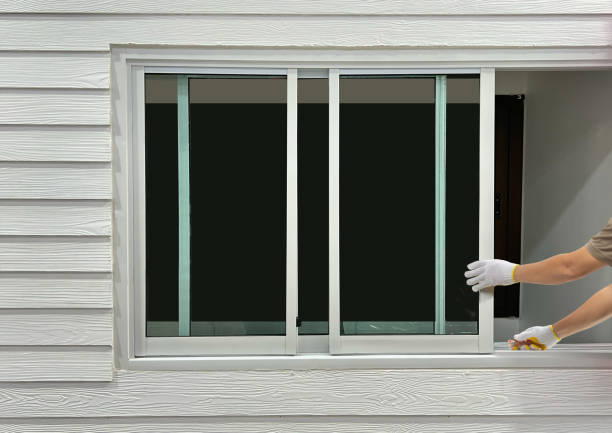
For most homeowners, exterior renovation decisions have always involved a significant leap of faith. Choosing a new siding color from a small sample, selecting window trim from a catalog photo, or committing to a roofing material based on a showroom display requires imagining how a decision made at small scale will translate across an entire home. Getting it wrong is expensive. Getting it right has historically depended on experience, professional guidance, and a fair amount of hope.
AI visualization tools are changing that dynamic in ways that are reshaping how homeowners approach exterior renovation from the very first step.
Seeing the Impact Before Spending Anything
The clearest value AI visualization offers in exterior renovation is the ability to remove uncertainty before any commitment is made. Andrew Sciacca, VP of Operations at New Jersey Siding & Windows, explains that homeowners considering exterior updates increasingly start with AI visualization tools before reaching out to a contractor. Seeing new siding color or window trim rendered on your own home makes the potential impact obvious in a way that descriptions never could. That same principle applies to curb appeal decisions generally. Homeowners tend to move forward more confidently once uncertainty about the outcome is removed.
This shift matters because uncertainty has always been one of the primary reasons homeowners delay or abandon exterior renovation plans. When the outcome of a significant investment is difficult to imagine, the safer choice often feels like doing nothing. AI previews change the emotional calculus of that decision by turning an abstract possibility into a concrete image. The hesitation that comes from not being able to picture the result gets replaced by the clarity that comes from actually seeing it.
Prioritizing When Budget Does Not Cover Everything
One of the most practical applications of AI visualization is in budget-constrained decision-making. When a homeowner cannot afford to do everything at once, the challenge is identifying which single change delivers the most noticeable transformation for the money available. Sciacca notes that when budgets are tight, AI previews help homeowners prioritize by showing which change delivers the most visual impact, whether darker window frames, a different siding tone, or updated trim, rather than spreading a limited budget thin across smaller updates.
The previews often reveal something homeowners would not have discovered through traditional product selection processes: that a detail as simple as trim color can change a home's entire character without any structural work involved. This is significant because it shifts renovation thinking away from scope toward impact. A homeowner who previously assumed a meaningful exterior transformation required replacing major components can discover through visualization that a targeted, less expensive change achieves a similar result. That discovery does not just affect spending decisions. It affects which projects actually move forward versus which ones stay on a wishlist indefinitely because the investment feels too large to justify.
From Visualization to Real-World Results
The value of an AI-generated exterior preview is highest when it becomes the starting point for a professional conversation rather than the end point of a design decision. Sciacca explains that the best use of a render is bringing it to a contractor as a starting point for a real conversation, allowing professionals to match the vision to the right window, siding, and door products before work begins.
This is an important distinction. AI visualization tools are powerful at generating realistic images, but they operate without knowledge of a specific home's structural conditions, local building codes, product availability, or installation requirements. A preview that shows a particular window style or siding profile may not account for whether that product is available in the required specification, whether the existing framing supports it, or whether local permitting creates constraints that affect the design. A homeowner who arrives at a contractor conversation with a clear visual reference has done something genuinely useful. A homeowner who treats that visual as a finished design plan rather than a starting point may be surprised by the gap between what AI generated and what is actually achievable.
The professionals who have integrated AI visualization into their own client processes understand this distinction well. The preview removes uncertainty about direction. Professional expertise closes the gap between direction and execution.
What AI Reveals That Experience Alone Cannot Show
Beyond helping homeowners make decisions they were already considering, AI visualization sometimes reveals exterior potential that a homeowner had not identified as a priority at all. Seeing a home rendered with different exterior combinations can surface improvement opportunities that were not apparent from living with the current exterior every day. A roofline that reads as neutral in person may look dated once rendered alongside a modern siding option. A window proportion that seemed fine may look undersized once the surrounding trim is updated in a preview.
This discovery function of AI visualization is less discussed than its decision-support role, but it may be equally valuable. Homeowners who commission an AI exterior preview looking for confirmation of one decision sometimes find that the preview redirects their attention to a different part of the home entirely. That redirection, when it happens, tends to produce better outcomes because it is based on seeing the whole exterior rather than focusing on the component that originally prompted the renovation conversation.
A Better Starting Point for Every Exterior Renovation
AI visualization has not replaced the professional judgment that exterior renovation requires. It has changed where the professional conversation starts and how much alignment exists between what a homeowner wants and what a contractor is being asked to deliver. The homeowner who arrives at a contractor meeting having already visualized their home with different siding profiles, window styles, and trim colors has done meaningful pre-work that makes every subsequent conversation more productive.
For homeowners planning exterior renovations, the practical takeaway is straightforward. Start with visualization, use it to identify the direction and priority of the project, and then bring that clarity into a professional conversation where expertise can match the vision to the right products and execution approach. The decisions that used to require the most imagination now require the least, and the results are more likely to match expectations because the expectation was built on something real.
Comments
Log in or sign up to join the conversation.