

The history of aerial surveillance is a history of compromise. Every platform that has ever been deployed to gather intelligence from the sky has represented a trade-off between competing operational demands, with endurance sacrificed for payload capacity, sensor sophistication traded against operational simplicity, and coverage area balanced against the resolution needed to make observations genuinely actionable. For as long as aerial surveillance has existed as a discipline, the fundamental tension between how long a platform can stay airborne and how much useful work it can do while aloft has constrained what persistent aerial intelligence could practically achieve. Aerostatic drone technology is resolving this tension at its root, not by finding a better point on the familiar trade-off curve but by changing the underlying architecture of aerial surveillance in a way that makes the traditional trade-offs largely irrelevant. The result is a redefinition of what long-duration aerial surveillance means, what it can deliver, and what becomes possible when genuine persistence is combined with serious multi-sensor capability in a single deployable platform.
The Architecture That Changes Everything
To understand why aerostatic drone technology represents a genuine redefinition rather than an incremental improvement of aerial surveillance capability, it is necessary to examine the architectural difference that separates it from every competing platform type. Rotary-wing aircraft including helicopters and multirotor drones generate lift by accelerating air downward, a process that requires continuous and substantial energy expenditure to counteract gravity. Fixed-wing aircraft generate lift through forward motion, which itself requires continuous propulsive energy. Both approaches mean that the energy consumed simply to remain airborne dominates the power budget of the platform, leaving relatively little capacity for the sensors, communication systems, and data processing equipment that determine the actual surveillance value of the system.
The aerostatic drone takes a categorically different approach. By enclosing a lighter-than-air gas, typically helium, within a carefully engineered envelope designed to maintain stable aerodynamic characteristics across a range of wind conditions, the platform achieves buoyancy that supports its weight and the weight of its payload without any energy expenditure at all. Lift is provided passively by physics rather than actively by machinery, which means that the power supplied through the ground tether can be directed almost entirely toward the operational systems that generate surveillance value rather than the lift systems that merely keep the platform in the air.
This architectural difference has consequences that cascade through every aspect of the platform's operational profile. Endurance is no longer limited by fuel capacity or battery charge. Payload capacity is no longer constrained by the weight penalties associated with carrying the energy reserves needed to sustain flight. The platform can carry a comprehensive multi-sensor suite and remain continuously operational for days at a time without any of the compromises that endurance and payload capacity trade-offs impose on conventional aerial surveillance systems. This is not a marginal improvement in performance. It is a structural transformation of what aerial surveillance capability can be.
What Genuine Persistence Enables
The operational implications of genuinely persistent aerial surveillance extend well beyond the obvious advantage of eliminating coverage gaps. When a surveillance platform can observe an area continuously for days rather than hours, the nature of the intelligence it can generate changes fundamentally. Short-duration surveillance produces snapshots. Long-duration surveillance produces understanding.
Pattern-of-life analysis, which involves tracking the routine behaviours and movement patterns of individuals, vehicles, vessels, and activities within a monitored area over time to build a baseline of normal activity against which anomalies can be identified, is only possible when observation is continuous and extended. A vehicle that appears at a border crossing point at irregular intervals may attract no particular attention in any individual observation. Observed continuously over forty-eight hours, its pattern of appearances may reveal a smuggling cycle that is immediately and unambiguously actionable. A fishing vessel observed once in a restricted maritime zone may appear coincidental. Tracked continuously, its movement pattern may reveal systematic illegal fishing operations or a support role in a larger criminal network.
This analytical depth that persistent observation enables is not achievable through any number of short-duration surveillance sorties however frequently they are repeated. The gaps between observations are not simply periods of no coverage. They are periods during which the continuity of the intelligence picture is broken and the behavioural context that makes individual observations meaningful is lost. The aerostatic drone eliminates those gaps entirely, and in doing so it enables a quality of intelligence analysis that transforms aerial surveillance from a detection tool into a genuine understanding tool.
Multi-Sensor Integration on a Persistent Foundation
The value of the aerostatic drone's persistent endurance is multiplied by its capacity to carry diverse sensor payloads that address the full range of conditions and intelligence requirements that comprehensive long-duration surveillance demands. Electro-optical cameras provide high-resolution visual coverage across wide areas during daylight hours, generating imagery detailed enough to support confident identification and characterisation of observed targets. Thermal imaging systems extend effective surveillance capability through the night and through conditions of smoke, haze, dust, and reduced visibility that defeat optical sensors, detecting heat signatures from individuals, vehicles, vessels, and infrastructure anomalies with sensitivity that is unaffected by ambient light levels.
Synthetic aperture radar adds the capability to track movement through cloud cover, heavy rain, and dense vegetation, ensuring that the platform's surveillance effectiveness is maintained in the most challenging atmospheric and environmental conditions. Communication relay equipment transforms the platform from a passive observer into an active node in the operational communication network, extending radio and data connectivity across areas where ground infrastructure is absent, insufficient, or damaged. Environmental monitoring sensors can be added to configurations destined for ecological and industrial applications, enabling the platform to simultaneously gather security intelligence and environmental data from the same persistent elevated position.
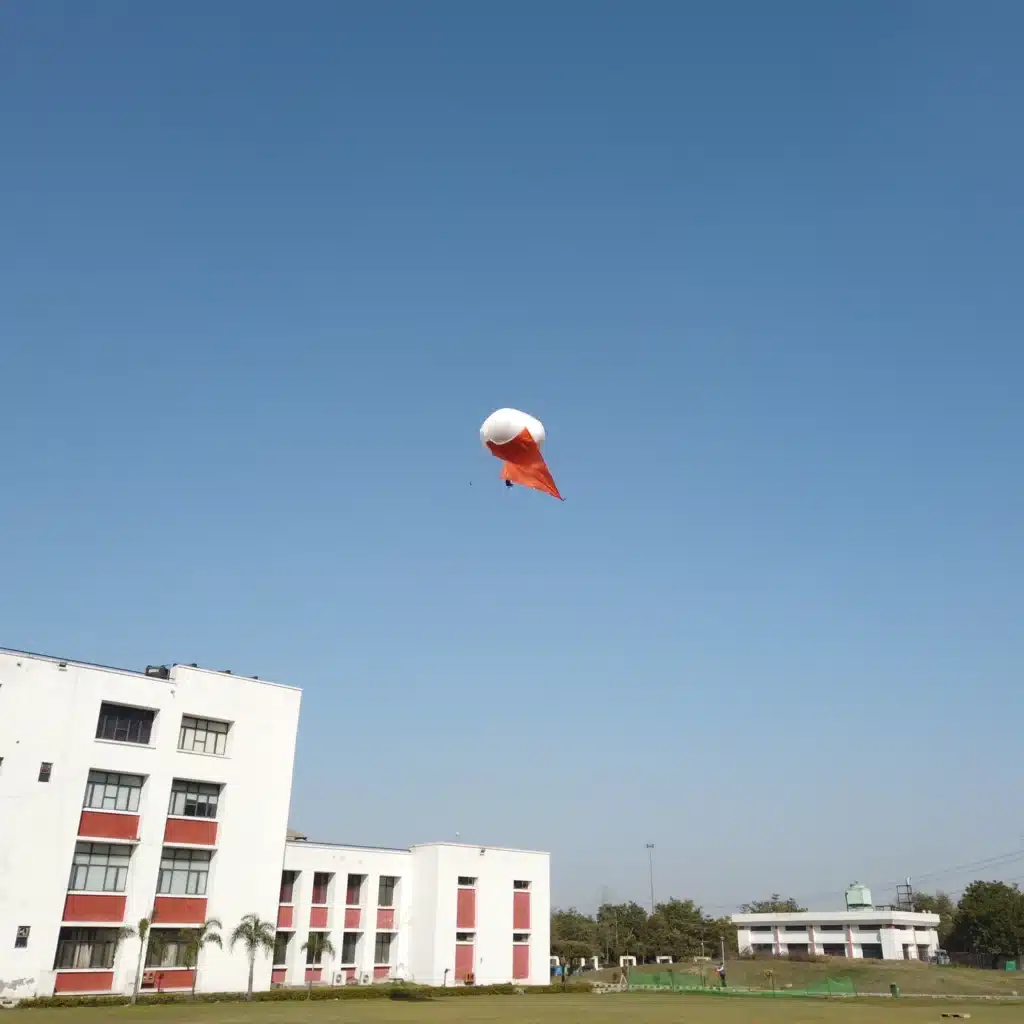
The Atal DrishTI Tactical Aerostat represents one of the most comprehensively realised examples of this multi-sensor, persistent endurance architecture currently deployed in operational contexts. Designed for the demanding environmental conditions encountered across India's diverse operational theatres, from desert frontier zones and high mountain passes to humid coastal environments and monsoon-affected lowland terrain, the Atal DrishTI Tactical Aerostat demonstrates that the performance standards that advanced aerostatic drone technology can achieve in controlled conditions translate directly and reliably into real-world operational environments where the ability to perform consistently under adverse conditions determines operational value.
Applications Across the Full Surveillance Spectrum
The redefinition of long-duration surveillance capability that aerostatic drone technology represents has implications across the full spectrum of applications where persistent aerial intelligence delivers operational value. Border security forces gain the ability to monitor frontier corridors continuously, eliminating the coverage windows that infiltrators and smugglers exploit with predictable regularity and establishing a deterrent presence that reduces incident frequency as well as improving detection and response rates. Coastal security agencies achieve the maritime domain awareness that tracking vessel movements over extended periods requires, building the pattern-of-life intelligence that distinguishes routine maritime activity from suspicious behaviour warranting interception.
Disaster response and emergency management organisations gain a persistent aerial platform that maintains continuous situational awareness across affected areas throughout the critical hours and days of an active emergency, providing incident commanders with the real-time intelligence they need to direct response resources effectively and the communication relay capability that keeps fragmented response networks connected despite the infrastructure damage that disasters inevitably cause. Environmental monitoring agencies gain the persistent presence needed to detect illegal deforestation, poaching activity, and pollution events in real time rather than retrospectively. Industrial and infrastructure operators gain continuous inspection capability across pipeline corridors, power transmission networks, railway lines, and facility perimeters that conventional inspection approaches cannot adequately address.
The Innovation Ecosystem That Aerial Technology Builds
The engineering excellence that makes aerostatic drone technology such a powerful long-duration surveillance platform is part of a broader wave of aerial innovation that influences applications across every domain where flight serves a meaningful purpose. The stable tethered flight architecture, efficient power management systems, precise sensor integration frameworks, and reliable real-time communication capabilities that define serious operational aerostatic platforms share foundational engineering principles with the technologies that power drone show for event productions and drone show for wedding displays.
A drone show for event performance creating spectacular choreographed aerial formations above a national celebration, corporate launch, or major public festival, and a drone show for wedding display illuminating the night sky with precisely coordinated patterns of light above a family celebration, both reflect the maturation of the same aerial engineering disciplines that make persistent surveillance aerostats operationally reliable and analytically powerful. The fail-safe flight management systems, precise positional control architectures, and real-time communication protocols that make a Atal DrishTI Tactical Aerostat both visually magnificent and operationally safe above a gathered audience are direct expressions of the same technological rigour that sustains an aerostatic surveillance platform in continuous, effective operation through days of demanding deployment.
This cross-domain transfer of aerial innovation confirms a broader truth about technological progress: advances made at the demanding frontier of operational necessity enrich every application domain they touch, raising standards, expanding possibilities, and creating value that extends far beyond the original context of development. The aerostatic drone stands at that frontier, redefining long-duration aerial surveillance and in doing so advancing the state of the entire aerial technology ecosystem it belongs to.
Comments
Log in or sign up to join the conversation.