

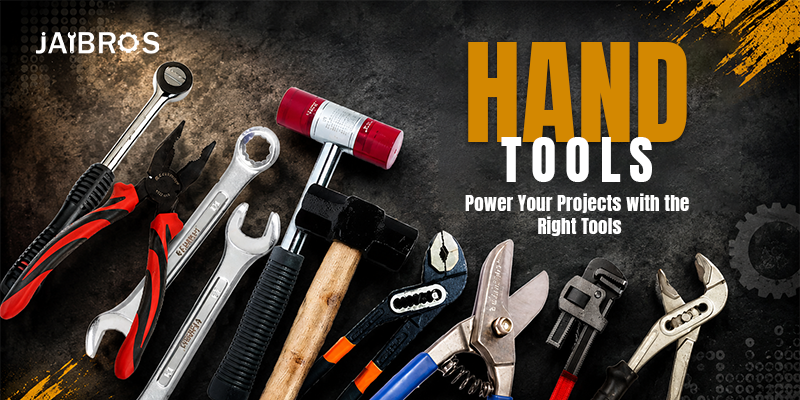
There have been tremendous developments in the field of industrial manufacturing through automation, robotic and intelligent systems for manufacturing. However, there is still an immense use of manual equipment in the industrial world. In even those industries where there is a lot of automation involved, people depend on special equipment that help in doing their work with precision and flexibility.
Industries need practical equipment to keep up their pace of operations. A hand tool forms an integral part of industrial operations where one needs to do various jobs with efficiency and safety.
Why Manual Tools Remain Important in Modern Industries
Despite the growing use of advanced machinery, many industrial processes still require human expertise. Certain tasks involve adjustments, inspections, and repairs that demand a level of control only manual equipment can provide.
Key reasons industries continue to use manual tools include:
Greater flexibility during operations
Better control over precision tasks
Easy access to confined spaces
Faster response during maintenance work
Cost-effective solutions for various applications
A quality hand tool allows workers to perform detailed tasks accurately while maintaining high productivity levels.
Major Industrial Applications of Hand Tools
Industrial environments rely on manual tools for a wide range of operations. Their versatility makes them valuable across different sectors.
Manufacturing and Assembly
Production facilities use manual equipment during assembly and quality-control processes. Workers often need to make adjustments, tighten fasteners, and inspect components before products move through the manufacturing cycle.
Common applications include:
Product assembly
Component fitting
Quality inspections
Equipment adjustments
Packaging operations
Maintenance and Repair Work
Industrial machinery requires routine maintenance to ensure optimal performance. Maintenance teams depend on reliable tools to diagnose problems and carry out repairs efficiently.
Typical maintenance activities include:
Replacing worn components
Adjusting machine settings
Tightening mechanical connections
Performing preventive maintenance
Conducting equipment inspections
Construction and Fabrication
Construction and fabrication industries rely heavily on manual equipment for daily operations. Workers use various tools to complete installation, measurement, and assembly tasks.
Applications include:
Structural installation
Metal fabrication
Equipment assembly
Surface preparation
Site maintenance
The adaptability of a hand tool makes it indispensable in environments where precision and durability are required.
Benefits of Using High-Quality Industrial Tools
Choosing the right tools can significantly impact efficiency, safety, and overall operational performance.
Improved Precision
Industrial tasks often require a high level of accuracy. Quality tools help workers achieve consistent results while minimizing errors.
Benefits include:
Better alignment of components
More accurate measurements
Higher-quality finished products
Improved operational consistency
Increased Productivity
Reliable equipment enables workers to complete tasks more efficiently. Less downtime and fewer interruptions contribute to smoother operations.
Advantages include:
Faster task completion
Improved workflow efficiency
Reduced operational delays
Better resource utilization
Greater Durability
Industrial environments can be demanding, making durability an important factor when selecting equipment.
Durable tools offer:
Longer service life
Reduced replacement costs
Consistent performance
Better return on investment
Enhanced Workplace Safety
Safety is a priority in every industrial setting. Well-designed tools help reduce risks and improve worker confidence.
Safety benefits include:
Better grip and control
Reduced user fatigue
Improved handling
Lower accident risks
Factors to Consider When Choosing Industrial Tools
Selecting suitable equipment requires careful evaluation of several important factors.
Material Quality
Tools manufactured from premium materials generally provide better strength, durability, and resistance to wear.
Ergonomic Design
Comfortable designs help reduce fatigue and improve efficiency, especially during long working hours.
Application Requirements
Different industrial tasks require different tool specifications. Choosing the correct equipment ensures optimal performance.
Ease of Maintenance
Tools that are simple to maintain often remain effective for longer periods and reduce operational costs.
Cost and Long-Term Value
Many businesses compare the hand tool price before making purchasing decisions. While affordability is important, long-term performance and durability should also be considered.
Evaluating the hand tool price alongside quality, lifespan, and reliability helps organizations make more informed investments.
The Importance of Proper Tool Management
Effective tool management plays a crucial role in modern industrial operations. Organized storage systems help improve efficiency and minimize downtime.
Benefits of proper tool management include:
Faster access to equipment
Improved workplace organization
Better inventory control
Reduced risk of tool loss
Enhanced productivity
Many industrial facilities maintain a hand tool kit containing essential equipment for maintenance and repair tasks.
Modern organizations are also adopting digital tracking systems to monitor inventory, schedule maintenance, and improve overall tool management practices.
Future Trends in Industrial Tool Usage
Industrial tools continue to evolve alongside technological advancements. Manufacturers are introducing innovative features that improve performance, comfort, and durability.
Emerging trends include:
Lightweight yet durable materials
Improved ergonomic designs
Corrosion-resistant finishes
Smart inventory tracking solutions
Sustainable manufacturing practices
Even though there is constant automation of industrial processes, the importance of the hand tool should not be ignored. There are still many processes that cannot be performed by automated machinery because human decision-making and human hands are needed.
Industrial businesses that aim at perfection in their operations will still benefit from reliable manual tools for years to come.
Conclusion
The modern industrial processes require the collaboration of sophisticated technology as well as qualified manpower. Although there has been an improvement in automation, manual equipment still serves a vital function in cases where accuracy, adaptability, and control are needed. Be it manufacturing, maintenance, construction, or fabrication; the tools are indispensable when it comes to productivity, safety, and quality.
Organizations that have the right equipment can ensure efficient business performance and avoid any possible downtime and repair costs. Organizations such as Jaibros know how important it is to provide efficient industrial equipment in order to meet the demands of modern industrial processes.
FAQs
1. Why is a hand tool still important in industrial applications?
It provides precision, flexibility, and control for tasks that cannot be fully automated.
2. Which industries use hand tools the most?
Manufacturing, construction, engineering, automotive, and maintenance industries frequently use them.
3. How do quality tools improve productivity?
They help workers complete tasks more accurately, reduce downtime, and improve operational efficiency.
4. What factors should be considered before purchasing industrial tools?
Material quality, durability, ergonomics, maintenance requirements, and overall value should be evaluated.
5. Will automation completely replace manual tools in the future?
No. Many industrial tasks still require human expertise, making manual tools essential even in highly automated environments.
Comments
Log in or sign up to join the conversation.