

A solitaire ring puts one diamond entirely in the spotlight, which means every factor affecting that stone price shows directly in what you pay. There's no halo of smaller stones to distribute cost across, and no elaborate setting to distract from the center diamond quality. Understanding how the 4Cs affect price is more important for a solitaire than almost any other ring style, since the stone alone carries the entire budget.
Why the 4Cs Matter More for Solitaire Rings Specifically
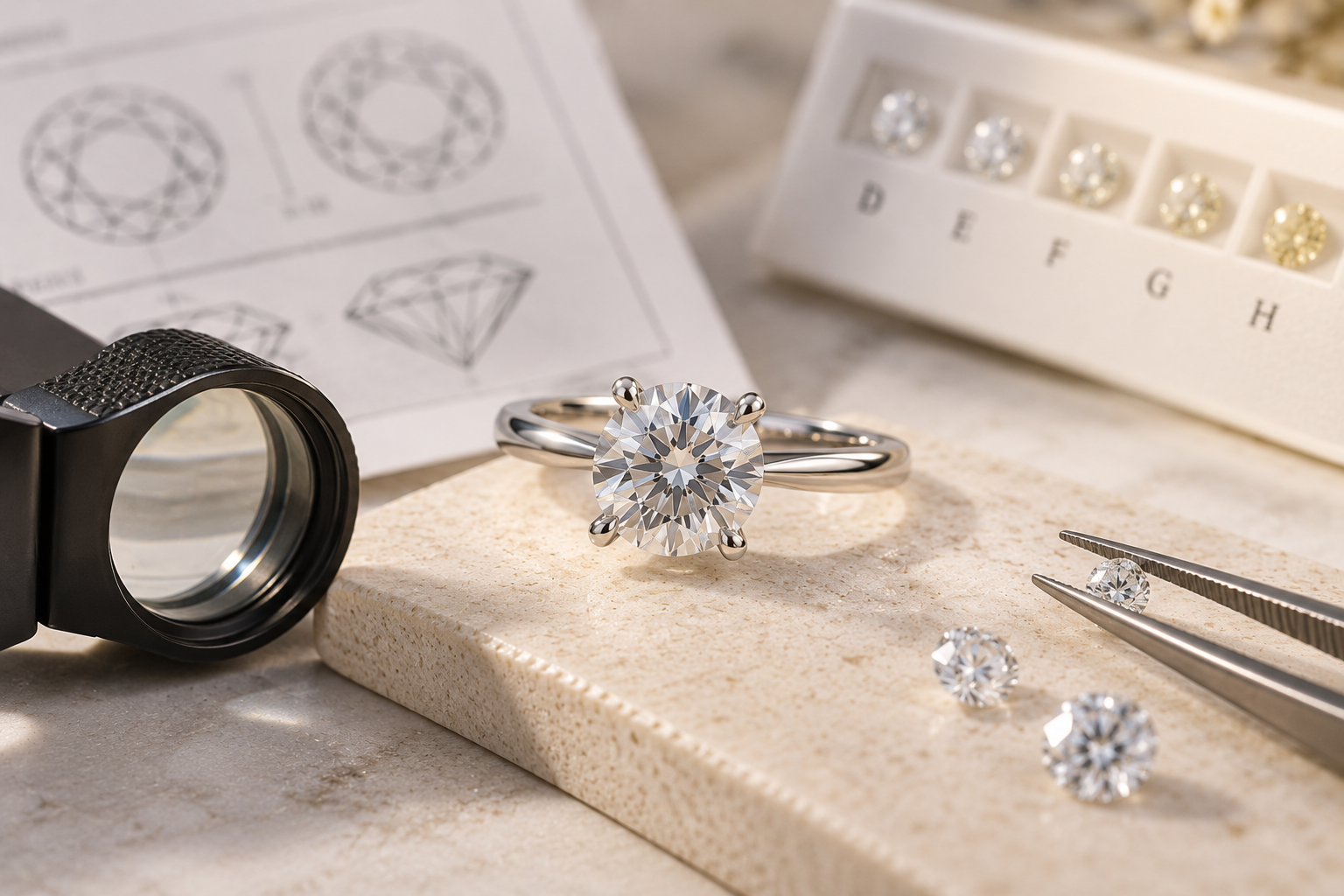
In a halo or pavé setting, some of the ring's visual impact comes from accent stones, which means the center diamond's individual grading has slightly less pressure on it. A solitaire has no such cushion. Every grade — cut, color, clarity, and carat — directly shapes both the price and the finished look, since the diamond has nothing else to lean on visually.
How Each of the 4Cs Affects Solitaire Ring Price
Cut: The Biggest Driver of Visual Impact
Cut has the strongest influence on how a diamond looks, and it carries real weight in pricing too. A well-cut diamond reflects light efficiently, creating the brilliance most buyers associate with a beautiful stone. Because a solitaire setting exposes the diamond fully, with no accent stones to soften an average cut, cut quality matters more here than in almost any other setting style.
Excellent or Ideal cut grades command a price premium but deliver noticeably more sparkle
A lower cut grade can make even a high-carat stone look dull in a solitaire setting
For solitaires specifically, prioritizing cut over other factors is generally the smartest way to spend your budget
Color: A Gradual, Not Dramatic, Price Curve
Color grades run from D (completely colorless) to Z (noticeable yellow tint), and price generally rises as color grade improves. In a solitaire setting, color differences are more visible than in a halo, since there's no white metal or accent of stones to visually offset a warmer tone.
D to F grades carry the highest prices, valued for appearing completely colorless
G to J grades offer strong value, since the color difference is difficult to detect with the naked eye once mounted
Lower grades become more noticeable in a solitaire, particularly in larger carat sizes
Clarity: Where Smart Trade-Offs Save Money
Clarity measures internal and surface characteristics, graded from Flawless to Included. Since a solitaire places the stone under direct, undistracted view, clarity matters more here than in a busier setting where a customer's eye moves across multiple stones.
Flawless and Internally Flawless grades carry premium prices, often for characteristics invisible without magnification
VS1 and VS2 grades typically appear clean to the naked eye while costing meaningfully less
SI1 grades can still work well in a solitaire, provided any inclusions aren't positioned under the table facet where they'd be more visible
Carat: Price Rises Faster at Certain Weight Thresholds
Carat weight has a direct, often nonlinear relationship with price. Diamonds priced at common benchmark weights — 1.00, 1.50, 2.00 carats — often carry a price jump compared to a stone just under that threshold, even though the visual size difference is barely noticeable.
A 0.90-carat diamond can cost meaningfully less than a 1.00-carat stone with very similar visual size
In a solitaire, carat weight is highly visible, since there's no halo adding perceived size
Buyers focused on value often shop just under these common carat benchmarks
Balancing the 4Cs for a Solitaire on a Budget
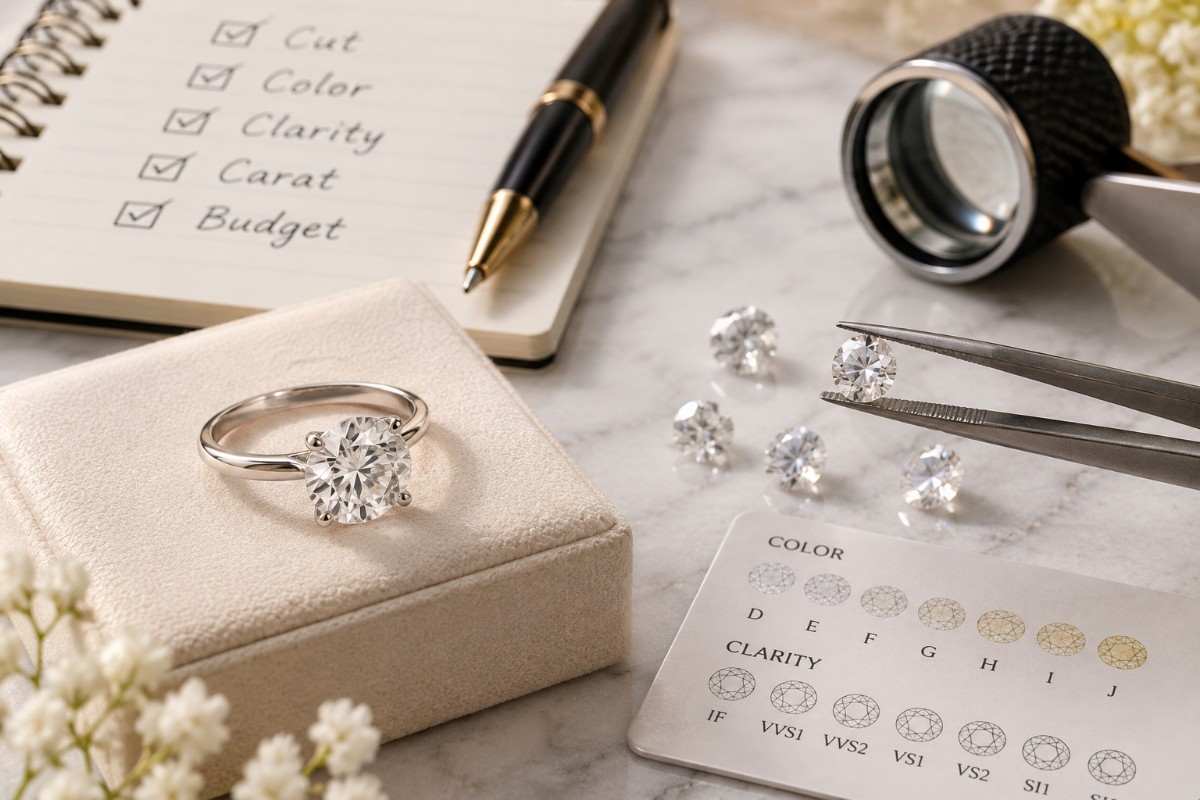
Because a solitaire exposes the diamond fully, smart budget allocation matters more than chasing top grades across every category. A practical approach:
Prioritize the cut first. It has the biggest visible impact and is worth stretching the budget for.
Choose color in the G–J range for strong value without a noticeable tint.
Choose clarity in the VS1–SI1 range, checking inclusion placement rather than relying on the grade alone.
Shop slightly under carat benchmarks like 1.00 or 2.00 carats for meaningful savings with minimal visual difference.
Why Setting Style Doesn't Change, But Amplifies, These Factors
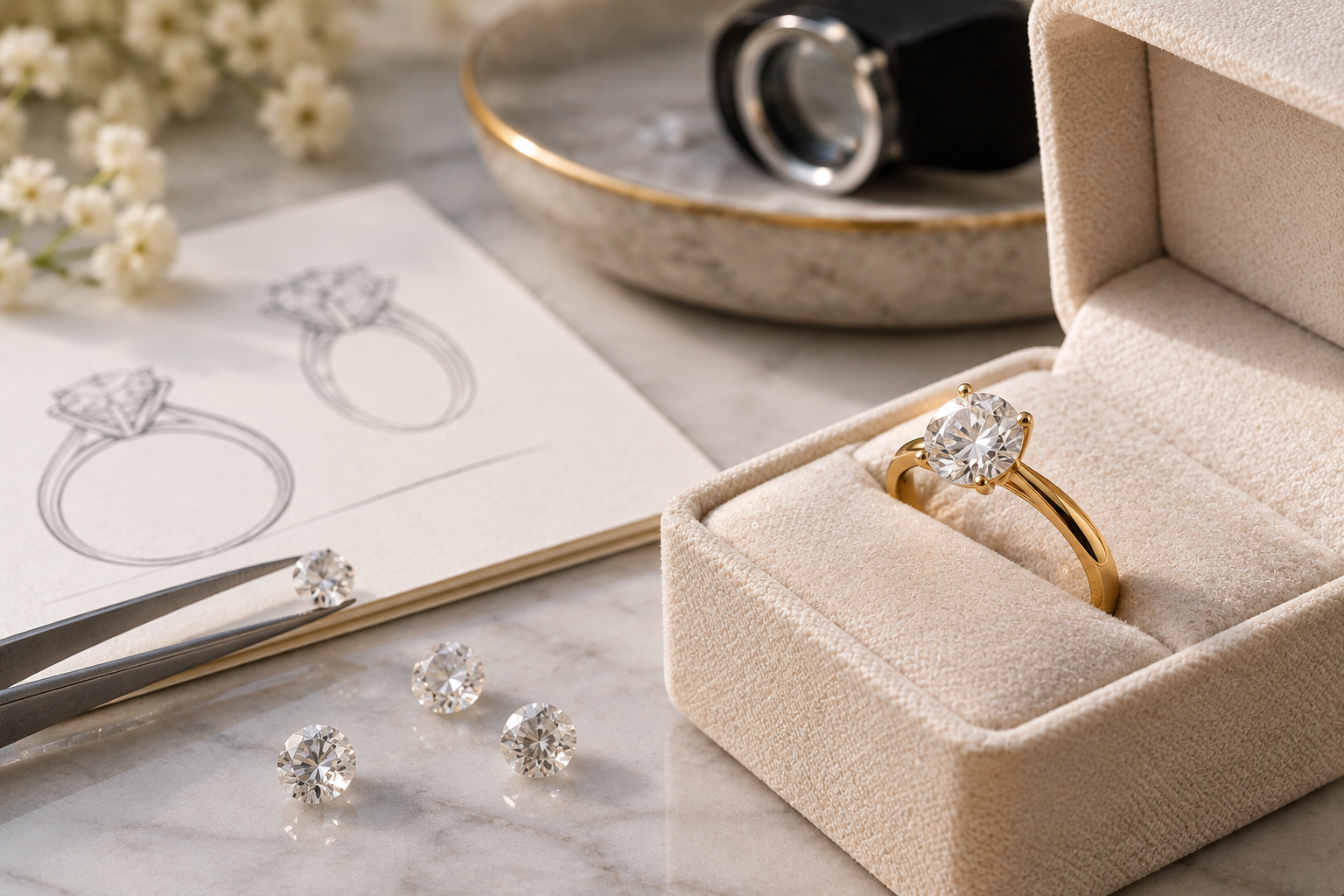
A solitaire setting doesn't add cost the way a halo or pavé design does, since there are no accent stones. But it does amplify how visible the 4Cs are, for better or worse. A well-balanced, high-quality diamond looks stunning in a solitaire precisely because nothing distracts it. A poorly chosen combination of grades becomes more obvious for exactly the same reason.
This is part of why solitaire settings remain a popular, timeless choice — they reward buyers who understand how to balance the 4Cs, letting a well-chosen diamond do all the talking. Shoppers ready to put this balance into practice can Buy solitaire rings and compare how different grade combinations actually look once mounted, rather than relying on a grading report alone.
FAQs: The 4Cs and Solitaire Ring Pricing
1.Which of the 4Cs matters most for a solitaire ring?
Ans. Cut generally matters most for solitaire rings, since it has the biggest impact on visible brilliance, and a solitaire setting doesn't have accent stones to compensate for a poorly cut center diamond.
2.Does carat weight affect solitaire price more than other settings?
Ans. Carat weight is highly visible in a solitaire setting, since there's no halo adding perceived size. Price often jumps at common carat benchmarks like 1.00 or 2.00 carats, even with minimal visual size difference just below those thresholds.
3.Can a lower clarity grade still work well in a solitaire ring?
Ans.Yes. SI1 or even some SI2 grades can look clean to the naked eye in a solitaire, provided any inclusions aren't positioned under the table facet where they'd be more visible.
The Bottom Line
Because a solitaire setting puts the diamond entirely on display, the 4Cs directly shape both its price and its finished appearance more than in almost any other ring style. Prioritizing cutting, choosing smart color and clarity ranges, and shopping just under carat benchmarks can help you get a genuinely beautiful solitaire without overspending on grades that won't be visible to the naked eye.
Comments
Log in or sign up to join the conversation.