

Modern hotel kitchens operate more like coordinated production systems than simple cooking spaces. Breakfast service, restaurants, room service, banquets, conferences and special events can create very different production demands throughout the day. Because of this variation, kitchen performance depends on much more than the individual quality of cooking or preparation equipment.
A well-designed kitchen must balance thermal loads, production capacity, utilities, workflow, maintenance, hygiene and future expansion. Even a high-quality piece of equipment can create operational problems if it is incorrectly sized, poorly positioned, overloaded or difficult to maintain.
This is why evaluating a Hotel Equipment Manufacturer should involve more than comparing product specifications and purchase prices. Technical understanding of capacity, thermal behavior, utility requirements, equipment redundancy, maintenance data and lifecycle planning can have a direct effect on long-term kitchen performance.
This guide examines the key factors that influence modern hotel kitchen equipment planning, installation and operation.
1. Thermal Load Mapping in Hotel Kitchens
Thermal load is an important consideration when planning a commercial hotel kitchen.
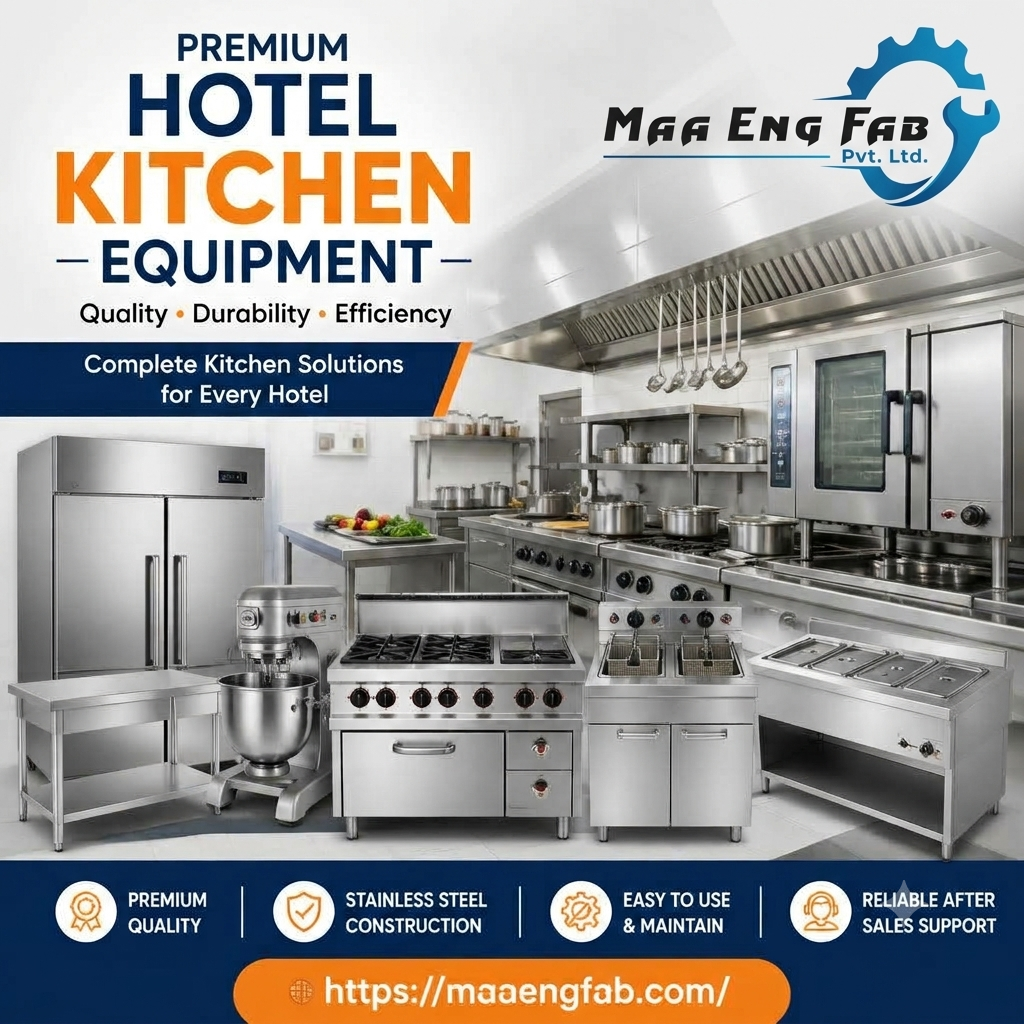
Cooking appliances, ovens, fryers, boiling systems, hot holding equipment and other heat-producing units can contribute significant heat to the kitchen environment.
What Is Thermal Load Mapping?
Thermal load mapping is the process of identifying where heat is generated, how much heat is produced and how that heat moves through the kitchen environment.
The assessment can consider:
Cooking equipment
Oven operation
Frying equipment
Steam-producing equipment
Refrigeration systems
Exhaust systems
Ambient conditions
Operating hours
Equipment density
Ventilation arrangements
The purpose is not simply to calculate heat. It is to understand how equipment interacts with the overall kitchen environment.
Why Thermal Load Matters
Poor thermal management can contribute to:
Uncomfortable working conditions
Higher ventilation demand
Increased cooling requirements
Greater energy consumption
Heat exposure around sensitive equipment
Reduced operational comfort
Equipment placement should therefore consider both production requirements and the thermal environment.
2. Identifying Production Bottlenecks
A kitchen's total capacity is often determined by its weakest operational stage.
For example, a kitchen may have sufficient cooking capacity but insufficient preparation space. Another kitchen may have fast cooking equipment but inadequate holding or plating capacity.
This creates a production bottleneck.
Common Bottleneck Areas
Bottlenecks can occur in:
Receiving
Ingredient preparation
Cooking
Frying
Baking
Holding
Plating
Dishwashing
Storage
Waste handling
How to Identify a Bottleneck
Operators can examine:
Waiting time
Queue length
Equipment utilization
Production cycle time
Staff movement
Repeated processing
Delayed orders
Equipment downtime
The objective is to determine where work accumulates instead of simply increasing equipment capacity everywhere.
Capacity Should Be Balanced
Adding more equipment to one section does not necessarily improve total kitchen output.
If preparation is already faster than cooking, increasing preparation capacity further may have little effect.
A balanced kitchen considers the relationship between each production stage.
3. Equipment Redundancy and Backup Planning
Some hotel kitchen operations are highly dependent on specific equipment.
If a critical unit fails during a busy service, the impact can extend beyond that individual station.
Equipment redundancy is one way of reducing dependence on a single production point.
What Is Equipment Redundancy?
Redundancy means having an alternative method or capacity available if a critical piece of equipment becomes unavailable.
Depending on the operation, this may involve:
Backup equipment
Multiple smaller units instead of one critical unit
Alternative cooking methods
Spare critical components
Emergency service arrangements
Temporary production procedures
Redundancy should be based on operational risk rather than automatically duplicating every machine.
Where Redundancy Can Matter
It may be particularly relevant for:
High-volume cooking
Refrigeration
Food holding
Dishwashing
Critical preparation processes
Banquet production
The appropriate strategy depends on the kitchen's menu, operating hours and consequences of equipment failure.
4. Electrical, Gas and Water Utility Demand
Kitchen equipment does not operate independently from building services.
Every major equipment installation should be evaluated against its utility requirements.
Depending on the equipment, requirements may include:
Electrical power
Gas supply
Water supply
Drainage
Exhaust ventilation
Make-up air
Steam
Refrigeration services
Electrical Demand
Electrical planning should consider:
Rated power
Number of connected units
Simultaneous operation
Starting loads where relevant
Operating schedules
Future equipment additions
The total connected load should not be evaluated without considering actual operating patterns.
Water Demand
Water requirements can be significant for:
Dishwashing
Cooking
Steam equipment
Food preparation
Cleaning
Ice production
Water supply and drainage should be coordinated with equipment placement.
Gas and Ventilation
Where gas-fired equipment is used, the installation must be coordinated with appropriate gas supply and ventilation requirements.
Utility planning should happen before finalizing the kitchen layout.
5. Peak Load vs Average Load Analysis
Average kitchen demand can sometimes hide the most important operational challenge: peak demand.
A hotel may have moderate production for several hours and then experience a short period of extremely high activity.
Examples include:
Breakfast rush
Dinner service
Wedding functions
Conference catering
Banquet service
Holiday periods
Why Peak Load Matters
Equipment that performs adequately under average conditions may struggle during peak production.
Peak-load analysis should consider:
Maximum portions
Production cycles
Recovery time
Simultaneous equipment operation
Holding requirements
Staff availability
Utility demand
Designing Around Real Demand
The goal is not to oversize every piece of equipment.
Instead, equipment capacity should be aligned with realistic demand patterns and appropriate capacity reserve.
This creates a more balanced system.
6. Using Equipment Utilization Data
Equipment utilization data can reveal how kitchen assets are actually being used.
Instead of relying only on assumptions, operators can review:
Operating hours
Number of production cycles
Idle periods
Peak usage
Failure frequency
Maintenance events
Energy consumption
Temperature performance
Why Utilization Data Matters
Suppose one piece of equipment operates continuously near its practical limit while another operates only occasionally.
Both units may have the same nominal capacity, but their operational importance is different.
Utilization information can support decisions about:
Capacity upgrades
Equipment replacement
Maintenance priorities
Backup requirements
Future expansion
Data-driven planning can therefore make equipment management more practical.
7. Preventive Maintenance vs Condition-Based Maintenance
Preventive maintenance generally follows scheduled inspection and servicing intervals.
Condition-based maintenance focuses more heavily on the actual condition and performance of equipment.
Both approaches can have a role in commercial kitchens.
Preventive Maintenance
Typical preventive activities can include:
Cleaning filters
Inspecting seals
Checking electrical connections
Inspecting moving components
Checking temperature controls
Cleaning ventilation components
Inspecting drainage
Reviewing safety mechanisms
The exact schedule should follow manufacturer instructions and actual operating conditions.
Condition-Based Maintenance
Condition-based maintenance may use indicators such as:
Unusual vibration
Abnormal noise
Temperature variation
Increasing energy consumption
Longer recovery time
Repeated fault events
Declining production performance
If equipment begins showing a measurable change in operating behavior, inspection can be scheduled before a major failure occurs.
8. Downtime and Failure-Point Analysis
Equipment downtime can have a disproportionate effect during peak hotel operations.
A failure-point analysis examines where equipment failures are most likely to interrupt production.
Important Questions
Operators can ask:
Which equipment has failed most frequently?
Which failures create the longest downtime?
Which components are difficult to replace?
Which equipment has no practical backup?
Which failure affects multiple kitchen sections?
Are certain failures recurring?
Building a Failure History
Maintenance records can provide useful information about:
Failure date
Failure type
Component involved
Repair time
Spare part used
Cost
Production impact
Over time, this information can identify recurring patterns.
This is more useful than waiting for equipment to fail repeatedly without documenting the cause.
9. Temperature Consistency and Recovery Performance
For many kitchen applications, temperature consistency is more important than simply reaching a target temperature once.
Equipment may need to maintain appropriate operating conditions while handling repeated loading and unloading.
Temperature Performance Factors
These can include:
Equipment insulation
Load size
Door opening frequency
Recovery time
Ambient conditions
Control accuracy
Product temperature
Equipment condition
Recovery Performance
Recovery performance refers to how quickly equipment returns toward its intended operating condition after a load or operating disturbance.
This can be important for:
Ovens
Refrigeration
Freezers
Hot holding
Cooking systems
Heating equipment
Performance should be evaluated according to the equipment's intended application rather than using one universal benchmark.
10. Integrating Equipment With Kitchen Workflow
Equipment selection should support the movement of food and people through the kitchen.
A basic production sequence may look like:
Receiving → Storage → Preparation → Cooking → Holding → Plating → Service → Cleaning
Equipment should be positioned according to this operational sequence.
Workflow Integration
Good planning considers:
Ingredient movement
Staff movement
Equipment access
Worktop location
Storage proximity
Waste movement
Cleaning routes
Service access
Reducing Unnecessary Movement
Repeated walking between distant stations can consume staff time and increase congestion.
Equipment should therefore be positioned to support the actual process rather than simply fitting into available floor space.
11. Cleaning and Sanitation Planning
Cleaning is part of kitchen performance, not an activity that happens separately from it.
Equipment that is difficult to access may require additional cleaning time and may be more difficult to inspect regularly.
Cleanability Factors
Consider:
Accessible surfaces
Removable components
Drainage
Floor clearance
Joint design
Corners and edges
Splash zones
Grease-prone areas
Cleaning chemical compatibility
Sanitation and Equipment Layout
Cleaning routes should also be considered during layout planning.
If cleaning requires moving equipment or passing through active production areas, routine sanitation can become more difficult.
Designing for cleanability from the beginning can make daily operation more practical.
12. Spare-Parts Planning
Spare-parts availability can influence equipment downtime.
Not every component needs to be stored on-site, but critical components should be identified according to operational risk.
Critical Spare Parts
Depending on the equipment, these may include:
Seals
Gaskets
Filters
Sensors
Heating components
Electrical components
Control components
Mechanical wear parts
The correct spare-parts strategy depends on equipment type, service availability and failure history.
Why Identification Matters
Clear component identification can make maintenance faster because technicians can determine exactly which part is required.
Documentation should therefore be maintained throughout the equipment lifecycle.
13. Lifecycle Cost Analysis
The purchase price of kitchen equipment is only one part of its financial impact.
A broader lifecycle evaluation can consider:
Purchase → Installation → Utilities → Maintenance → Repairs → Downtime → Replacement
Operating Cost
Energy and water consumption can contribute significantly to long-term operating expenditure.
Maintenance costs can also increase as equipment ages.
Downtime Cost
A failure can have indirect costs beyond the repair invoice.
For example:
Delayed production
Menu changes
Additional staff workload
Service disruption
Emergency repair charges
Temporary equipment requirements
Lifecycle analysis helps operators evaluate equipment according to long-term operational value rather than initial purchase price alone.
14. Replacement Timing Based on Performance Data
Equipment should not always be replaced simply because it has reached a certain age.
Age is one factor, but actual performance can provide more useful information.
Potential Replacement Indicators
These can include:
Increasing breakdown frequency
Longer repair periods
Reduced temperature stability
Higher energy consumption
Difficult-to-source components
Repeated safety issues
Reduced production capacity
Increasing maintenance costs
Data-Based Replacement Planning
Maintenance records can show whether an asset is becoming progressively more expensive or unreliable.
This allows replacement planning to happen before a critical failure creates an operational emergency.
15. Commissioning and Performance Verification
Commissioning provides an important link between installation and normal kitchen operation.
Equipment should be checked to confirm that it has been installed according to the intended requirements.
Commissioning Checks
Depending on the equipment, checks may include:
Correct positioning
Utility connections
Controls
Temperature performance
Drainage
Ventilation
Safety features
Access for cleaning
Service clearance
Functional operation
Performance Verification
The objective is to confirm that equipment performs appropriately in its installed environment.
A unit that performs correctly in a manufacturing facility may behave differently if installation conditions, utilities or ventilation are unsuitable.
16. Future Capacity and Kitchen Expansion Planning
Hotel operations can change.
A property may add:
More rooms
New restaurants
Banquet services
Catering operations
Additional meal periods
New menu categories
Kitchen planning should therefore consider future requirements where practical.
Expansion Considerations
Future planning may include:
Available floor space
Utility capacity
Electrical distribution
Water and drainage
Ventilation capacity
Equipment replacement access
Modular equipment arrangements
Avoiding Short-Term Planning
Designing only for today's production volume may create limitations later.
At the same time, excessive future capacity can consume capital and space unnecessarily.
A practical approach is to identify realistic growth scenarios and design critical infrastructure accordingly.
How a Hotel Equipment Manufacturer Supports Technical Kitchen Planning
A manufacturer can contribute more than the physical equipment itself.
During a project, technical discussions may involve:
Equipment dimensions
Capacity requirements
Material selection
Utility requirements
Workflow integration
Fabrication details
Installation conditions
Maintenance access
Cleaning requirements
Commissioning
Service support
The value of manufacturer involvement depends on the project's requirements and the manufacturer's technical capabilities.
For complex hotel kitchens, early coordination can reduce the risk of discovering equipment or utility conflicts after installation.
A Practical Technical Checklist for Hotel Equipment Selection
Before finalizing major kitchen equipment, operators can review the following:
Capacity
What is the normal production volume?
What is the peak production volume?
What is the expected batch size?
Is capacity appropriately sized?
Thermal Performance
How much heat does the equipment generate?
Does ventilation accommodate the installation?
Are surrounding units affected by heat?
Utilities
What electrical supply is required?
Is gas required?
What water flow is required?
Is suitable drainage available?
What ventilation is required?
Workflow
Where does the equipment sit in the production sequence?
Does it reduce or create movement?
Is there sufficient operating space?
Hygiene
Can all relevant surfaces be accessed?
Are components easy to clean?
Is drainage appropriate?
Maintenance
Is service access available?
What components require regular inspection?
Are spare parts available?
Is technical documentation provided?
Lifecycle
What is the expected operating pattern?
What are the maintenance requirements?
How will replacement be planned?
Can the equipment adapt to future demand?
Conclusion
Modern hotel kitchen performance depends on the interaction between equipment, people, utilities, workflow, maintenance and operating demand.
Thermal load mapping helps manage the kitchen environment. Bottleneck analysis identifies production constraints. Redundancy planning can reduce dependence on critical equipment. Utility analysis ensures that electrical, gas and water systems can support operational requirements.
At the same time, utilization data, maintenance records and failure histories can provide valuable information for improving equipment decisions over time.
Temperature consistency, cleaning access, spare-parts planning, lifecycle cost and commissioning are equally important because equipment performance does not end when installation is complete.
For hotels evaluating a Hotel Equipment Manufacturer, a technical and lifecycle-based approach can provide a clearer understanding of how equipment will perform in real operating conditions.
The strongest equipment strategy is not simply about purchasing more equipment. It is about creating a balanced system in which capacity, thermal conditions, workflow, utilities, maintenance, hygiene and future requirements work together.
When these factors are considered during planning, equipment selection becomes part of a broader operational strategy rather than an isolated purchasing decision.
Frequently Asked Questions
1. Why is thermal load important in a hotel kitchen?
Thermal load helps determine how much heat equipment contributes to the kitchen environment and supports decisions about ventilation, equipment placement and overall working conditions.
2. What is a production bottleneck?
A production bottleneck is a stage of the kitchen workflow where limited capacity or slower processing restricts the output of the overall operation.
3. Why is equipment redundancy useful?
Redundancy can provide an alternative production route when critical equipment fails. The appropriate level depends on the importance of the equipment and the consequences of downtime.
4. How can equipment utilization data help hotels?
Utilization data can reveal which equipment is heavily used, underused, frequently overloaded or associated with recurring maintenance requirements.
5. What is condition-based maintenance?
Condition-based maintenance uses actual equipment condition or performance indicators to determine when inspection or maintenance may be required.
6. Why should spare parts be planned in advance?
Identifying critical spare parts can help reduce repair delays when commonly required or operationally important components fail.
7. What is lifecycle cost analysis?
Lifecycle cost analysis evaluates costs across the equipment's useful period, including purchase, installation, utilities, maintenance, repairs, downtime and replacement.
8. Why is commissioning important?
Commissioning verifies that equipment has been installed correctly and performs appropriately with the available utilities and operating environment.
9. How does workflow influence hotel kitchen equipment selection?
Equipment should support the movement of ingredients, staff and prepared food through the production process. Poor placement can create unnecessary movement, congestion and delays.
10. Should hotel kitchens plan for future expansion?
Where realistic growth is expected, future capacity and utility requirements can be considered during the initial planning stage. The extent of future-proofing should be based on credible operational scenarios rather than excessive oversizing.
Comments
Log in or sign up to join the conversation.