

Market Analysis
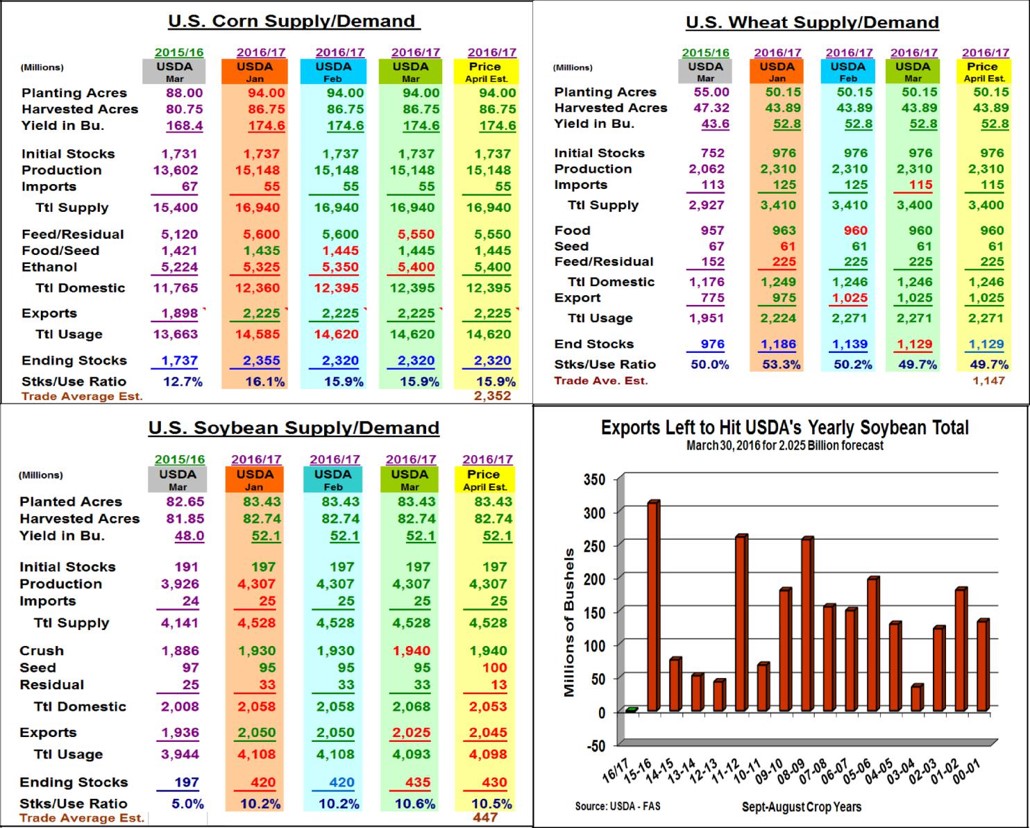
The new crop planting intentions garnered much the market’s attention last week after the 2017 US acreage survey and quarterly stocks were released. However, the government won’t utilize the planting survey data until it issues its first 2017/18 US and World supply/demand outlooks on May 10. Last week’s quarterly stocks updates along with soybeans’ monthly domestic crush, corn’s industrial utilization and the US Census Bureau’s February export levels released this week will help finalize this past winter’s corn, wheat and soybean demand levels.
As previously reported, corn’s March 1 stocks were 82 million bu. above expectations, a modest level between the trade and the USDA. This week’s industrial corn grind reduced both January’s previous level and February’s initial ethanol corn usage after the Energy Department cut January output by 2.3% from the impressive weekly calculated expansion of 8.6%. These reduced industrial bush-els swing over to corn’s feed portion of demand. However, corn’s February Census update showed 13 million bu. more exports than the weekly inspection report. Overall, corn’s 2016/17 ending stocks may still be unchanged for now. Wheat also had slightly higher February exports vs. inspections, but USDA may also leave this market’s stocks unchanged to see how wheat’s exports turn-out.
Soybeans’ 51 million bu. larger stocks than expectations still suggest 2016/17 crop could be underestimated. However, no change in crop size can be made until after the September stocks report so a cut in the current 33 million residual is likely. With this week’s old-crop sales already 1.5 million bu, past the USDA’s 2.025 billion forecast and February’s Census report boosting exports by 20-25 million to 727 million, soybeans’ exports needs to advance even if the residual is cut by a similar amount. Higher plantings will also require more seed beans. Overall, old crop stocks my drop 5 million to 430 million bu. next week.
(Click on image to enlarge)
What’s Ahead
The market’s ongoing concerns about growing World supplies have resurfaced after the latest USDA reports. Given the declines in US corn, wheat, and other feed/food grains seedlings, these crops carryover will likely decline unless 2017 growing season creates record yields for the 4th year in a row. We’ll examine corn and wheat balance sheets along with soybeans in coming updates. Hold sales at this time.



Comments
Log in or sign up to join the conversation.