

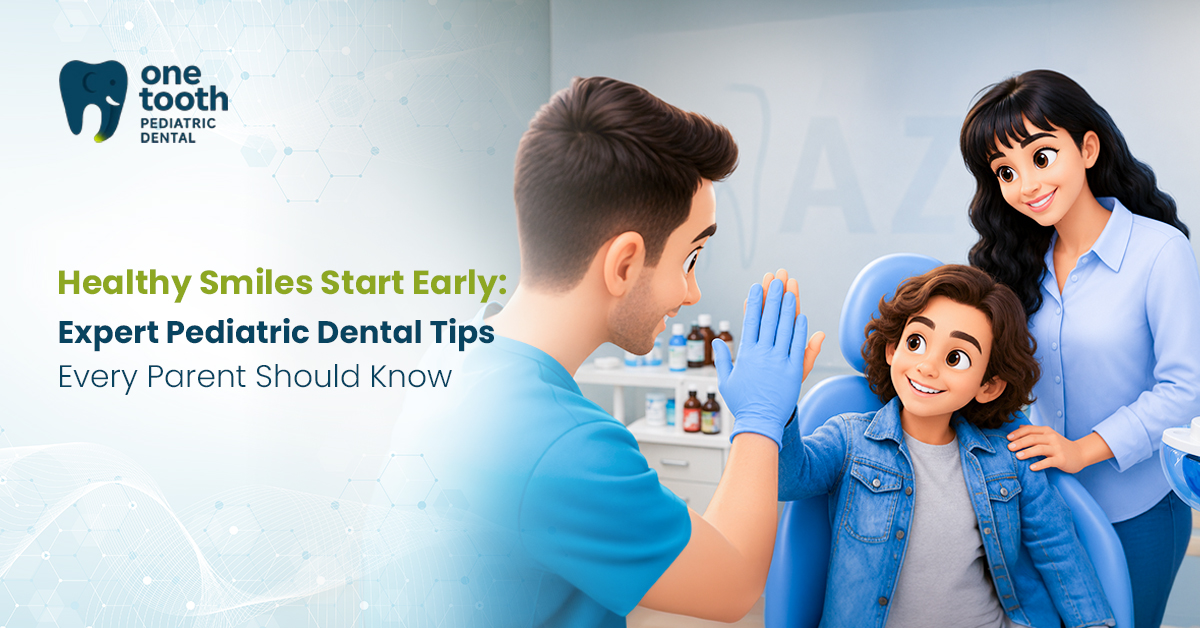
Good oral health in childhood usually begins with simple habits at home, not complicated routines. In the early years, parents shape how children brush, what they drink, how often they snack, and how comfortable they feel about dental care. These small daily patterns often have a lasting effect on oral health. Many parents are unsure when to start, how much help a child still needs, or which habits matter most in everyday life. That is why clear guidance matters in the first few years. When parents understand the basics early, it becomes easier to build routines that support healthy teeth, regular care, and fewer avoidable problems later. One Tooth Pediatric Dental supports families through preventive, child-focused care and practical guidance built around healthy early habits.
What Are the Most Important Pediatric Dental Tips for Parents?
The most important pediatric dental tips are to start oral care early, brush twice a day, keep routines consistent, and schedule preventive visits on time. Parents should also watch snack and drink habits, because daily patterns affect teeth more than occasional treats.
Toddler brushing resistance, early yellowing, and uncertainty about what is normal at each age are concerns most parents run into at some point. The good news is that prevention does not have to be strict or complicated—it works best when it feels simple, kind, and consistent.
When Should Oral Care Start for Children?
Oral care should start before all the baby teeth come in. Parents can begin by cleaning the gums gently, then move to brushing as soon as the first tooth appears. This early start helps children treat mouth care as a normal part of the day.
Starting before resistance sets in makes a real difference. A soft, consistent start is far easier than trying to introduce brushing later to a child who already pushes back on it.
How Should Parents Build a Daily Routine at Home?
A good daily routine is simple: brush in the morning, brush before bed, and keep the timing consistent. Children respond better when the same steps happen in the same order each day.
These oral hygiene tips are practical for most families:
Keep brushing tied to bedtime and morning routines
Use a child-sized toothbrush and age-appropriate toothpaste
Help children brush instead of expecting them to do it well alone
Offer water between meals more often than sweet drinks
Avoid letting skipped brushing become a regular exception
Consistency matters more than trying to make every brushing session perfect.
What Brushing Tips for Kids Work Best in Real Life?
The best brushing tips for kids are the ones parents can repeat calmly every day. Short instructions, a steady pace, and hands-on help usually work better than long reminders or bargaining.
A calm, child-led approach makes a real difference at home too. The Tell-Show-Do method—where a child hears what is going to happen, sees it demonstrated, and then experiences it—works just as well at the bathroom sink as it does in a dental chair. Parents can show the brush, explain one simple step, and then help without turning it into a negotiation.
For example, if a child resists at night, a parent can keep the same order every evening: bathroom, brushing, rinsing, pajamas, then bed. Predictable steps often reduce pushback over time.
Which Healthy Teeth Habits Do Children Need Most?
The most useful healthy dental habits children need are brushing twice daily, routine dental checkups, and consistent eating habits. Children also benefit when parents notice small changes early instead of waiting for pain.
Most children benefit from checkups every six months, although some may need to be seen more often depending on cavity risk and health history.
Here are the habits that matter most in everyday family life:
Home habit | Why it matters |
Brushing every morning | Removes overnight buildup and starts the day clean |
Brushing before bed | Reduces the time food and residue stay on teeth |
Regular water intake | Helps limit frequent sugar exposure from drinks |
Planned snacks instead of constant grazing | Gives teeth a break between food exposures |
Preventive dental visits | Helps catch concerns before they become harder to manage |
How do home habits and preventive visits work together?
Home care and preventive visits do different jobs. Home care handles the daily routine, while preventive visits help parents check whether that routine is working.
Home care at home | Preventive care at the dental office |
Daily brushing and habit building | Gentle exams and cleanings |
Watching snack and drink patterns | Early review of changes or concerns |
Helping children practice routine | Child-friendly guidance for future visits |
Managing resistance at home | Support with prevention and comfort planning |
Preventive care works best when it feels like a relationship, not just a checklist. Each visit builds on the one before it, giving parents a clearer picture of their child’s development and a chance to ask questions before small concerns become bigger ones.
How Can One Tooth Pediatric Dental Support Early Dental Habits?
Early dental visits matter because they make dental care familiar before a child has a painful problem. They also give parents direct guidance on brushing, routines, and what to watch for at home.
First visits are designed to feel predictable, with clear explanations and room for parents’ questions at every step. Every recommendation is explained before moving forward, so families always know what is happening and why. Children are never rushed, and comfort is built gradually from one visit to the next.
Most healthy smiles are built through small habits repeated consistently over time. When parents start early, keep habits simple, and use preventive visits as support, children have a better chance of growing up with comfort, confidence, and stronger daily care habits.
Reach out to One Tooth Pediatric Dental today to support healthy smiles early with practical guidance, preventive care, and child-focused visits.
Comments
Log in or sign up to join the conversation.