

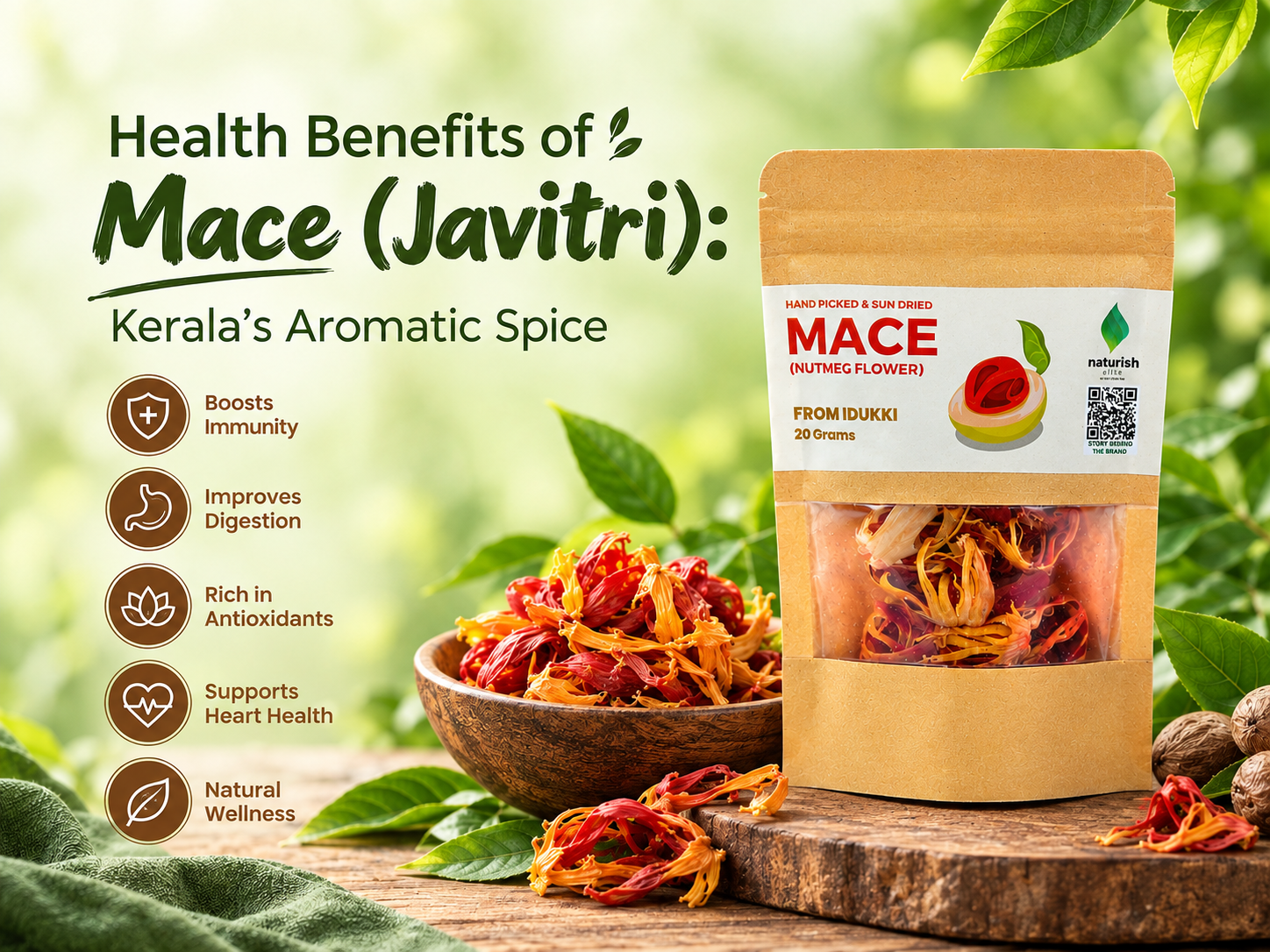
Mace, commonly known as javitri, is a fragrant spice obtained from the dried outer covering of the nutmeg seed. It has a warm aroma, slightly sweet flavour, and a delicate spicy character that makes mace spices useful in both sweet and savoury recipes.
Although mace is generally used in small quantities, it has been a part of traditional cooking and food practices for generations. Along with its culinary value, javitri is often discussed for its traditional digestive properties and naturally occurring plant compounds.
Today, people can also buy mace spice online and use this aromatic spice in everyday cooking. However, mace is primarily a culinary spice, and research on its specific health benefits in humans is still limited.
What Is Mace or Javitri?
Mace is the dried, reddish-orange aril that surrounds the nutmeg seed. Both mace and nutmeg come from the same fruit, but they are different parts of the plant. Mace has a lighter and more aromatic flavour, while nutmeg generally has a deeper and warmer taste.
Mace Spices in Everyday Cooking
Mace spices are commonly used in rice dishes, gravies, spice blends, desserts, beverages, and other recipes where a warm aroma is desired. Since its flavour can become strong, only a small amount is usually needed.
Whole mace can be added during cooking and removed before serving, while ground mace can be mixed directly into recipes. This makes it a versatile ingredient for everyday kitchens.
Health Benefits of Mace (Javitri)
The traditional use of mace is mainly connected with its aromatic qualities and digestive comfort. It also contains naturally occurring plant compounds that contribute to its characteristic flavour and fragrance.
May Support Digestive Comfort
Javitri has traditionally been included in meals, particularly rich or heavily spiced preparations. Its warming and aromatic character is associated with digestive comfort in traditional food practices.
However, mace should not be considered a treatment for acidity, bloating, stomach pain, or other digestive conditions. If digestive symptoms continue regularly, proper medical advice is more appropriate.
Contains Naturally Occurring Plant Compounds
Mace contains aromatic compounds and other plant constituents that contribute to its distinctive properties. Research on spices from the nutmeg family has explored antioxidant and other biological activities, but these findings should not be interpreted as proof that eating culinary amounts of mace prevents or treats diseases.
Because mace is normally consumed in small quantities, it is better viewed as one part of a varied and balanced diet rather than a major source of nutrients.
How to Use Mace in Your Diet
Mace can be used in different ways depending on the recipe. Whole mace works well in slow-cooked dishes because it gradually releases its aroma. It can be added to rice preparations, curries, broths, and gravies during cooking.
Using Mace Powder
Mace powder is convenient when you want to add the spice directly to a recipe. A small quantity can be used in spice mixes, desserts, baked foods, sauces, rice dishes, and savoury preparations.
The key is moderation. Mace has a strong fragrance, so using too much can overpower the other flavours in a dish.
Mace and Nutmeg: What Is the Difference?
Mace and nutmeg are closely related but should not be confused. Mace is the dried aril surrounding the nutmeg seed, while nutmeg is the seed itself.
Javitri vs Jaiphal
In Indian cooking, javitri refers to mace and jaiphal refers to nutmeg. Mace usually provides a lighter, more delicate aroma, whereas nutmeg has a stronger and warmer flavour.
Understanding this difference is useful when selecting a spice for a particular recipe. Both can be used individually or together depending on the desired flavour profile.
What to Check When You Buy Mace Spice Online
If you want to buy mace spice online, check the product information, packaging, freshness, ingredient details, and storage instructions before making a purchase. Good-quality mace generally has a pleasant natural aroma and characteristic reddish-orange to orange-brown appearance.
Whole mace can be a useful choice if you prefer grinding the spice when required. Mace powder, on the other hand, is convenient for regular cooking and quick recipe preparation.
Choosing Mace for Everyday Cooking
When selecting mace, look for clear product information and suitable packaging that helps maintain its aroma and quality. Buying from a reliable source can also make it easier to understand how the spice has been processed and stored.
Naturish Elite offers mace in forms suitable for everyday cooking, including whole mace and convenient powder options.
Can Mace Be Used Every Day?
Mace can be included in regular cooking when used as a normal culinary spice and in modest amounts. There is no need to consume large quantities to get its characteristic flavour.
It is also important not to treat concentrated amounts of mace as equivalent to culinary use. Large amounts of mace or related spices can cause unwanted effects, so moderation is important.
Conclusion
Mace or javitri is a distinctive spice valued for its warm fragrance, delicate flavour, and traditional culinary use. It can add depth to rice dishes, gravies, spice blends, desserts, and beverages while being used in small quantities.
The potential health benefits of mace should be understood carefully because research on specific health effects in humans remains limited. Its best use is as part of a varied diet and balanced cooking routine rather than as a substitute for medical treatment.
For those who want to explore this traditional spice, Naturish Elite provides convenient mace options for everyday culinary use.
FAQs
What is mace or javitri?
Mace, commonly called javitri in India, is the dried outer aril surrounding the nutmeg seed. It has a warm, aromatic flavour and is commonly used in small quantities in different recipes.
What are the health benefits of mace?
Mace has traditionally been associated with digestive comfort and contains naturally occurring plant compounds. However, strong human evidence for specific health benefits is limited, so it should primarily be considered a culinary spice rather than a medicinal treatment.
Is mace the same as nutmeg?
No. Mace and nutmeg come from the same fruit but are different parts. Mace is the dried outer aril, while nutmeg is the seed found inside.
How can I use mace powder?
Mace powder can be added in small quantities to rice dishes, gravies, spice blends, desserts, sauces, and baked recipes. Its strong aroma means that a little is generally enough.
Can I buy mace spice online?
Yes, you can buy mace spice online. When choosing a product, check the ingredient information, packaging, freshness, storage details, and whether you prefer whole mace or mace powder.
Comments
Log in or sign up to join the conversation.