


Image source: Pixabay
Inflation fears, which were mistakenly considered transitory by the Fed since May 2021, continue to surprise investors unknowingly. Although the broad markets swung from a flight-to-quality to a flight-to-safety week, Sowell’s underlying tactical economic signal continues to maintain its current neutral rating on the grounds of post-Covid economic expansion, notwithstanding caution towards interest rate concerns.
Equities fell again last week for the third consecutive week. The fear of a more aggressive Federal Reserve raising rates to tame inflation caused investors to sell. Hawkish comments from Fed chair Powell on Thursday caused rates to go higher, causing the selloff in the equity markets to accelerate towards the end of the week. Technology and communication services sectors lagged as value performed better than growth. On the strength of the U.S. economy, we received mixed data. The Purchasing manager’s index (PMI) showed expansion, but the services PMI dropped from the previous month but also showed expansion. The 10-year Treasury rose to a three-year high at just under 3%.
This week we will see numerous companies report earnings. Some notable names reporting are Apple (AAPL), Amazon (AMZN), Microsoft (MSFT), Coca-Cola (KO), Starbucks (SBUX), and Google (GOOGL). Meta Platform (FB) will also be reporting. Technology stocks have struggled this year, underperforming the broader market as higher interest rates have raised the discount rates used to discount their loftier cash flow projections. On the economic front, we will get an update on the housing market with the latest figures from the Case-Shiller Home Price Index and new and existing home sales on Tuesday and Wednesday. Housing price gains will most likely slow as rising mortgage rates, and declining affordability dampen buying appetite. We will also see the strength of the overall economy on Thursday with the preliminary estimate first-quarter GDP growth rate. GDP growth is expected to slow in the first quarter of the year due to rising inflation, weak consumer sentiment, and an aggressive Fed. The personal consumer expenditures index, the Fed’s preferred measure of inflation, will be released on Friday.
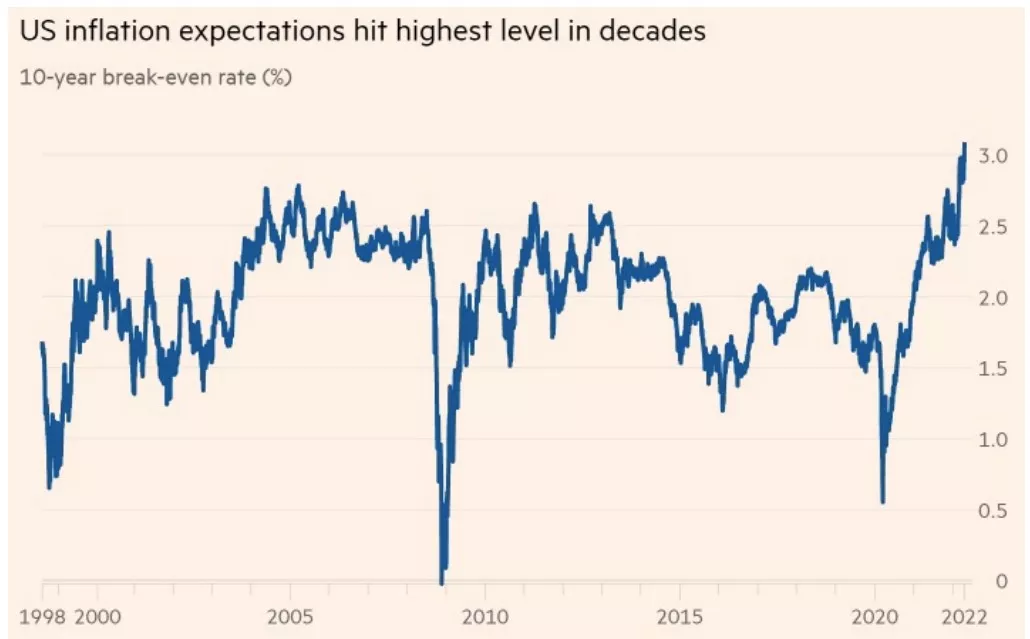
The bond rout intensified this week as officials from both the Federal Reserve and the Federal Reserve and the European Central Bank stepped up their language on fighting inflation. At an IMF event on Thursday, Fed Chair Jerome Powell said that a quicker move to raise rates is more appropriate to combat inflation. Markets are now expecting a 0.5 percentage point rate rise in each of the next three Fed meetings. The Fed’s hawkish message has done little to stop the rise in long-term inflation expectations. The U.S. 10-year breakeven, a gauge of market inflation expectations over the next decade, climbed to 3.08 percent on Friday. This is the highest level in two decades, according to FT.com. The high inflation expectations reflect the current consumer price inflation, which is at the highest level in 40 years. (Source: FT.com).



Comments
Log in or sign up to join the conversation.