

Hard money loans for flipping houses generally work well for investors who need quick funding, flexible qualification requirements, and fast property acquisition. Traditional investment financing typically suits borrowers seeking lower interest rates, longer repayment periods, and structured lending terms. The right choice depends on project timelines, financial qualifications, renovation budgets, and profit objectives. Understanding the differences between these financing methods helps investors select a funding solution that supports both short-term project goals and long-term investment success.

Understanding Hard Money Loans for Flipping Houses
Real estate investors often encounter opportunities that require immediate action. Hard money loans for flipping houses provide access to funding through private lenders that focus heavily on the property's value and potential. Approval timelines are often measured in days rather than weeks.
This financing option can help investors secure properties before competing buyers submit stronger offers. Many lenders evaluate the after-repair value of the property alongside the renovation plan. Borrowers should still review repayment terms carefully before accepting funding.
Consider a property listed for $180,000 with an estimated after-repair value of $280,000. Waiting several weeks for traditional financing could result in losing the opportunity. Fast funding can help investors move quickly while maintaining a clear renovation strategy.
How Traditional Investment Financing Works
Traditional financing generally comes from banks, credit unions, and established lending institutions. These lenders examine income records, employment history, assets, debt obligations, and credit scores before approving a loan. The review process often requires substantial documentation.
Qualified borrowers may receive lower interest rates and longer repayment terms. This structure can reduce monthly borrowing costs and improve cash flow management. Many investors choose this route when project timelines allow additional time for approval.
Traditional financing may work particularly well for investors with strong financial profiles. A well-documented borrower often gains access to more favorable lending conditions. Understanding lender requirements beforehand can make the application process smoother.
Fix-and-flip House Investment Loan in Texas and Market Potential
A fix-and-flip house investment loan in Texas can support investors pursuing renovation opportunities in growing housing markets. Strong population growth and ongoing housing demand continue to attract real estate investment throughout many Texas communities. Renovated properties often appeal to buyers seeking move-in-ready homes.
Market research remains a critical part of project planning. Investors should evaluate comparable sales, neighborhood trends, renovation expenses, and projected resale values. Careful analysis helps establish realistic profit expectations.
For example, a property purchased below market value may generate attractive returns when renovation costs remain controlled. However, inaccurate budgeting can quickly reduce profitability. Thorough planning often separates successful projects from unsuccessful ones.
Side-by-Side Comparison of Financing Options
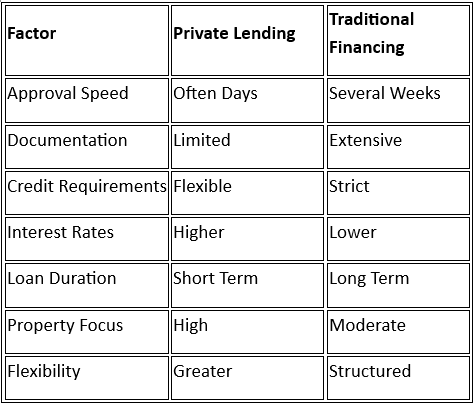
The following table highlights common differences between private lending and traditional financing.
Key Takeaways
Fast approvals can help secure competitive properties.
Lower interest rates can improve long-term profitability.
Renovation timelines influence financing choices.
Qualification requirements vary significantly.
Exit strategies should be established before borrowing.
Real-World Factors That Influence Financing Decisions
Several factors influence financing decisions during renovation projects. Budget requirements, project duration, expected resale value, and available reserves all affect lender selection. Investors should also account for unexpected expenses.
Industry professionals often recommend maintaining contingency funds between 10% and 20% of the renovation budget. Older properties frequently reveal hidden issues after construction begins. Financial preparation can help reduce project disruptions.
Questions about funding structures and qualification requirements are common among investors. All About You Financing, through Billy Smith, helps borrowers explore financing options across multiple industries and credit categories. Professional guidance can support more informed lending decisions.
Risks Investors Should Evaluate Before Borrowing
Every financing option involves risk. Market conditions may shift while a property is being renovated. Construction delays can increase holding costs and reduce expected profits.
Interest expenses, contractor availability, and material costs should also be considered. A project that appears profitable on paper may encounter unexpected challenges during execution. Conservative financial projections help reduce exposure to risk.
Successful investors often establish multiple exit strategies before purchasing a property. Preparing for different market scenarios creates greater flexibility. Careful planning remains one of the most valuable tools available to investors.
Which Financing Option Fits Different Investment Goals?
Investment goals usually determine the most appropriate funding solution. Investors pursuing time-sensitive opportunities may prefer hard money loans for flipping houses because of their speed and flexibility. Faster access to capital can create advantages in competitive markets.
Traditional financing may appeal to borrowers who prioritize lower borrowing costs. Investors with strong credit profiles often benefit from more favorable lending terms. The decision should align with project requirements rather than personal preference alone.
Evaluating timelines, projected returns, and risk tolerance can simplify the selection process. Financing should support the investment strategy rather than create unnecessary obstacles. A clear understanding of project goals leads to better borrowing decisions.
Conclusion
Choosing between private lending and conventional financing requires careful evaluation of project objectives, financial qualifications, and market conditions. Hard money loans for flipping houses can provide rapid access to capital for investors who need flexibility and speed.
A fix-and-flip house investment loan in Texas may support opportunities in active housing markets where timing plays an important role. Investors who combine thorough market research with realistic budgeting often place themselves in stronger positions for long-term success. Guidance from Billy Smith can help borrowers evaluate funding solutions that align with their investment goals.
Frequently Asked Questions
Q. What are hard money loans for flipping houses, and why do investors use them?
Hard money loans for flipping houses are short-term financing solutions that help investors purchase, renovate, and resell properties quickly. Many investors choose this option because approvals often occur faster than conventional financing. All About You Financing recognizes that speed and flexibility can be valuable advantages when attractive investment opportunities appear in competitive real estate markets.
Q. How quickly can hard money loans for flipping houses be approved?
Hard money loans for flipping houses can often receive approval within a few days, depending on the lender and project details. Faster funding allows investors to act quickly on desirable properties. All About You Financing understands that rapid approval timelines may help investors secure opportunities that could otherwise be lost during lengthy traditional lending reviews.
Q. What is a fix-and-flip house investment loan in Texas?
A fix-and-flip house investment loan in Texas is financing designed to support property acquisition, renovation, and resale activities. These loans often focus on project potential and property value. All About You Financing notes that investors frequently use this type of funding when pursuing renovation opportunities in growing Texas housing markets.
Q. How do lenders evaluate a fix-and-flip house investment loan in Texas application?
Lenders reviewing a fix-and-flip house investment loan in Texas commonly assess property condition, renovation scope, estimated after-repair value, and project feasibility. Financial strength may also be considered. All About You Financing encourages investors to prepare detailed renovation plans because thorough project documentation can improve the lending evaluation process.
Q. Are hard money loans for flipping houses more expensive than traditional financing?
Hard money loans for flipping houses typically have higher interest rates and fees than conventional financing. However, borrowers often accept these costs in exchange for faster approvals and greater flexibility. All About You Financing believes investors should compare overall project profitability and funding speed rather than evaluating interest costs alone.
Q. What are the benefits of a fix-and-flip house investment loan in Texas?
A fix-and-flip house investment loan in Texas may provide financing tailored to renovation-focused projects. Investors can often access funding based on property potential and projected value improvements. All About You Financing understands that flexible financing structures can support investors seeking opportunities in active and expanding housing markets.
Q. Which option is better: hard money loans for flipping houses or a fix-and-flip house investment loan in Texas?
The answer depends on project goals, timelines, and financing requirements. Hard money loans for flipping houses often prioritize speed and flexibility, while a fix-and-flip house investment loan in Texas may be structured around specific renovation objectives. All About You Financing recommends evaluating project costs, risk tolerance, and expected returns before selecting a funding solution.
Comments
Log in or sign up to join the conversation.