

By Elliott Gue, editor of Energy and Income Advisor.
Right now, we’re already seeing strong growth in Latin America – and accelerating drilling programs in markets like Asia-Pacific and Africa. In a normal energy cycle, you’ll see commodity prices start to rise off their lows, and the producers (upstream) are the big early winners in the cycle. Then, as time passes, you’ll see the producers boost their spending in an effort to increase production to take advantage of higher prices.
Halliburton Co. (HAL)
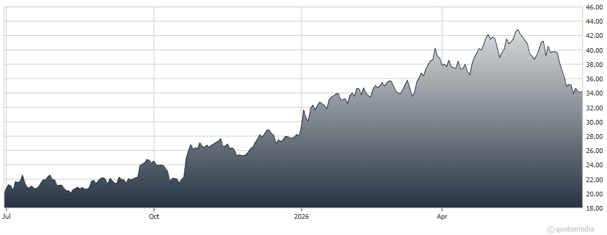
This results in services outperformance as producer capex is their revenue base. But now we’re seeing a desire to diversify energy supply – a sort of energy nationalism – beyond extreme dependence on just one supplier. So, it looks like the main impact for investors will be an acceleration of the normal cycle roadmap that favors the oil services stocks earlier in the cycle than normal.
Let’s talk about when oil and gas wells are shut in, too. The operator stops producing from the well due to factors like a lack of storage capacity – and the operator must perform significant work to restart production. It is not a simple matter of turning a valve back on. Plus, there can be damage to the reservoir.
As a rule of thumb, the longer a well is shut in, the harder it is to restore production and the longer it can take to do so. So, even once the Strait of Hormuz fully reopens, the production response won’t be immediate. And the longer the current turmoil persists, the longer it will take to resume output. This is bullish for oil because we believe investors are underestimating the longer-term price impact.
Recommended Action: Buy HAL.

Comments
Log in or sign up to join the conversation.