

WHEAT
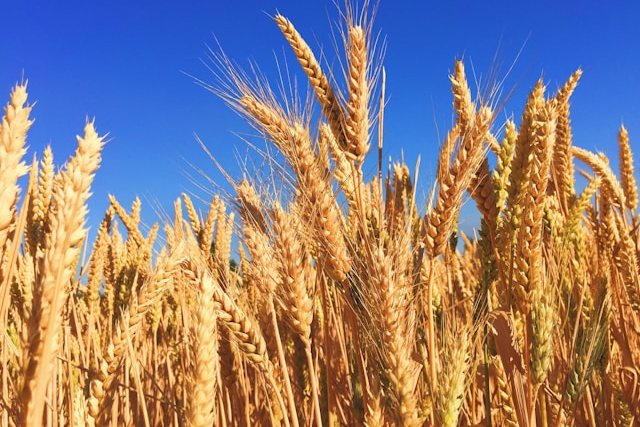
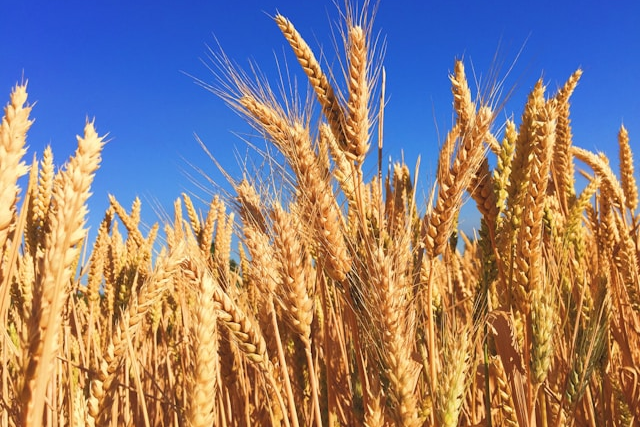
General Comments: Wheat markets were higher on the bad weather reported in the Great Plains. It was cold and part of the crop froze, then it turned warm and dry. The big negative for the market is still better weather for Europe and Russia. Europe has been getting some rains after a prolonged dry spell and Russia is likely to get some very beneficial rains this week. The rains in Russia would come at a time when the crop most needs them. The forecasts call for big rains that would really help the crops. The US Midwest has also seen a lot of rain and a bumper SRW crop is expected. The Great Plains have been a different story and reduced production ideas are floated for HRW areas. It has been hot and dry in central and southern areas after a freeze a couple of weeks ago. The crop suffered Winterkill first and now is suffering under the hot and dry weather. It has been warm and mostly dry in the northern Great Plains and into the Canadian Prairies but the market is less concerned about production potential for Spring Wheat crops. Ideas are that the warmer and drier weather is greatly assisting in the planting progress.
Overnight News: The southern Great Plains should get scattered showers on Saturday and Monday. Temperatures should be above normal. Northern areas should see scattered showers on Saturday and Monday Temperatures will average above normal. The Canadian Prairies should see scattered showers on Friday and Sunday, otherwise mostly dry conditions. Temperatures should trend to above normal.
Chart Analysis: Trends in Chicago are mixed to down with objectives of 487 July. Support is at 506, 499, and 488 July, with resistance at 525, 535, and 540 July. Trends in Kansas City are mixed. Support is at 476, 470, and 468 July, with resistance at 489, 496, and 508 July. Trends in Minneapolis are mixed to down with objectives of 482 July. Support is at 502, 497, and 491 July, and resistance is at 514, 518, and 520 July.
RICE
General Comments: Rice was lower with the biggest losses seen in May while it is in delivery. May Rice has put on a show as domestic supplies ran low in the cash market. The domestic situation remains tight. New crop months have reflected ideas of greatly increased planted area from producers. Some producers are selling the next crop and some significant hedge selling has been seen in new crop months in futures but this has dried up as Arkansas has been cool and wet for planting. Planting should be active this week in the state and northern sections of the state are reported to be planted already. Mississippi has also had problems planting the crop due to too much rain. Demand for US Rice remains generally positive and the export sales pace in general has been very good. Mills and exporters are calling previously bought Rice to keep the market supplied. This is happening mostly in Arkansas as Gulf Coastal areas are mostly sold out of Rice. The weekly crop progress reports showed that southern Rice is emerging well. Some Texas and Louisiana Rice is now in flood.
Overnight News: The Delta should get mostly dry conditions Temperatures should be generally below normal.
Chart Analysis: Trends are mixed. Support is at 1450, 1444, and 1432 July, with resistance at 1504, 1548, and 1562 July.
CORN AND OATS
General Comments: Corn was lower. The main fundamental remains demand destruction caused by the lack of ethanol demand and the lack of feed demand. Both have been detrimentally affected by the Coronavirus. The virus has caused states to impose stay at home orders on its people, meaning no one is driving and consuming gas. Russia and Saudi Arabia have said that world Crude Oil production would be 10 million barrels a day less did little for the market as consumption is even less. Some states are starting to open now in the US but it is unclear if the people will move out and enjoy life as before. The experience in other countries suggests that the people will be very cautious in any activities and really not go out and spend money or hit the stores as before. Driving will be significantly less either way. Feed demand has been reduced as packers have been forced to shut plants down due to infected employees in the plants. President Trump signed an order forcing the plants to reopen with protections from lawsuits and with protections for employees, but it is unclear if the employees will go back to work at this time. Wholesale beef and pork prices are up sharply, but cattle and hog producers are seeing very cheap prices and are liquidating herds. The Corn demand has been significantly reduced. The prospect of a renewed trade war with China over Coronavirus concerns also was negative. President Trump has threatened to place tariffs on Chinese goods again on ideas that the virus started in a Chinese lab and the seriousness of the epidemic was underplayed by Chinese government.
Overnight News: Mexico bought 109,135 tons of US Corn.
Chart Analysis: Trends in Corn are mixed to down with no objectives. Support is at 308, 301, and 288 July, and resistance is at 317, 322, and 327 July. Trends in Oats are up with objectives of 294 July. Support is at 285, 281, and 278 July, and resistance is at 296, 302, and 306 July.
SOYBEANS AND PRODUCTS
General Comments: Soybeans and products closed lower as the trade tensions with China resurfaced. Soybeans found support after some significant purchases from China. The news buoyed a market in search of demand. The demand has been slow otherwise with the significant competition from Brazil. The Real has weakened a lot against the US Dollar and Brazil producers can sell at very high prices in the local currency. Meanwhile, Soybean Meal demand has been supported by logistical issues in Argentina. The Parana River has been very low and ships are not able to load the full amount of Soybeans or products. Demand has shifted to the US and also to Brazil. Improving rains in southern Brazil and northern Argentina offer hope for improved logistics in the very near term. The export meal demand has helped keep the US crush very strong. Domestic meal demand has suffered along with the demand for Corn due to reduced feed demand caused by the Coronavirus and the problems it has caused feed operations. The prospect of a renewed trade war with China over Coronavirus concerns also was negative. President Trump has threatened to place tariffs on Chinese goods again on ideas that the virus started in a Chinese lab instead of in the open air market and the seriousness of the epidemic was underplayed by the Chinese.
Overnight News: China bought a total of 378,000 tons of US Soybeans for this year and next year combined.
Chart Analysis: Trends in Soybeans are mixed. Support is at 830, 818, and 812 July, and resistance is at 857, 861, and 868 July. Trends in Soybean Meal are mixed. Support is at 286.00, 283.00, and 280.00 July, and resistance is at 296.00, 298.00, and 301.00 July. Trends in Soybean Oil are mixed. Support is at 2560, 2510, and 2480 July, with resistance at 2670, 2820, and 2910 July.
CANOLA AND PALM OIL
General Comments: Palm Oil and Canola were higher. Palm Oil was hurt by the lack of bio fuels demand, but the demand loss appears to be part of the market price now. The same factors affecting ethanol demand are affecting demand for other bio fuels. People are driving less due to the Coronavirus and even reduced Crude Oil production has not been enough to lift prices to profitable levels for bio fuels producers. Palm Oil had found some support from reduced production potential in Southeast Asia as workers are affected by the Coronavirus. However, the threat of a renewed trade war between the US and China hurt demand ideas. Meanwhile, Canola found selling due to weakness in Chicago Soybeans and Soybean Oil.
Overnight News:
Chart Analysis: Trends in Canola are mixed. Support is at 462.00, 459.00, and 455.00 July, with resistance at 468.00, 471.00, and 474.00 July. Trends in Palm Oil are mixed to down with objectives of 1970 and 1710 July. Support is at 1970, 1940, and 1910 July, with resistance at 2100, 2120, and 2180 July.

Comments
Log in or sign up to join the conversation.