


Gold's decline is being driven by a renewed shift in expectations for US monetary policy. As we entered 2026, investors hoped the Federal Reserve could hold rates steady or eventually cut them, but that early optimism has faded as inflation has stayed stubbornly high and economic data has remained too strong to justify monetary easing. Markets now price in the possibility of further rate rises (see below), a sharp change from earlier talk about how rates might steady or even fall. Fed officials have reinforced this outlook by stressing their ongoing commitment to bringing inflation back to target. This in turn has driven the US dollar and government bond yields ever higher, weighing on gold. The latest CME Rate Probabilities now point to a potential 100 basis points of hikes by mid-2027.
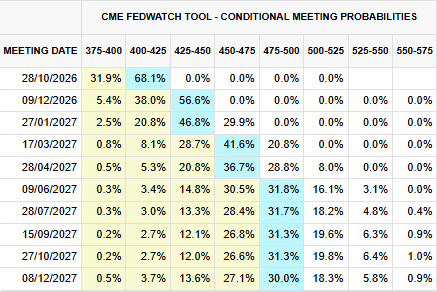
This week's economic calendar may give traders a better look under the hood with the release of closely followed PCE inflation data on Wednesday, while jobs data this week includes JOLTS job openings on Tuesday, ADP Employment change on Wednesday, and the monthly US Jobs Report (NFPs) on Friday. All of these releases will need to be watched closely. In addition, a raft of Fed officials will be speaking during the course of the week, and these comments again need to be monitored.
While the US dollar remains strong, inflation elevated, and oil prices buffeted by geopolitical noise and actions, gold will remain under pressure over the coming weeks. Spot gold has broken below the 50-day simple moving average, a supportive technical indicator over the last six weeks, and looks set to retest the $4,000/oz zone.
Short-term holders of gold will remain under pressure, while longer-term investors may see value in the $4,000/oz area.


Comments
Log in or sign up to join the conversation.