

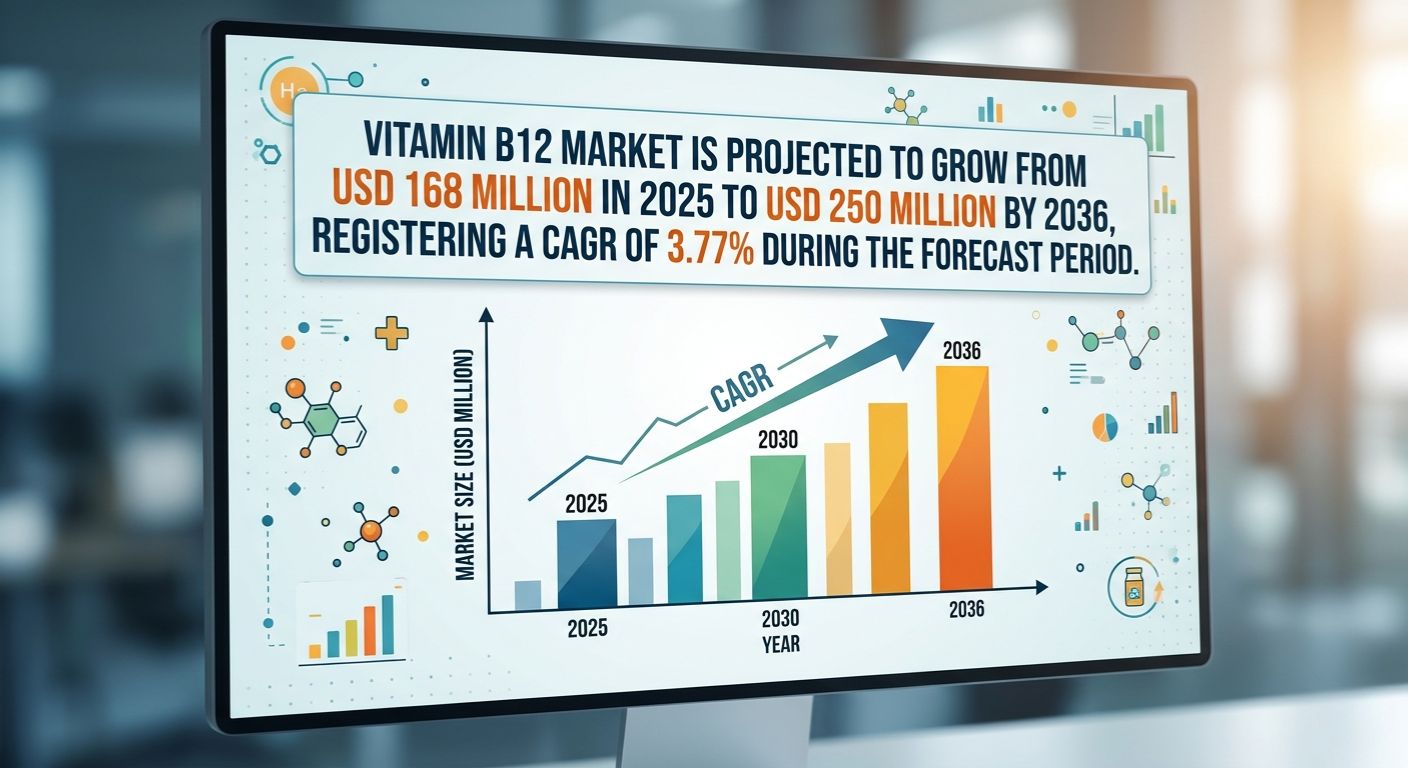
The global Vitamin B12 market is poised for steady expansion over the next decade, driven by increasing awareness of nutritional deficiencies, rising demand for dietary supplements, and expanding applications across pharmaceuticals and animal nutrition. According to current projections, the market is expected to grow from USD 168 million in 2025 to approximately USD 250 million by 2036, registering a compound annual growth rate (CAGR) of 3.77% during the forecast period.
Complete Market Analysis: - https://www.chemanalyst.com/industry-report/vitamin-b12-market-3104
Vitamin B12, also known as cobalamin, plays a vital role in maintaining neurological health, DNA synthesis, and red blood cell formation. As a highly complex, water-soluble organometallic compound, its industrial production relies on advanced fermentation technologies, making it both scientifically significant and commercially valuable.
Understanding Vitamin B12: Composition and Industrial Production
Vitamin B12 stands out among vitamins due to its intricate molecular structure, which includes a central cobalt ion. It is naturally found in animal-derived foods, but industrial production has become essential to meet global demand.
Commercially, Vitamin B12 is synthesized through deep-tank microbial fermentation, utilizing specialized bacterial strains such as Pseudomonas denitrificans. This process involves:
Controlled fermentation environments
High-purity nutrient media
Multi-stage purification systems
The complexity of this production method contributes to cost fluctuations and influences market pricing trends. Additionally, ongoing research into strain optimization and fermentation efficiency is expected to improve yields and reduce production costs over time.
Market Drivers: Key Factors Supporting Growth
Rising Prevalence of Vitamin B12 Deficiency
One of the primary drivers of market growth is the increasing prevalence of Vitamin B12 deficiency worldwide. This condition is particularly common among:
Vegetarians and vegans
Elderly populations
Individuals with gastrointestinal disorders
Symptoms such as fatigue, neurological impairment, and anemia have led to a surge in demand for supplementation, especially in urban populations where dietary imbalances are more common.
Expansion of the Dietary Supplements Industry
The global wellness trend has significantly boosted the demand for dietary supplements. Vitamin B12 is widely used in:
Energy-boosting supplements
Multivitamin formulations
Cognitive health products
Consumers are increasingly adopting preventive healthcare practices, contributing to sustained demand across developed and emerging markets alike.
Read the Complete Market Report: - https://www.chemanalyst.com/industry-report/vitamin-b12-market-3104
Growth in Pharmaceutical Applications
Vitamin B12 is widely used in the pharmaceutical sector for treating conditions such as:
Pernicious anemia
Neuropathy
Vitamin deficiencies
Injectable forms, particularly hydroxocobalamin and methylcobalamin, are gaining popularity due to their higher bioavailability and effectiveness in clinical treatments.
Increasing Demand in Animal Nutrition
The livestock and poultry industries rely heavily on Vitamin B12 as a feed additive to enhance:
Animal growth rates
Feed conversion efficiency
Overall health and productivity
As global meat consumption rises, particularly in Asia-Pacific regions, the demand for fortified animal feed continues to expand.
Market Segmentation: Forms and Applications
By Chemical Form
The Vitamin B12 market is segmented into several key chemical forms, each with distinct properties and applications:
Cyanocobalamin: The most commonly used and cost-effective form, widely utilized in supplements and food fortification.
Methylcobalamin: A bioactive form preferred for neurological treatments and premium supplements.
Hydroxocobalamin: Often used in injectable pharmaceuticals due to its longer retention in the body.
Adenosylcobalamin: Primarily used in specialized medical and research applications.
Among these, cyanocobalamin dominates the market due to its stability and affordability, while methylcobalamin is witnessing faster growth due to rising consumer preference for natural and bioactive compounds.
By Application
Dietary Supplements
This segment holds a significant share of the market, driven by increasing health consciousness and preventive healthcare trends. Vitamin B12 supplements are available in various forms, including tablets, capsules, and sublingual formulations.
Pharmaceuticals
The pharmaceutical segment is expanding steadily, supported by the rising incidence of chronic diseases and the need for effective deficiency treatments. Injectable formulations are particularly important in clinical settings.
Animal Feed
Vitamin B12 is a crucial additive in animal feed formulations, especially for poultry and swine. The growing global demand for protein-rich diets is directly influencing this segment.
Fortified Food and Beverages
Food fortification is gaining traction as governments and health organizations promote nutritional security. Vitamin B12 is increasingly added to:
Breakfast cereals
Dairy alternatives
Energy drinks
This segment is expected to witness moderate but consistent growth.
Regional Insights: Global Market Dynamics
Asia-Pacific
Asia-Pacific dominates the global Vitamin B12 market, primarily due to:
Large-scale production facilities in China
Strong presence of fermentation-based manufacturers
Growing demand from the animal feed industry
China, in particular, serves as a major production hub, exporting Vitamin B12 to various global markets.
North America
North America is characterized by high consumer awareness and strong demand for dietary supplements. The region also benefits from:
Advanced healthcare infrastructure
High adoption of fortified foods
Growing elderly population
Europe
Europe represents a mature market with steady growth, driven by:
Regulatory support for food fortification
Increasing vegan population
Rising demand for pharmaceutical-grade Vitamin B12
Rest of the World
Emerging markets in Latin America, the Middle East, and Africa are gradually increasing their consumption, supported by improving healthcare access and rising disposable incomes.
Competitive Landscape: Key Market Players
The global Vitamin B12 market is moderately consolidated, with several key players dominating production and supply chains. Major companies include:
Hebei Yuxing Bio-Engineering Co., Ltd.
North China Pharmaceutical Group Corp. (NCPC)
Euroapi
Ningxia Kingvit Pharmaceutical Co., Ltd.
DSM and other global manufacturers
These companies focus on:
Expanding production capacities
Enhancing fermentation technologies
Strengthening global distribution networks
Strategic collaborations, mergers, and investments in R&D are common strategies adopted to maintain competitive advantage.
Pricing Trends and Market Challenges
Pricing Dynamics
Vitamin B12 pricing is influenced by several factors, including:
Raw material costs
Fermentation efficiency
Energy prices
Supply-demand balance
Fluctuations in these variables can impact market stability, particularly in regions heavily dependent on imports.
Challenges
Despite steady growth, the market faces certain challenges:
Complex production process: High capital investment and technical expertise are required.
Regulatory constraints: Strict quality standards for pharmaceutical and food-grade products.
Supply chain disruptions: Dependence on specific regions for production can create vulnerabilities.
Addressing these challenges will be critical for sustained market expansion.
Emerging Trends and Future Outlook
Shift Toward Bioactive Forms
Consumers are increasingly favoring bioactive forms such as methylcobalamin due to better absorption and perceived health benefits. This trend is expected to reshape product offerings in the supplement industry.
Technological Advancements in Fermentation
Innovations in microbial engineering and fermentation processes are likely to:
Improve yield efficiency
Reduce production costs
Enhance product quality
Growth in Plant-Based Diets
As plant-based diets gain popularity, the demand for Vitamin B12 supplementation is expected to rise significantly, since plant sources lack this essential nutrient.
Expansion of Functional Foods
The integration of Vitamin B12 into functional foods and beverages is creating new growth avenues, particularly among health-conscious consumers.
Conclusion
The global Vitamin B12 market is set for consistent growth through 2036, supported by rising health awareness, expanding applications, and technological advancements in production. While challenges such as complex manufacturing processes and regulatory requirements persist, the market’s strong fundamentals and diverse application base provide a solid foundation for long-term expansion.
As industries ranging from pharmaceuticals to animal nutrition continue to rely on Vitamin B12, and as consumers increasingly prioritize preventive healthcare, the market is expected to remain resilient and steadily evolving in the years ahead.
Contact US:
Email-id: [email protected]
Phone no: +1-(332) 258 - 6602
Address: 420 Lexington Avenue, Suite 300
New York, NY
United States, 10170
Comments
Log in or sign up to join the conversation.