
What Is Generative Engine Optimization and Why Does It Matter?
Generative Engine Optimization (GEO) is rapidly becoming one of the most important digital marketing strategies in 2026. As AI-powered search platforms such as ChatGPT, Gemini, Perplexity, and Claude continue changing how users discover information, businesses must adapt their content strategies to remain visible.
Unlike traditional SEO, which focuses on ranking webpages in search engine results, Generative Engine Optimization aims to increase the chances of your content being referenced, cited, or recommended in AI-generated answers. As AI search adoption grows, businesses that invest in Generative Engine Optimization today will gain a significant competitive advantage tomorrow.
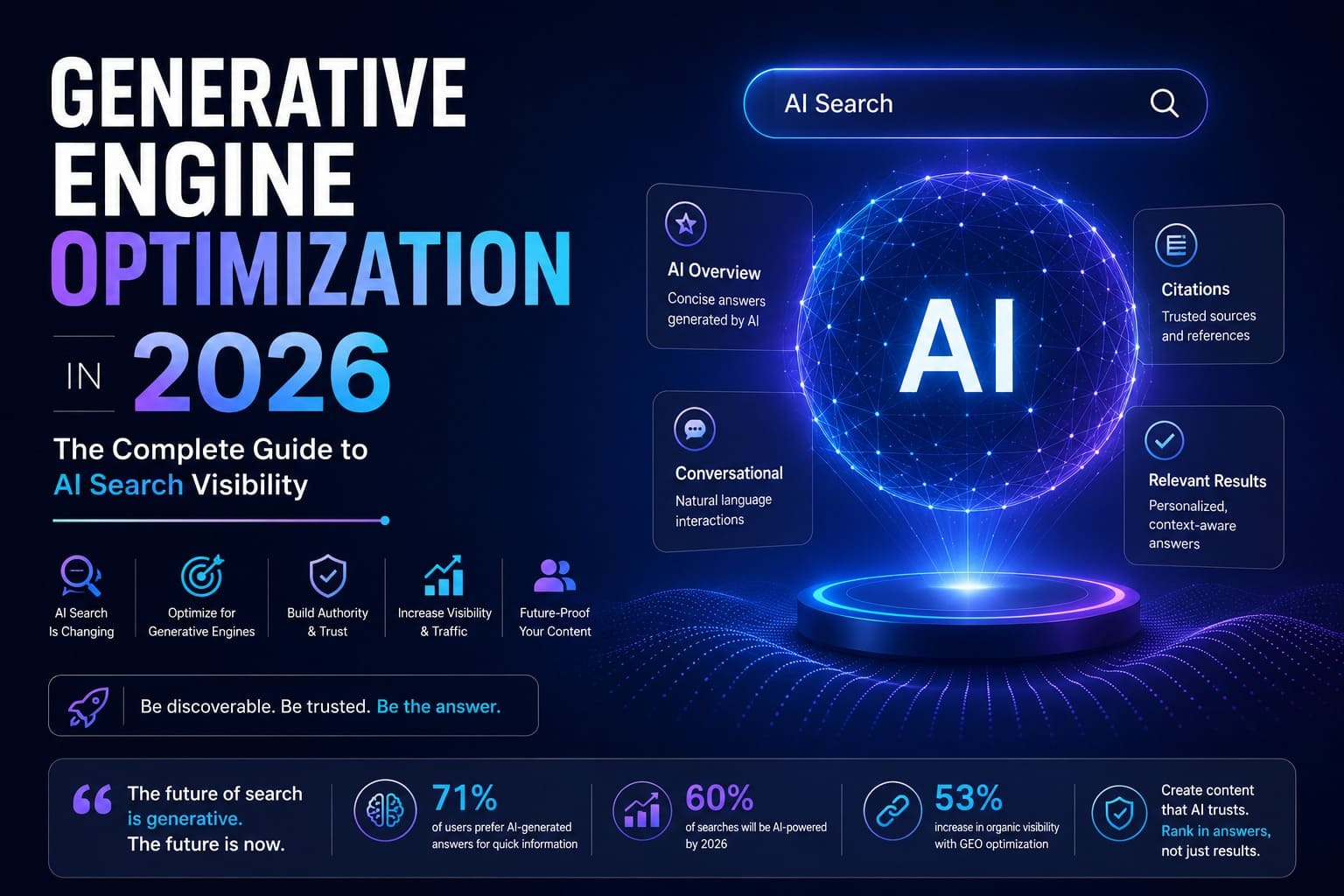
Understanding How Generative Engine Optimization Works
Generative AI engines analyze vast amounts of information from websites, trusted sources, structured data, and authoritative content to generate answers for users. Instead of showing ten blue links, these systems provide direct responses based on the most reliable and relevant sources available.
A successful Generative Engine Optimization strategy focuses on:
Publishing authoritative content
Demonstrating expertise and trustworthiness
Creating AI-friendly content structures
Improving technical website performance
Building strong brand mentions across the web
Studies suggest that content with clear structure, factual support, and strong authority signals is more likely to be cited in AI-generated responses.
Generative Engine Optimization vs Traditional SEO
Although GEO and SEO share many similarities, their goals differ significantly.
Traditional SEO | Generative Engine Optimization |
Focuses on rankings | Focuses on AI citations |
Targets search engines | Targets AI-powered answer engines |
Click-based visibility | Mention and recommendation-based visibility |
Keyword-focused | Context and entity-focused |
SERP performance | AI response performance |
The future of digital marketing requires combining both approaches rather than choosing one over the other. Businesses that integrate GEO with SEO will be better positioned for long-term online visibility.
Key Generative Engine Optimization Strategies for 2026
Create Authoritative and Helpful Content
AI systems prefer content that demonstrates expertise and provides accurate information. Every article should answer user questions clearly while supporting claims with credible data and examples.
Content should prioritize user intent rather than simply targeting keywords.
Improve Content Structure
Research indicates that well-organized content improves AI citation rates. Use:
Clear H1, H2, and H3 headings
Bullet points and numbered lists
Short paragraphs
FAQ sections
Summary boxes
Proper content organization helps AI systems understand and retrieve information more efficiently.
Strengthen Entity-Based SEO
Modern AI search relies heavily on entity recognition. Ensure your brand, services, products, and industry expertise are consistently represented across your website and external platforms.
This helps AI systems accurately identify and reference your business.
Optimize Technical Foundations
Technical SEO remains critical for GEO success. Fast-loading pages, mobile responsiveness, crawlability, and structured data improve content accessibility for both search engines and AI systems.
You can further improve your website by following a comprehensive Technical SEO Checklist for 2026 to ensure your site meets modern search and AI visibility standards.
Build Trust Signals Across the Web
AI engines often favor information supported by third-party validation.
Focus on:
Digital PR
Industry citations
Expert contributions
Brand mentions
High-quality backlinks
The more trustworthy your brand appears across the internet, the greater the likelihood of AI systems citing your content.
Common Generative Engine Optimization Mistakes to Avoid
Many businesses are already investing in GEO but making critical errors that limit their visibility.
Ignoring Content Quality
Publishing AI-generated content without human review often results in generic, low-value articles that fail to earn citations.
Overlooking Technical SEO
Even excellent content can struggle if search engines and AI crawlers cannot access it efficiently.
Neglecting Structured Data
Schema markup helps AI systems better understand your content and its context.
Focusing Only on Keywords
AI engines prioritize relevance, context, and expertise over simple keyword density.
Repeating Traditional SEO Mistakes
Many businesses continue making common SEO Mistakes, such as creating thin content, neglecting user intent, or publishing duplicate information. These issues can reduce both search engine rankings and AI visibility.
How to Measure Generative Engine Optimization Success
Tracking GEO performance requires different metrics compared to traditional SEO.
Monitor:
AI-generated mentions
Brand citations in AI platforms
Referral traffic from AI tools
Share of voice across AI search engines
Content visibility in conversational search results
Businesses should regularly test prompts related to their industry to determine whether AI platforms reference their content.
The Future of Generative Engine Optimization
The evolution of AI-powered search is transforming how users discover brands, services, and information online. Experts increasingly view GEO as an extension of traditional SEO rather than a replacement. Businesses that invest in creating authoritative content, strong technical foundations, and trustworthy brand signals will be best positioned for success in the AI search era.
Conclusion
Generative Engine Optimization is no longer an emerging trend—it's becoming a critical component of digital visibility in 2026. By combining high-quality content, technical excellence, structured data, and strong brand authority, businesses can improve their chances of being featured in AI-generated responses and recommendations.
If you want expert assistance implementing GEO strategies, improving AI visibility, or strengthening your SEO performance, visit our Contact Us page and speak with our digital marketing specialists today.
Comments
Log in or sign up to join the conversation.