

GBP/USD is trading flat on Friday, making the pair's path to the 1.3500 level difficult ahead of important UK Retail Sales data.
At the time of this writing, the cable is trading at 1.3487, down by 0.02 percent. The Bank of England (BoE) is under pressure to raise interest rates at its next meeting since inflation in the UK has risen to its highest level in ten years at 4.2%. Because of this, investors are eagerly awaiting the outcome of the BoE's decision on a rate increase.
It's worth noting that the labor shortage in the area is expected to put further pressure on the Bank of England to raise interest rates sooner than any of its regional counterparts.
The GBP/USD bulls face the issue of COVID-19. However, they remain optimistic about the UK's employment and inflation data. Typically, investors utilize the tools supplied by Forex brokers to estimate future price fluctuations.
To locate the best brokers, traders usually read forex brokers reviews by trusted sources, to see if their services and tools are effective for forecasting future price fluctuations. They can determine whether to be bullish or bearish in the market using their tools and services.
After a two-day decline in the US dollar, the GBP/USD pair was supported by modest US T-bond rates and speculation over an early Fed policy tightening.
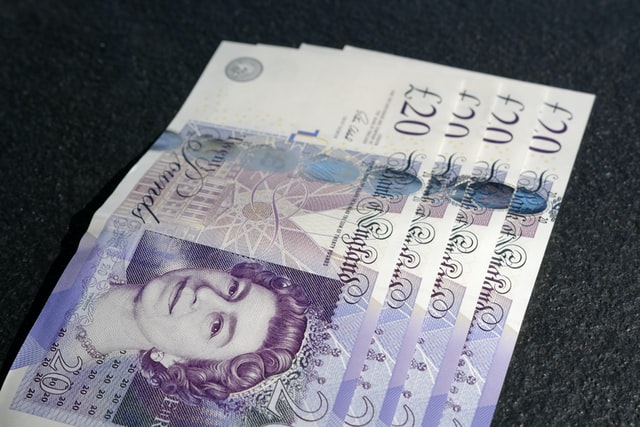
Photo by Colin Watts on Unsplash
Before, in November, the US Philly Fed Manufacturing Index surged to 39 in defiance of forecasts, indicating a rise to 24 from the previous month's 23.8. Higher Weekly Jobless Claims, which came in at 268K for the week ending November 12, more than offset this. It provided a tiny lift to the two of them.
Federal Reserve Vice Chairman Richard Clarida and Christopher Waller are expected to provide additional encouragement to the market in their talks. In order to keep the cable pair's momentum going, though, it has to hold above 1.3500.
The market had anticipated an increase in interest rates to control predicted inflation, but with just two votes out of nine, the BoE still seems to be a long way from raising rates.
US inflation surged in September, and although the UK's GDP rebounded in September, it was still trailing behind other major economies.
Both the GBP and the USD continue to have a difficult time with the Euro. As of this writing, the GBP/USD pair is trading at 1.1700 and the EUR/USD pair is at 1.1500, the lowest level since July 2020. It is possible that the disparity between US and European interest rates may expand further, resulting in more downward pressure on the Euro.
Customers from the pound and euro face a significant risk in 2022, and they should consider re-evaluating their needs.
History Of GBP/USD Currency Pair
A 5:1 ratio was the norm for much of the 1800s for the world's oldest currency pair, just for context. It reached an all-time high of 10:1, but the First World War was the first big tipping point, and the sterling depreciated to around 312:1. The value of the currency pair hasn't always been subject to fluctuation. When the Second World War broke out in 1940, both governments agreed that the pound should be linked to the dollar at a rate of $4.03 to reduce Britain's enormous borrowing expenses.
Even in 2020, several currency pairings, such as AED/USD and HKD/USD, still choose to have their exchange rates tied to the dollar. Pegging a currency pair may be done for a variety of reasons. In 2019, 44.15 percent of all currency transactions included the US dollar, which is the world's most popular currency.
Many investors and companies are concerned about how the USD/JPY currency pair will perform in 2021. Dollar weakness since peaking of economic panic about coronavirus has not dampened demand for the greenback as long as the global economy is in recovery mode and in a vulnerable position. For sterling, the pound has lost its safe-haven character ever since Black Wednesday in 1992 and particularly since the 2008 crisis.
What's Driving The Pair?
A record-low 0.1 percent interest rate and an extraordinary bond-buying program of £875bn were unveiled by the central bank as the epidemic struck the UK economy.
Members of the Monetary Policy Committee (MPC), including Michael Saunders and David Ramsden, were in favor of cutting the objective for the purchase of bonds from £875 billion to £830 billion.
On the day, GBP/USD gained momentum and re-established daily highs of 1.3945. The pound was given a boost by Sanders and Ramsden's opposition on the QE vote, although the gains were modest.
In light of the Bank of England's "arguably mildly hawkish in tone" statement, the bank has marginally advanced its estimated timeline for the Bank of England's rate rise cycle, according to the Wells Fargo Research Team. But Wells Fargo expects the first-rate rise in Q3-2022, albeit it will be only 0.25 percent.
As a result of the US Federal Reserve's anticipated interest rate rise and the risk-averse mindset that is driving the US dollar price action, the overall pair has fallen. Since the beginning of June, when the Fed's dot-plot graphic showed that a rate rise may occur sooner than anticipated, this dynamic has become stronger. In the wake of the dot-plot on June 16, GBP/USD fell by 0.66 percent and reached a low of 1.4010. It had previously reached a high of 1.4132.
Recent FOMC minutes signaled that the US Federal Reserve will soon begin to reduce its quantitative easing (QE) program.
A dovish tone from Fed Chairman Jerome Powell at the annual Jackson Hole Symposium rekindled concerns about Fed tapering, sending the USD down. "It may be prudent" to start weaning down the Federal Reserve's $120 billion monthly asset purchases this year, according to Powell.

Comments
Log in or sign up to join the conversation.