

Bearish view
Sell the GBP/USD pair and set a take-profit at 1.3200.
Add a stop-loss at 1.3400.
Timeline: 1-2 days.
Bullish view
Buy the GBP/USD pair and set a take-profit at 1.3400.
Add a stop-loss at 1.3200.
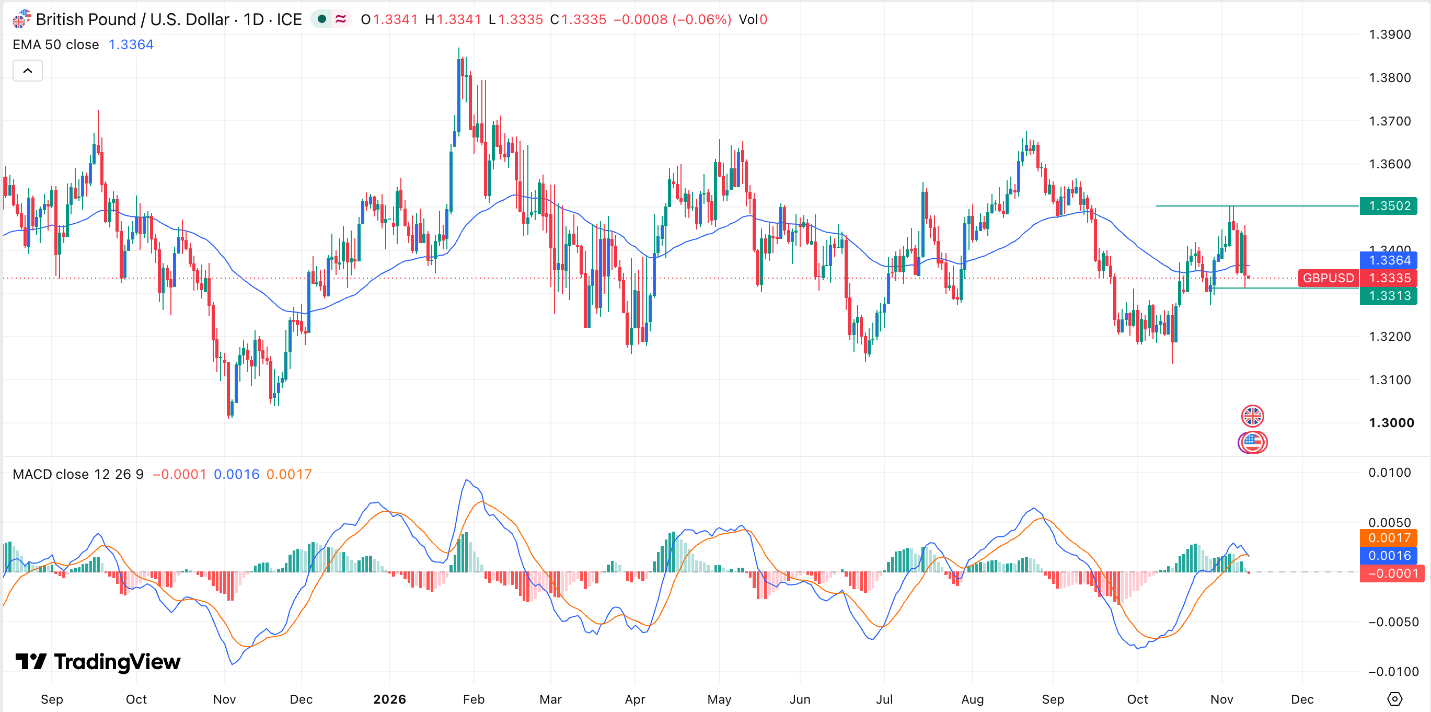
The GBP/USD pair dropped sharply after the US published a strong consumer inflation report, which raised the possibility that the Federal Reserve will hike interest rates in December. The pair fell to a low of 1.3313, which is 1.15% below its October high.
Christopher Waller Pushes for 50 bps Rate Hike
The GBP/USD pair dropped after the US published the October consumer inflation report. According to the Bureau of Labor Statistics (BLS), the headline consumer price index (CPI) rose 0.4% in October after rising 0.6% in the previous month. That figure was higher than the expected 0.3%.
Core inflation, on the other hand, rose 0.3%, higher than the expected 0.2%. These numbers mean that US consumer inflation has continued rising, mostly driven by the rising gasoline prices.
The report came a few days after the US published strong nonfarm payrolls (NFP) data. The report showed that the unemployment rate dropped to 4.1% in October as it added over 165k jobs during the month.
These numbers mean that the Federal Reserve has the incentive to hike interest rates in the last meeting of the year. In a statement on Tuesday, Christopher Waller, a senior Federal Reserve official, said that he will support hiking interest rates by 0.25% in the next meeting.
Waller’s statement is important because he has been a dove for a long time, such that President Donald Trump considered him to take over from Jerome Powell. Other Fed officials have supported more rate hikes. This includes Michelle Bowman and Lorie Logan, which explains why US bond yields have jumped.
The next important catalyst for the GBP/USD pair will be the upcoming UK GDP numbers. Economists expect the report to show that the economy did relatively well in the third quarter, driven by AI investments.
GBP/USD Technical Analysis
The daily chart shows that the GBP/USD pair has dropped significantly in the past few days. It has moved from this month’s high of 1.3502 to the current 1.3340. The pair has dropped below the 50-day Exponential Moving Average (EMA)
At the same time, the two lines of the MACD indicator have formed a bearish reversal pattern and are pointing downwards. Therefore, the pair will likely continue falling, potentially to the key support level of 1.3200. On the flip side, a move above the resistance level of 1.3400 will invalidate the bearish outlook.


Comments
Log in or sign up to join the conversation.