

Global Gas Meters Market: Growth Outlook, Smart Meter Adoption, Trends, and Opportunities
The global gas distribution industry is moving toward greater automation, accuracy, safety, and data-driven energy management. Gas meters are at the center of this transformation, providing utilities, businesses, and households with the measurement capabilities needed to monitor consumption, manage billing, improve network efficiency, and identify abnormal usage. As natural gas infrastructure expands and utilities modernize their metering networks, demand for technologically advanced gas meters is expected to increase steadily.
According to the TechSci Research report, “Gas Meters Market Size– Global Industry Share, Trends, Opportunity, and Forecast 2021-2031,” the Global Gas Meters Market is projected to grow from USD 5.61 billion in 2025 to USD 7.97 billion by 2031, registering a CAGR of 6.03% during the forecast period.
Market development is being influenced by the increasing adoption of smart metering, expansion of gas distribution infrastructure, growing awareness of energy conservation, and the need for more reliable consumption data. At the same time, the use of natural gas in combined heat and power systems, industrial machinery, and several specialized manufacturing processes is supporting broader demand for gas-related infrastructure.
Smart gas meters are emerging as an especially important growth area because they enable remote data collection, consumption monitoring, leak detection, and advanced analytics. These capabilities are helping utilities transition from conventional meter-reading models toward connected and responsive energy-management systems.
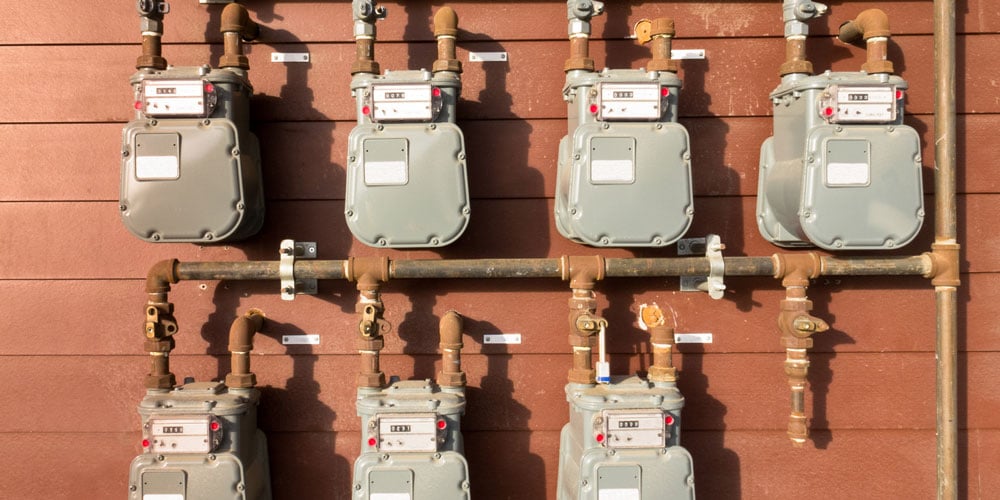
Industry Key Highlights
The Global Gas Meters Market is expected to increase from USD 5.61 billion in 2025 to USD 7.97 billion by 2031.
The market is forecast to expand at a 6.03% CAGR from 2025 to 2031.
Smart Gas Meters are expected to dominate the market by technology during the forecast period.
The Residential segment is projected to maintain its dominance by application.
North America is expected to remain the leading regional market during the forecast period.
Expansion of natural gas pipelines and distribution networks is creating additional demand for accurate metering equipment.
Smart meters support remote monitoring, data analytics, leak detection, predictive maintenance, and improved billing accuracy.
Increasing consumer interest in energy conservation and lower utility bills is encouraging adoption of advanced metering technologies.
Key participants include Honeywell International Inc., Itron Inc., Apator SA, Diehl Stiftung & Co. KG, Xylem Inc., Landis+Gyr Group AG, Badger Meter, Inc., General Electric, Aclara Technologies LLC, and EDMI Limited.
Request For Sample Copy of Report For More Detailed Market insight
Main Drivers
Expansion of Natural Gas Infrastructure
The continued development of natural gas infrastructure is one of the major factors supporting the gas meters market. As gas distribution networks extend into new geographic areas, utilities require dependable measurement systems to monitor the volume of gas delivered to individual customers and commercial or industrial facilities.
Pipeline extensions, new distribution networks, and infrastructure upgrades create opportunities for both conventional and smart metering solutions. Accurate measurement is essential not only for billing but also for monitoring network performance, identifying unusual consumption patterns, and improving supply management.
As more communities gain access to natural gas, the requirement for reliable meters is expected to increase alongside the expansion of distribution infrastructure.
Growing Adoption of Smart Metering
The transition from traditional meters to smart gas meters represents a significant market opportunity. Conventional meters generally require physical readings, whereas smart solutions can transmit consumption information electronically and enable utilities to access data remotely.
This capability can reduce manual meter-reading requirements while improving the frequency and accuracy of consumption data. Utilities can use this information to understand customer demand, optimize distribution, and identify potential problems more quickly.
Smart metering is therefore becoming an important component of the broader digital transformation of energy utilities.
Rising Demand for Energy Efficiency
Energy efficiency has become an increasingly important consideration for both consumers and utility providers. Households and businesses are seeking better ways to understand and control their energy consumption, particularly as they look for opportunities to reduce operating expenses.
Accurate gas meters provide the foundation for this effort by giving customers clearer information about their consumption. Advanced meters can take this further by enabling detailed usage analysis and supporting personalized energy-saving recommendations.
Increasing Use of Natural Gas in CHP Systems
Combined heat and power (CHP) systems are gaining attention across commercial, residential, and industrial environments because they can simultaneously generate useful heat and electricity from a fuel source.
Natural gas is widely used in these systems, creating additional demand for gas supply and measurement infrastructure. As organizations look for efficient energy solutions and seek to control emissions and costs, CHP adoption can contribute indirectly to the demand for accurate gas metering systems.
Industrial Gas Consumption
The industrial sector is increasingly deploying advanced machinery and automated production systems to improve productivity and operational efficiency. Many industrial processes rely on natural gas as an energy source, making precise measurement increasingly important.
Gas meters enable industrial users to track consumption, manage operating expenses, and improve energy-management strategies. As industrial facilities become more automated, accurate metering can also contribute to broader digital monitoring and optimization initiatives.
Emerging Trends
Smart Gas Meters Becoming the Industry Standard
Smart Gas Meters are expected to dominate the market by technology throughout the forecast period. Their growing popularity stems from their ability to provide more detailed and timely information than conventional metering technologies.
Utilities can remotely collect consumption data while customers can gain better visibility into their gas usage. These capabilities are particularly valuable as energy providers seek to modernize their infrastructure and improve customer engagement.
Leak Detection and Automated Shut-Off
Safety is becoming an increasingly important consideration in gas metering. Advanced smart meters can incorporate features such as leak detection and automated shut-off mechanisms.
These functions can help identify potentially dangerous situations and enable faster responses. For residential customers in particular, improved safety functionality can strengthen confidence in smart metering technologies.
Predictive Maintenance
Gas utilities are increasingly interested in using data to move from reactive maintenance toward predictive approaches. Information generated by connected meters can help identify unusual operating patterns and potential equipment problems.
Predictive maintenance can reduce unnecessary service visits, minimize downtime, improve equipment reliability, and potentially extend the useful life of metering infrastructure.
Integration With Digital Energy Management
Smart meters are increasingly becoming part of broader connected energy ecosystems. Where a utility manages both gas and electricity services, data from different metering systems can potentially support integrated energy-management solutions.
This integration can provide a more comprehensive picture of energy consumption and help utilities develop more targeted efficiency programs.
Renewable Natural Gas Monitoring
The growing interest in renewable natural gas (RNG) is also creating new requirements for measurement and monitoring. Accurate metering can help track RNG blended with conventional natural gas, supporting operational management, regulatory compliance, and environmental objectives.
Real-World Use Cases
Residential Energy Monitoring
Residential customers represent a major application area for gas meters. Households depend on accurate measurements for billing and increasingly want greater visibility into their energy consumption.
Smart meters can provide more timely consumption information while supporting safety features such as leak detection and automated shut-off. Utilities can also use digital engagement platforms to provide customers with personalized energy-saving guidance.
Commercial Buildings
Hotels, offices, retail facilities, restaurants, and other commercial properties often use natural gas for heating, cooking, hot water, and other applications.
Advanced meters allow commercial operators to monitor consumption more effectively and identify opportunities to reduce unnecessary energy usage. More detailed consumption information can also assist facility managers with budgeting and operational planning.
Industrial Facilities
Manufacturing plants and processing facilities can use gas meters to measure fuel consumption across production processes. Detailed monitoring can help companies identify inefficient operations, control energy expenditure, and improve resource management.
For energy-intensive industries, even incremental improvements in gas utilization can produce meaningful operational savings.
Combined Heat and Power Installations
CHP facilities require accurate measurement of the natural gas consumed during energy generation. Gas meters can help operators monitor fuel input and evaluate system performance.
Reliable measurement is particularly important where organizations are tracking energy efficiency and seeking to optimize the relationship between fuel consumption and useful heat and power output.
Gas Distribution Networks
Utilities use gas meters throughout distribution networks to measure consumption at customer endpoints. Smart metering can enhance network visibility and provide data that supports demand forecasting, distribution planning, and operational decision-making.
Competitive Analysis
Honeywell International Inc.
Itron Inc.
Apator SA
Diehl Stiftung & Co. KG
Xylem Inc.
Landis+Gyr Group AG
Badger Meter, Inc.
General Electric
Aclara Technologies LLC
EDMI Limited
Customers can also request for 10% free customization on this report.
Segmentation
The Global Gas Meters Market is segmented based on technology, application, type, and region.
By Technology
The market is divided into:
Standard Gas Meters
Smart Gas Meters
Smart Gas Meters are expected to lead the market during the forecast period because of their remote monitoring, enhanced accuracy, safety features, data analytics, and connectivity capabilities.
By Application
The market includes:
Residential
Commercial
Industrial
The Residential segment is projected to dominate throughout the forecast period. Growing consumer awareness regarding energy conservation, utility costs, safety, and environmental sustainability is supporting demand for more advanced residential metering solutions.
Regulatory initiatives in some markets are also encouraging or requiring smart-meter deployment. Meanwhile, utilities can use connected meters to engage customers through digital platforms and provide personalized recommendations for reducing energy consumption.
By Type
Gas meters are categorized into:
Diaphragm Meters
Rotary Meters
Turbine Meters
Ultrasonic Flow Meters
Each technology serves different operational requirements depending on factors such as flow rate, accuracy, installation environment, and application scale.
By Region
The market covers North America, Europe, Asia-Pacific, South America, and the Middle East & Africa.
North America is expected to be the dominating region during the forecast period. The region benefits from strong technological capabilities and ongoing investments in advanced metering infrastructure. The integration of IoT sensors, data analytics, and remote monitoring is helping utilities improve operational efficiency and enhance customer service.
Frequently Asked Questions
1. What is the projected size of the Global Gas Meters Market by 2031?
The Global Gas Meters Market is projected to reach USD 7.97 billion by 2031, compared with USD 5.61 billion in 2025.
2. What CAGR is expected for the Global Gas Meters Market?
The market is expected to grow at a 6.03% CAGR between 2025 and 2031.
3. Which technology segment is expected to dominate the market?
The Smart Gas Meters segment is expected to dominate during the forecast period because of its remote monitoring, accurate data collection, leak detection, predictive maintenance, and analytics capabilities.
4. Which region is expected to dominate the Global Gas Meters Market?
North America is expected to be the dominant regional market during the forecast period, supported by technological innovation and investments in advanced metering solutions.
Contact US:
Techsci Research LLC
420 Lexington Avenue, Suite 300,
New York, United States- 10170
Tel: +13322586602
Email: [email protected]
Comments
Log in or sign up to join the conversation.