

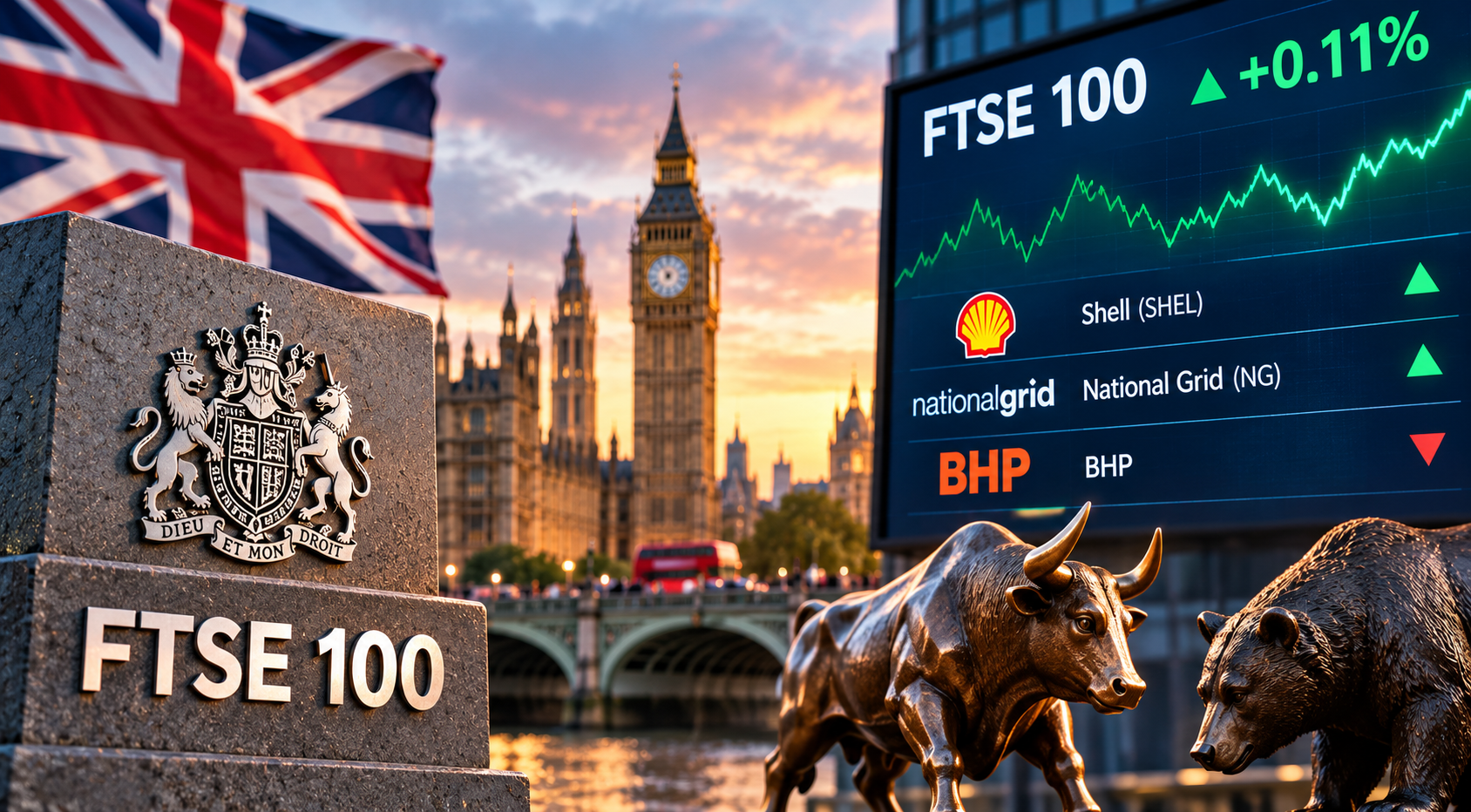
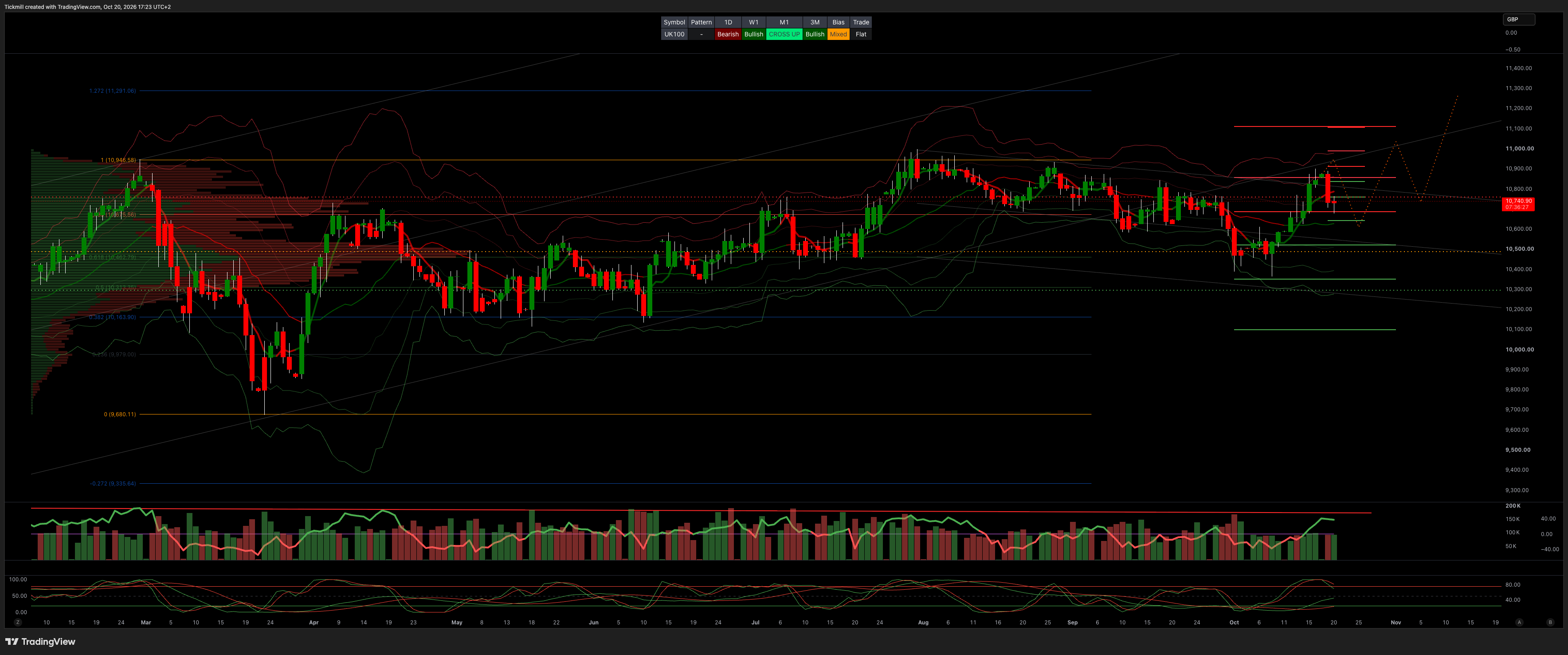
London’s benchmark FTSE 100 mounted a late recovery into the close to finish in positive territory on Tuesday, up 11.70 points or 0.11% at 10,745.40 GBP. While earlier intraday weakness saw the index drift lower on banking and mining hits, late-session buying across defensive utilities, consumer staples, and energy majors helped the market erase its losses and extend its overall upward trajectory.
Defensive utilities, consumer staples, and energy plays provided the crucial lift to push the index into the green. Gains ranging between 0.5% and 1.3% were registered across Ithaca Energy, National Grid, AstraZeneca, Coca-Cola HBC, Tesco, Reckitt Benckiser, ConvaTec Group, SSE, United Utilities, Coca-Cola Europacific Partners, Severn Trent, and Shell (SHEL).
Conversely, resource and financial heavyweights capped broader top-flight upside. Miners faced widespread selling after BHP reported a steep Q1 drop in copper production, sending ripples through the broader metals space: Antofagasta dropped 4.0%, Rio Tinto (RIO) lost 3.1%, and Fresnillo fell 2.7%, while Endeavour Mining, Glencore, and Anglo American Plc declined between 1.3% and 2.1%. Banking stocks remained under pressure, led down by Standard Chartered (-2.7%), Lloyds Banking Group (-2.0%), NatWest Group (NWG) (-1.7%), Barclays (-1.6%), and HSBC Holdings (-1.3%). Services and distribution specialist Bunzl dropped over 2% despite reaffirming annual guidance alongside Q3 revenue growth. Additional notable downside hits included Diploma, Halma, Polar Capital Technology Trust, Weir Group, Scottish Mortgage Investment Trust, Lion Finance, Computacenter, Aberdeen Group, and IG Group Holdings.
Geopolitical market volatility intensified into the afternoon following mixed signals on U.S.-Iran negotiations. Early optimism around a peace proposal submitted by the Pakistani army chief briefly weakened crude and boosted equities, but sentiment rapidly shifted after a senior diplomat involved in the talks clarified that reports of an imminent deal were incorrect. The headline breakdown triggered a sudden spike in the U.S. Dollar Index (DXY) and crude oil while forcing equity indexes into volatile swings. Front-month Brent crude futures surged nearly 2% toward $111.75 a barrel, fuelled by new Houthi drone and missile strikes on Saudi infrastructure and fresh vessel attacks in the Gulf.
On the domestic macroeconomic front, official data on the U.K. labour market provided a mixed read for the Bank of England. Data from the Office for National Statistics (ONS) showed the ILO unemployment rate unexpectedly declined to 4.7% for the June–August period (versus 4.9% expected). Average earnings, including bonuses, grew 3.7% year-on-year, moderating slightly from 3.9% previously and coming in below consensus forecasts of 3.8%.
Finish Line: U.K. equities demonstrated resilience late in the session as steady buying across utility and consumer defensive heavyweights erased early losses, keeping the FTSE 100 in positive territory. While mining drops and erratic Middle East headlines created friction, defensive strength ensured the index held onto its gain.

Comments
Log in or sign up to join the conversation.