

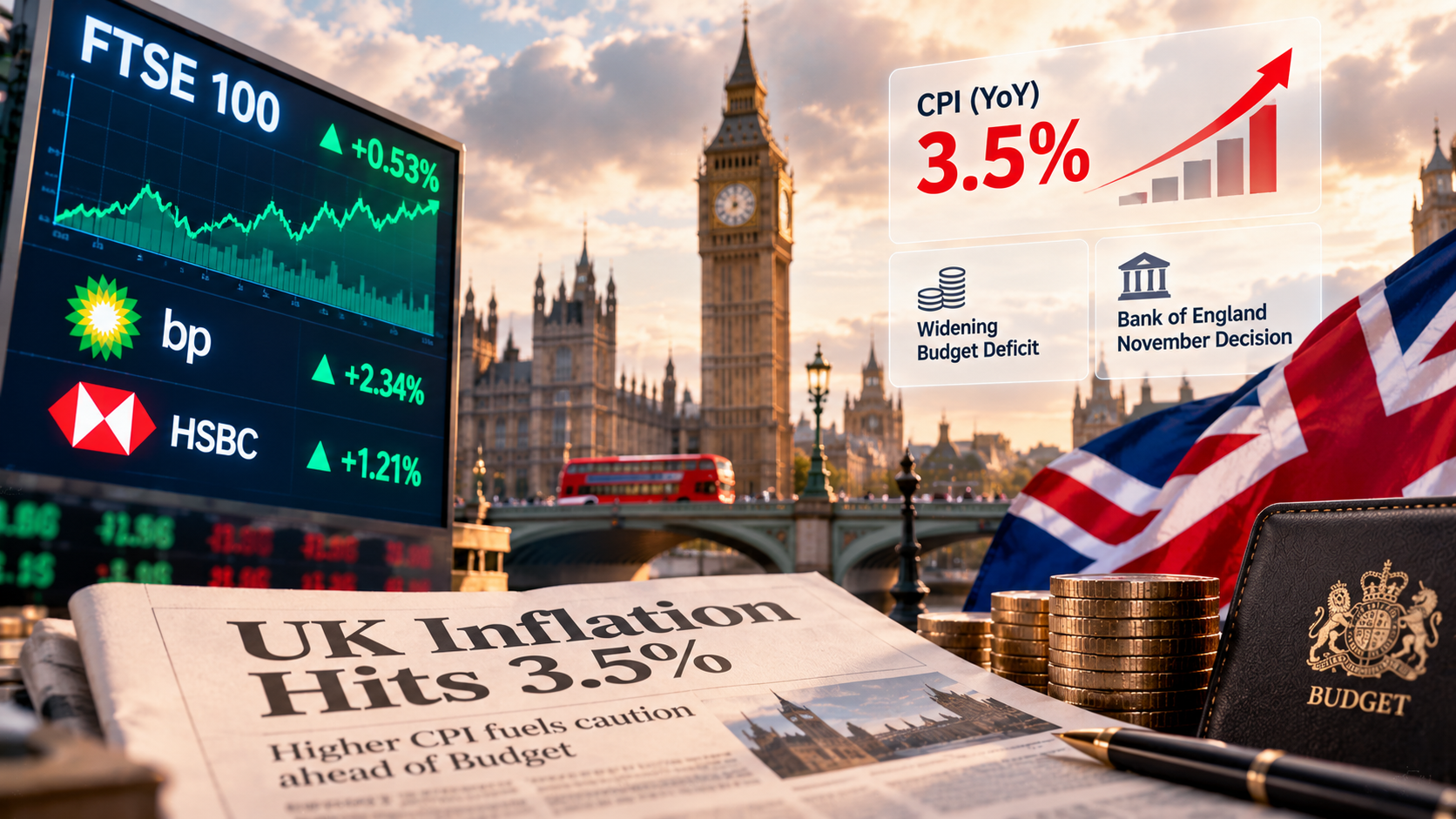
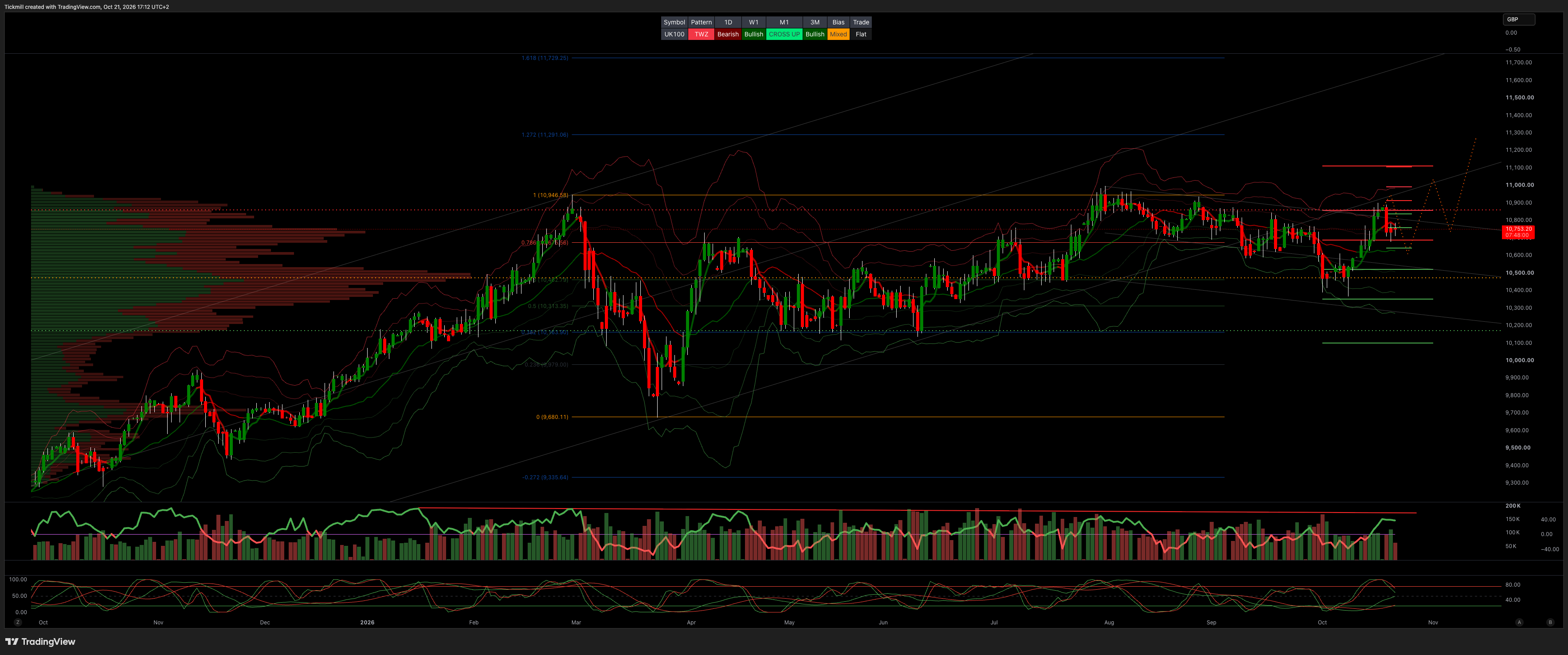
London’s benchmark FTSE 100 turned in a mixed performance on Wednesday, oscillating between marginal gains and losses to close essentially flat, down just 3.40 points or 0.03% at 10,753.60 GBP. Investors digested hot domestic inflation metrics and a widening public deficit while looking ahead to a busy earnings calendar, balancing strength in energy majors and banks against pullbacks across miners and investment trusts.
Energy majors and select growth names provided solid baseline support. Riding higher crude oil prices, Ithaca Energy and BP (BP) advanced 3% and 2%, respectively. IT provider Computacenter gained over 3%, while broad-based buying lifted ConvaTec Group, Lion Finance, Experian, WPP (WPP), Admiral Group, Compass Group, Games Workshop, and Scottish Mortgage Investment Trust by 1% to 2%. Heavyweight banking stocks also posted modest gains, led by Standard Chartered, HSBC Holdings, Barclays, NatWest Group (NWG), and Lloyds Banking Group.
Conversely, asset management, mining, and consumer blue-chips dragged on broader upside. Aberdeen Group dropped nearly 4% after reporting that assets under management and administration rose 4% at the end of September compared to late 2025. Precious and industrial miners lost ground as metals softened, with Fresnillo down 2.1%, Antofagasta dropping 1.4%, and Anglo American Plc falling 1.1%. Additional downside pressure hit 3i Group (-3.3%), Kingfisher (-2.1%), Unilever, Vodafone Group (VOD), Howden Joinery, United Utilities, and Rolls-Royce Holdings.
On the domestic macroeconomic front, hotter-than-expected inflation data fueled market caution. Official figures from the Office for National Statistics (ONS) showed U.K. CPI inflation surging to a one-year high of 3.5% year-on-year in September (up from 3.1% in August and above forecasts of 3.4%), driven primarily by motor fuel costs. Core CPI accelerated to 2.8% from 2.6%, while services inflation picked up to 3.7% and goods CPI rose to 3.2%. Upstream pressures intensified as factory gate output inflation hit an April 2023 high of 4.6% y/y, with input price growth spiking to a four-month high of 8.3%.
Compounding monetary worries, public finance data showed the U.K. budget deficit widening to £24.5 billion in September—overtaking last year's £22.8 billion and coming in £1.9 billion above the OBR's forecast as spending growth outpaced revenue receipts. Meanwhile, Bank of England Governor Andrew Bailey confirmed at an OMFIF event that the central bank has entered its quiet pre-meeting period earlier than usual ahead of the November 5 MPC decision and noted that negative rates and fiscal policy are constrained tools at lower bounds.
Finish Line: U.K. equities finished virtually unchanged as gains in energy and banking heavyweights absorbed the shock of rising CPI inflation and a widening budget deficit. With central bank officials entering an early blackout period ahead of November’s policy decision, attention shifts firmly to corporate earnings and Chancellor John Healey's upcoming Budget.


Comments
Log in or sign up to join the conversation.