

According to TechSci Research report, “Floating Storage and Regasification Unit (FSRU) Market - Global Industry Size, Share, Trends, Competition Forecast & Opportunities, 2031F, The Global FSRU (Floating Storage and Regasification Unit) Market is projected to grow from USD 8.62 Billion in 2025 to USD 13.77 Billion by 2031 at a 8.12% CAGR.
The global energy industry is undergoing a major transformation as countries seek to balance rising energy requirements with environmental objectives and energy-security priorities. Liquefied natural gas (LNG) has gained importance in this transition because it generally produces fewer carbon emissions than coal and oil when used for power generation and other applications. As LNG imports expand, countries are increasingly looking for infrastructure solutions that can be deployed quickly, scaled according to demand, and adapted to changing energy markets.
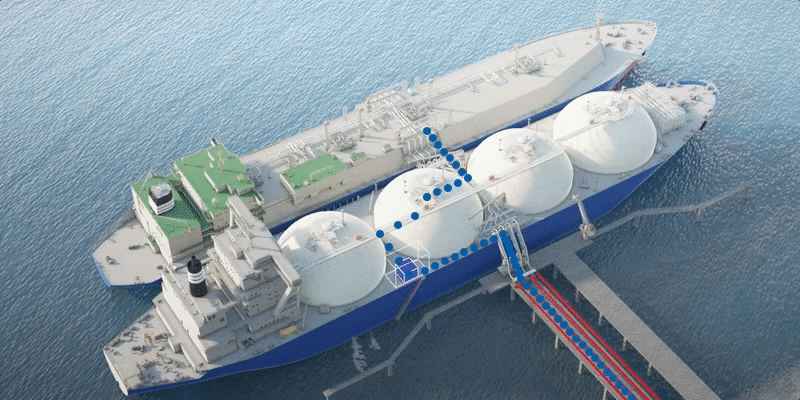
Floating Storage and Regasification Units (FSRUs) have emerged as a highly flexible solution for LNG import and distribution. These specialized vessels combine LNG storage and regasification capabilities in a floating platform, eliminating the need for extensive permanent onshore infrastructure. This makes FSRUs particularly valuable for countries with limited land availability, developing gas infrastructure, challenging coastal geography, or urgent requirements for additional natural gas supplies.
Beyond conventional LNG infrastructure, FSRUs are increasingly being considered as strategic energy assets. Their ability to be relocated allows operators and governments to respond to changing demand patterns, supply disruptions, and evolving regional energy requirements.
Industry Key Highlights
The Global FSRU Market is projected to reach USD 13.77 billion by 2031.
The market is expected to grow from USD 8.62 billion in 2025.
The industry is forecast to expand at a CAGR of 8.12% from 2025 to 2031.
Closed-roofed systems dominated the market in 2024 and are expected to maintain their leadership throughout the forecast period.
Asia Pacific is emerging as the fastest-growing regional market.
Rising LNG consumption is encouraging countries to expand import and regasification capacity.
FSRUs provide a faster and potentially more cost-effective alternative to conventional land-based LNG terminals.
Mobility enables FSRUs to respond to seasonal demand and changing market conditions.
Technological improvements are increasing regasification efficiency, safety, reliability, and environmental performance.
Key market participants include Golar LNG, Excelerate Energy, Höegh LNG, BW LNG, Mitsui O.S.K. Lines, Kawasaki Kisen Kaisha, Korea Gas Corporation, Qatar Gas Transport Company, New Fortress Energy, and TotalEnergies.
Request For Sample Copy of Report For More Detailed Market insight
Main Drivers
Growing Global Demand for LNG
One of the primary forces behind the FSRU market is the increasing international demand for LNG. Countries are expanding natural gas consumption for electricity generation, industrial operations, commercial applications, and residential energy requirements.
As governments attempt to reduce dependence on higher-emission fuels, LNG can serve as a transition fuel within broader energy diversification strategies. This is particularly relevant for rapidly developing economies where electricity demand is increasing faster than domestic gas production.
FSRUs enable these countries to access international LNG markets without waiting for large-scale permanent terminal infrastructure to be constructed.
Need for Rapid LNG Infrastructure Deployment
Traditional onshore LNG terminals can require substantial capital investment, lengthy construction periods, extensive permitting, and significant land availability. These factors can create challenges for countries seeking to increase LNG import capacity quickly.
FSRUs address several of these limitations by integrating storage and regasification equipment into a floating facility. Depending on project requirements, they can be deployed considerably faster than conventional infrastructure.
This fast-track characteristic is especially attractive when countries face immediate energy shortages or need to respond quickly to changing energy markets.
Energy Security and Supply Diversification
Energy security has become increasingly important as geopolitical developments and supply disruptions affect global energy markets. Countries that depend heavily on a limited number of energy suppliers are increasingly exploring ways to diversify their sources.
FSRUs can provide additional LNG import capacity and enable access to a wider range of international suppliers. Their flexibility also allows governments and energy companies to establish alternative import routes without committing exclusively to permanent infrastructure.
Infrastructure Challenges in Coastal and Island Regions
Island nations and remote coastal markets often encounter significant challenges when developing large onshore LNG terminals. Limited land availability, difficult terrain, high infrastructure costs, and relatively small gas markets can make permanent facilities economically challenging.
FSRUs provide an alternative by placing critical LNG infrastructure offshore or nearshore. This allows countries to expand access to natural gas while limiting the scale of land-based construction.
Private Investment and Government Support
Growing participation from private energy companies, infrastructure investors, and international financing institutions is creating additional momentum for FSRU projects.
Government policies supporting LNG imports, cleaner energy sources, and energy infrastructure development are also helping improve project feasibility. Partnerships between governments and international energy companies can further reduce technological and financing barriers.
Emerging Trends
Increasing Adoption of Flexible LNG Infrastructure
The energy market is becoming increasingly dynamic, making flexibility a major consideration when developing LNG infrastructure. FSRUs can be moved, redeployed, or adapted to changing market requirements.
This mobility is particularly beneficial for countries with seasonal gas demand or markets undergoing rapid energy-sector transformation.
Development of Advanced Regasification Technologies
FSRU manufacturers and operators are focusing on improving regasification efficiency while maintaining high safety standards. Advances in equipment design, thermal systems, automation, and process monitoring are helping enhance operational performance.
Improved technologies can reduce energy consumption and support more efficient LNG-to-gas conversion.
Growing Preference for Closed-Roofed Systems
The Closed-Roofed segment dominated the FSRU Market in 2024 and is expected to maintain its leadership throughout the forecast period.
Closed-roofed configurations offer enhanced protection against external environmental conditions and can provide greater control over temperature, pressure, and vapor management. Their enclosed structure can also reduce heat exchange fluctuations caused by changing marine and climatic conditions.
Digitalization and Remote Monitoring
Digital technologies are becoming increasingly important in floating LNG operations. Advanced sensors, automated controls, predictive maintenance tools, and remote monitoring systems can help operators track equipment performance and identify potential issues before they become major failures.
This trend is expected to improve asset availability while reducing maintenance-related downtime.
Greater Focus on Environmental Performance
FSRU operators are under increasing pressure to improve environmental performance. Newer designs are therefore emphasizing fuel efficiency, reduced emissions, improved vapor management, and better energy utilization.
These improvements align with broader efforts to reduce the environmental footprint of LNG infrastructure.
Real-World Use Cases
Supporting Power Generation
FSRUs are increasingly relevant in countries where natural gas is being introduced or expanded as a fuel for electricity generation. Regasified LNG can be delivered directly into domestic gas networks or power-generation infrastructure.
This can help countries manage electricity shortages and diversify their generation mix.
Meeting Seasonal Energy Demand
Markets with substantial seasonal fluctuations in natural gas consumption can benefit from the flexibility of FSRUs. Operators can adjust LNG procurement and utilization according to demand, while the floating infrastructure provides greater adaptability than fixed facilities.
Island Energy Supply
Island nations often face high energy-import costs and infrastructure limitations. FSRUs can provide LNG access without requiring large land-based terminals, supporting more reliable fuel supplies for electricity generation and industrial activities.
Emergency and Temporary LNG Infrastructure
FSRUs can also be used as temporary or emergency infrastructure when existing gas-import capacity is insufficient. Their deployment flexibility makes them suitable for situations where a country needs additional LNG capacity while permanent infrastructure is being developed.
Industrial Gas Supply
Industrial facilities such as manufacturing plants, petrochemical complexes, and other gas-intensive operations can benefit from reliable LNG import and regasification capacity. FSRUs can help support industrial expansion where pipeline gas availability is limited.
Competitive Analysis
Golar LNG Limited
Excelerate Energy, Inc.
Höegh LNG Holdings Ltd.
BW LNG AS
Mitsui O.S.K. Lines, Ltd.
Kawasaki Kisen Kaisha, Ltd.
Korea Gas Corporation
Qatar Gas Transport Company Limited
New Fortress Energy Inc.
TotalEnergies SE
Customers can also request for 10% free customization on this report.
segmentation
By Heating
The FSRU Market is segmented into:
Open Looped
Closed-roofed
IFV
Floating
Others
The Closed-roofed segment held the dominant position in 2024. Its advantages include improved insulation, environmental protection, vapor containment, operational reliability, and reduced exposure of critical systems to marine conditions.
The enclosed design can also contribute to lower heat loss and more consistent regasification performance. Improved protection against corrosion, saltwater exposure, and weather-related degradation can potentially support longer equipment life and lower maintenance requirements.
By Application
The market is divided into:
Oil & Gas
Marine
Transportation
Others
Oil and gas applications represent an important area of demand because FSRUs directly support LNG import, storage, regasification, and natural gas distribution. Growing LNG trade and increasing investment in gas infrastructure are expected to sustain opportunities across this segment.
Marine and transportation applications can also benefit from LNG's expanding role as an alternative fuel, particularly as maritime industries seek cleaner energy options.
By Region
The market is segmented into:
North America
Europe
Asia Pacific
South America
Middle East & Africa
Asia Pacific is emerging as the fastest-growing regional market for FSRUs. The region's growth is being supported by increasing energy consumption, rising LNG imports, industrialization, urbanization, and efforts to diversify energy supplies.
Countries including India, China, Vietnam, Bangladesh, and the Philippines are increasingly exploring LNG infrastructure to meet expanding energy requirements. Several markets face constraints associated with land availability, infrastructure development, and the cost of constructing conventional LNG terminals, creating an attractive environment for floating solutions.
India and Vietnam, in particular, are expanding LNG import capabilities as they seek to increase natural gas utilization and reduce dependence on more carbon-intensive fuels.
Government support is another important factor. Energy policies, LNG infrastructure initiatives, international investment, and partnerships with global energy companies are helping accelerate FSRU deployment.
The ability to relocate floating units is also particularly valuable in Asia Pacific, where energy requirements can vary significantly between markets and seasons. As countries continue developing their natural gas infrastructure, FSRUs can provide an adaptable bridge between current energy requirements and longer-term infrastructure plans.
Future Outlook
The global FSRU Market is entering a strong growth phase as countries seek flexible, scalable, and rapidly deployable LNG infrastructure. With the market expected to increase from USD 8.62 billion in 2025 to USD 13.77 billion by 2031 at a CAGR of 8.12%, the technology is positioned to play a significant role in the evolving LNG value chain.
Asia Pacific is expected to remain a major growth engine, while emerging opportunities in Africa and South America could further expand the global market. Countries without extensive permanent LNG infrastructure are likely to view FSRUs as an efficient pathway toward improving energy security and accessing international gas markets.
Technological innovation will remain central to market development. More efficient regasification systems, modular designs, advanced automation, improved safety technologies, and environmentally optimized operations are expected to enhance the attractiveness of FSRUs.
The market could also benefit from increasing geopolitical uncertainty and the need for diversified energy-import infrastructure. By providing rapid deployment and mobility, FSRUs can help governments respond to changing supply conditions without making irreversible infrastructure commitments.
Contact US:
Techsci Research LLC
420 Lexington Avenue, Suite 300,
New York, United States- 10170
Tel: +13322586602
Email: [email protected]
Comments
Log in or sign up to join the conversation.