

The global skincare industry generates billions of dollars annually — yet millions of people still wake up every morning battling dull complexions, irritation, premature aging, and ingredient labels they cannot pronounce. The disconnect is glaring. Somewhere between lab-synthesized preservatives and petroleum-derived emollients, the skin lost its most powerful ally: nature itself.
Buying high quality plant-based skincare products is not a trend born from Instagram aesthetics. It is a science-backed, dermatologist-recognized category of skincare that harnesses the bioactive intelligence embedded in botanical extracts, cold-pressed seed oils, adaptogenic herbs, and phytonutrient-rich plant compounds. These are ingredients that have coevolved with human skin biology for thousands of years — and today, modern cosmetic science is confirming what ancient apothecaries always knew.
If you are ready to move beyond empty promises and invest in a skincare routine that genuinely transforms your skin's texture, tone, and long-term resilience, this guide is your definitive starting point.
What Exactly Is Plant Based Skincare — And Why Does It Matter?
Before exploring individual products, it is essential to understand what distinguishes Plant Based Skincare from conventional alternatives at both a molecular and formulation level.
Plant-based formulations are built on ingredients derived entirely or predominantly from botanical sources — including leaves, roots, seeds, flowers, bark, and fruit pulp. These ingredients deliver a remarkable density of naturally occurring antioxidants, vitamins, fatty acids, polyphenols, flavonoids, and terpenes that work synergistically with the skin's own biological processes.
Conventional skincare, by contrast, often relies on synthetic humectants, silicone-based occlusives, artificial fragrances, and petrochemical derivatives that sit on the skin's surface without contributing to cellular repair or long-term skin health. They may create short-term visual softness, but they rarely address the root cause of skin concern.
Plant Based Skincare formulations penetrate deeper, communicate with skin receptors more effectively, and carry a dramatically lower risk of triggering sensitization, clogged pores, or hormonal disruption. For consumers prioritizing both performance and safety, the choice becomes increasingly clear.
The Core Bioactive Ingredients Powering Modern Plant Based Skincare Products
Understanding active botanical ingredients is the first step toward choosing the right products for your specific skin concerns. Here are the most clinically validated plant-derived actives in today's premium skincare market:
1. Bakuchiol — The Retinol Alternative That Doesn't Punish Your Skin
Derived from the seeds of the Psoralea corylifolia plant, bakuchiol has become one of the most talked-about actives in Plant Based Skincare formulations. Clinical studies demonstrate that bakuchiol stimulates collagen synthesis, improves skin elasticity, and reduces the appearance of fine lines and hyperpigmentation — delivering results comparable to retinol without the photosensitivity, peeling, or irritation that synthetic vitamin A derivatives commonly cause.
For anyone with sensitive, reactive, or rosacea-prone skin who has been told they cannot tolerate retinol, a high-potency bakuchiol serum represents a genuine paradigm shift in anti-aging skincare.
2. Rosehip Seed Oil — The Regenerative Gold Standard
Cold-pressed from the seeds of Rosa canina, rosehip seed oil is among the most nutrient-dense carrier oils in cosmetic chemistry. It contains exceptionally high concentrations of trans-retinoic acid (a natural vitamin A analogue), vitamin C, linoleic acid, and beta-carotene. Together, these compounds support skin cell turnover, fade post-acne scarring, improve uneven skin tone, and reinforce the skin's natural moisture barrier.
3. Sea Buckthorn — The Omega Powerhouse for Barrier Repair
Rich in rare omega-7 fatty acids (palmitoleic acid), vitamin E, carotenoids, and phytosterols, sea buckthorn berry extract is a cornerstone of advanced Plant Based Skincare barrier-repair formulations. It is particularly effective for chronically dry skin, eczema-prone skin types, and anyone recovering from over-exfoliation or environmental damage.
4. Turmeric & Curcumin — Nature's Anti-Inflammatory Actives
Curcuminoids derived from Curcuma longa root are among the most thoroughly studied plant-based anti-inflammatory compounds in both pharmaceutical and cosmetic science. When formulated correctly in a skincare product, turmeric extract can reduce erythema, calm inflammatory acne, brighten hyperpigmented patches, and protect against free radical damage. Pair it with black pepper extract (piperine) in a formulation to significantly enhance bioavailability.
5. Niacinamide from Plant Sources — The Multitasking Skin Perfector
While niacinamide (vitamin B3) can be synthetically derived, plant-sourced niacinamide from fermented botanical extracts is increasingly available in premium Plant Based Skincare lines. It minimizes pore appearance, regulates sebum production, strengthens the epidermal barrier, and visibly reduces discoloration with consistent use.
6. Hyaluronic Acid from Cassava Root — Hydration That Goes Deeper
Though hyaluronic acid was historically derived from animal sources, plant-fermented hyaluronic acid — often sourced from cassava root starch or wheat fermentation — is now widely available and functionally identical. It pulls moisture from the environment into the skin's deeper layers, delivering up to 1,000 times its weight in hydration.
The 5-Step Plant Based Skincare Routine That Delivers Real Results
Building a high-performance routine around Plant Based Skincare products requires understanding the correct sequence, layering logic, and product synergies. Here is the complete framework:
Step 1: Botanical Cleansing — Remove Without Stripping
Your first product touchpoint sets the tone for everything that follows. Choose a plant-based gel or balm cleanser formulated with ingredients like Camellia sinensis (green tea) extract, aloe vera juice base, or saponin-rich soapwort root. These actives remove surface impurities, SPF residue, and excess sebum without disrupting the skin's acid mantle (the protective pH barrier between 4.5–5.5).
Avoid cleansers containing sodium lauryl sulfate (SLS), which strips the skin's natural lipid barrier and leads to transepidermal water loss (TEWL) — a leading driver of premature aging and sensitization.
Step 2: Exfoliating Toner — Resurface With Plant Acids
AHAs (alpha-hydroxy acids) such as mandelic acid from bitter almonds, lactic acid from fermented sugar cane, and malic acid from apples gently dissolve the "glue" holding dead skin cells together. This process — chemical exfoliation — accelerates cell turnover, refines skin texture, fades discoloration, and primes the skin to absorb subsequent actives more efficiently.
Apply your botanical exfoliating toner on a cotton pad after cleansing, or pat directly into the skin for a gentler delivery method.
Step 3: Treatment Serum — Target Your Primary Concern
This is where your high-potency actives live. In Plant Based Skincare protocol, your serum should be selected based on your primary skin concern:
For hyperpigmentation and uneven tone: Vitamin C serum from kakadu plum extract, the most concentrated natural source of ascorbic acid on earth.
For fine lines and loss of firmness: Bakuchiol + plant-sourced peptides + sea buckthorn oil concentrate.
For active breakouts and congestion: Willow bark extract (natural salicylic acid precursor) + neem oil + tea tree hydrosol.
For redness and sensitization: Centella asiatica (cica) extract + chamomile bisabolol + oat beta-glucan.
Step 4: Face Oil — Lock In Nutrients With Botanical Lipids
Many people skip face oils out of fear of breakouts — a misconception rooted in misunderstanding skin biology. Botanical face oils rich in linoleic acid (rosehip, sea buckthorn, hemp seed, marula) are non-comedogenic and actually help regulate excess sebum production by communicating with the skin's lipid receptors. Apply 3–4 drops and press (do not drag) into the skin to seal in moisture and amplify the penetration of water-soluble actives.
Step 5: SPF Moisturizer With Botanical Actives — The Most Underrated Step
Daily UV protection is non-negotiable in any serious Plant Based Skincare routine. Seek out mineral SPF formulations using zinc oxide (a naturally occurring mineral) combined with moisturizing botanicals like shea butter, jojoba oil, and green tea polyphenols. These formulations protect against both UVA (aging) and UVB (burning) rays while simultaneously delivering skin-nourishing benefits throughout the day.
Who Should Switch to Plant Based Skincare Products? (Hint: Almost Everyone)
The short answer: if you have skin, you will benefit. But certain skin types and conditions see particularly transformative results when switching to a fully botanical routine:
Sensitive and reactive skin types respond exceptionally well to Plant Based Skincare formulations because they eliminate the synthetic fragrances, dyes, and preservatives (like methylisothiazolinone and formaldehyde-releasing agents) that are among the most common triggers of contact dermatitis and topical allergies.
Acne-prone and oily skin types benefit from the anti-inflammatory, sebum-regulating, and antibacterial properties of plant actives like neem, tea tree, willow bark, and zinc-derived compounds, without the harsh drying effects of benzoyl peroxide or aggressive chemical peels.
Mature and aging skin types gain the most from the collagen-stimulating, antioxidant-dense profile of botanicals. Free radical damage from UV exposure, pollution, and lifestyle factors is the number one cause of visible skin aging — and plant-based antioxidants like resveratrol (from grape seed), astaxanthin (from microalgae), and quercetin (from onion skin extract) neutralize free radicals far more efficiently than most synthetic alternatives.
Pregnant and nursing individuals often need to avoid a long list of conventional skincare actives — including retinoids, salicylic acid at high concentrations, and certain chemical SPF filters. Plant Based Skincare provides a much safer framework for maintaining skin health during this sensitive life stage.
The Environmental Intelligence of Choosing Plant Based Skincare
Choosing plant-based products is not only an act of self-care — it is a responsible decision for the planet. The environmental impact of conventional cosmetics manufacturing includes microplastic contamination, petroleum extraction, animal-derived ingredient sourcing, and chemical effluent from synthetic fragrance production.
Plant Based Skincare brands committed to regenerative agriculture practices, biodegradable packaging, fair trade botanical sourcing, and cruelty-free certification represent an entirely different supply chain philosophy. When you invest in these products, you vote with your wallet for a more sustainable beauty industry.
Additionally, plant-based ingredients are inherently biodegradable — meaning that when they wash off your skin and enter the water system, they do not persist as environmental pollutants the way synthetic silicones, synthetic musks, and microplastics do.
How to Read a Product Label: Identifying Authentic Plant Based Skincare
The wellness beauty market is unfortunately rife with "greenwashing" — brands that use terms like "natural" or "botanical" while their formulations remain largely synthetic. Here is how to identify genuinely high-quality Plant Based Skincare products:
Read the INCI list (International Nomenclature of Cosmetic Ingredients). Ingredients are listed in descending order of concentration. If a botanical extract appears near the bottom of a long list of synthetic humectants and silicones, it is present in a negligible quantity that will not deliver real results.
Look for certifications such as COSMOS Organic, Ecocert, USDA Certified Biobased, Leaping Bunny (cruelty-free), and Rainforest Alliance (for ethically sourced botanicals). These third-party validations hold brands accountable beyond their own marketing claims.
Prioritize whole-plant extracts over isolated synthetics. Whole rosehip oil delivers a complete spectrum of synergistic fatty acids and vitamins. Synthetic vitamin A (retinyl palmitate) is an isolated, lab-created analogue. The whole is almost always greater than the sum of its synthetic parts in botanical skincare science.
French DNA's Commitment to Plant Based Skincare Excellence
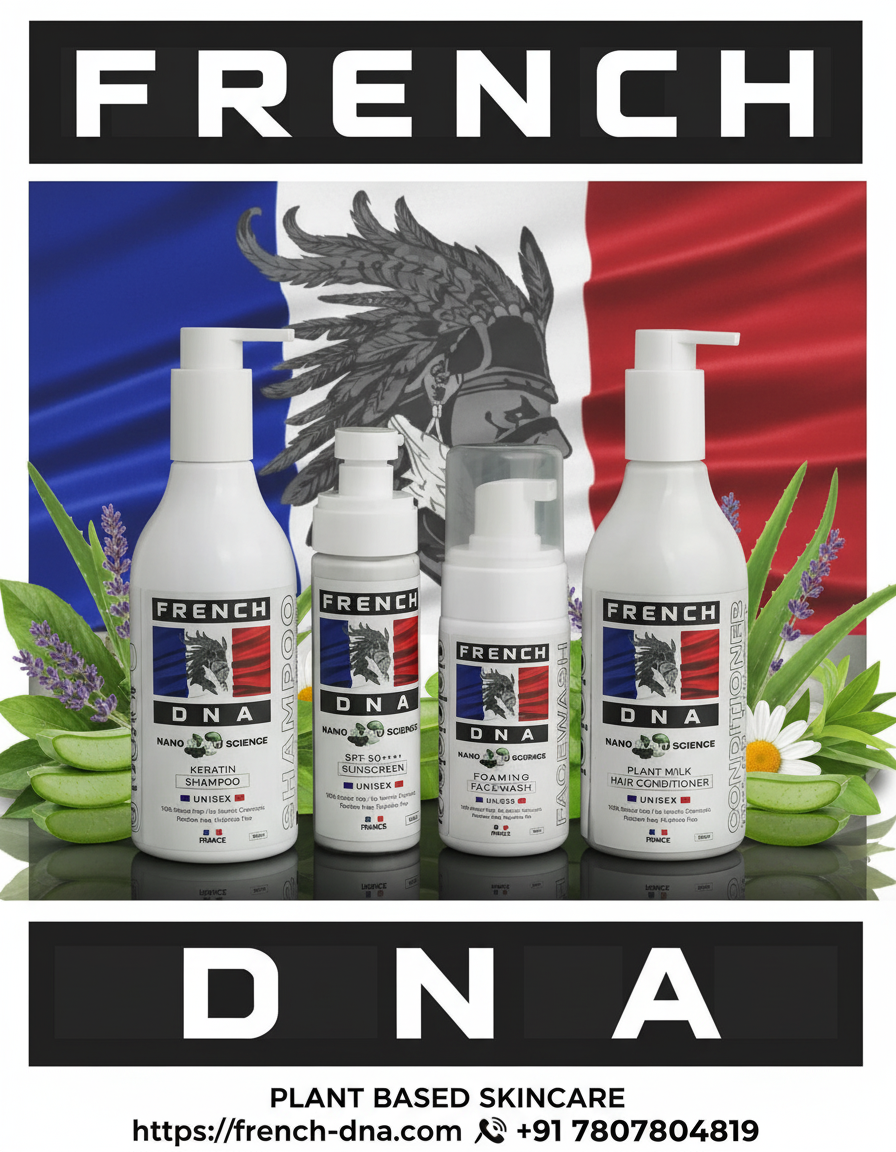
At French DNA, the product development philosophy is rooted in a deep respect for both botanical science and French cosmetic expertise — two traditions that have long recognized the primacy of natural actives in skin health. Every formulation is built around clinically validated plant-derived actives, rigorously tested for stability and bioavailability, and designed for real results on real skin.
Plant Based Skincare at French DNA means no compromise between performance and purity. It means understanding that your skin barrier is not a problem to be masked with synthetic film-formers — it is a living, breathing organ that flourishes when given the bioactive intelligence of nature in its most potent, carefully concentrated form.
Whether you are beginning your first serious skincare routine or upgrading from a conventional regimen that has stopped delivering, the French DNA botanical collection offers products calibrated for every skin type, concern, and lifestyle.
Conclusion: Invest in Plant Based Skincare — Your Skin Is Worth It
The evidence is unambiguous. Plant Based Skincare outperforms synthetic alternatives across nearly every measure that matters for long-term skin health: biocompatibility, anti-inflammatory activity, antioxidant density, barrier repair efficacy, and safety profile. It aligns your beauty routine with environmental responsibility. It gives your skin exactly what it was designed to thrive on.
Stop settling for formulations that coat the surface and call it care. Invest in products built from the intelligent complexity of botanical actives — the kind your skin recognizes, responds to, and rewards you for choosing.
Comments
Log in or sign up to join the conversation.