
There is something wonderfully freeing about owning a boat in Ireland. One weekend might mean a quiet morning around the harbour, while the next could bring a long coastal passage, a summer cruise with family or a day of racing against familiar faces from the local sailing club.
That variety is part of the pleasure of being on the water. It is also why choosing suitable boat insurance Ireland cover deserves more thought than simply looking for the lowest premium.
A small lake boat, a fast motor cruiser and a racing yacht do not face the same risks. Nor are they used in the same way. The right policy should reflect the vessel, where it is kept, how it is operated and what you expect to do with it during the year.
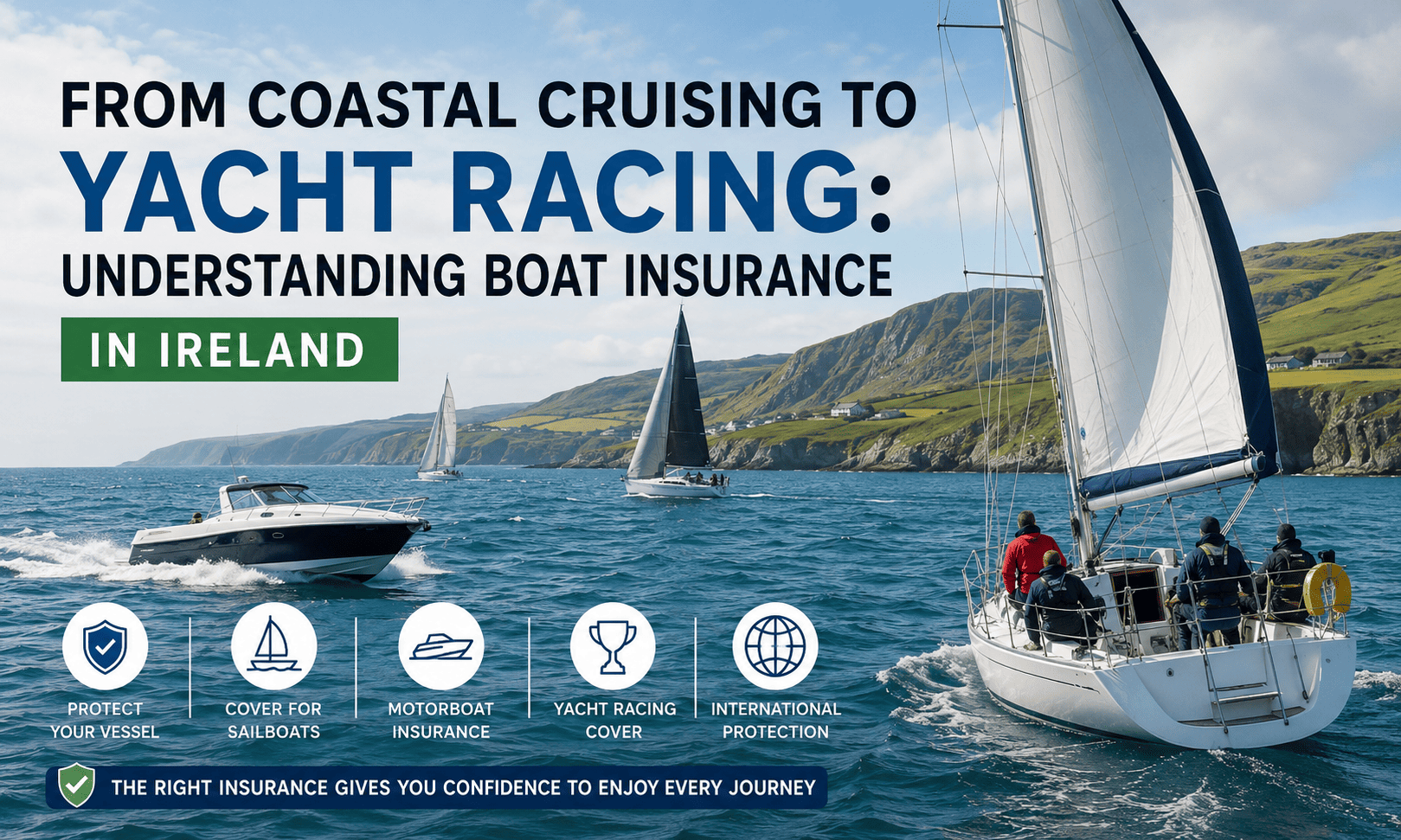
Understanding Boat Insurance in Ireland
Boat insurance is designed to protect owners from the financial consequences of risks associated with owning and using a vessel. Depending on the policy, that may include damage to the hull, theft, accidental loss, liability to other people and damage to equipment on board.
The exact protection varies from one insurer and policy to another. That is why it is important to read the wording carefully rather than assuming that every policy described as comprehensive offers the same benefits.
When arranging boat insurance Ireland cover, an insurer or broker will usually need to understand details such as:
•The type, age and value of the vessel.
•Whether it is a sailing yacht, motorboat, RIB, dinghy or another type of craft.
•Where the boat is normally moored, stored or transported.
•The waters and countries in which it will be used.
•Who operates it and whether other people are permitted to take the helm.
•Whether it is used for leisure cruising, fishing, chartering or racing.
•The vessel’s safety equipment, maintenance history and security arrangements.
These questions are not simply administrative. They help determine whether the policy reflects the real-life risks faced by the boat. For example, a vessel kept securely ashore for much of the winter may have a different risk profile from one left afloat year-round. Similarly, a boat used only in sheltered local waters may require different geographical permissions from one regularly taken across the Irish Sea.
Third-party liability is another important part of the conversation. If a boat damages another vessel, a marina structure or someone else’s property, the resulting costs can be significant. Liability protection may also be relevant if another person is injured in connection with the boat. The appropriate limit and conditions should be discussed before the policy begins.
Yacht Insurance for Sailboats and Coastal Cruising
Sailing has its own rhythm and its own practical demands. A sailing yacht can spend long periods moored in a marina, be taken out for weekend passages or travel between countries during the cruising season. Each pattern of use can affect the insurance arrangements required.
Good yacht insurance for sailboats should begin with an honest description of how the yacht is actually used. If the plan is to cruise beyond Irish waters, the permitted navigation area should be wide enough for the intended journey. Owners should also check whether the policy includes conditions relating to named waters, seasonal restrictions, weather events or periods when the boat is left unattended.
Storage is equally important. A policy may treat marina berthing, winter storage ashore, private moorings and unattended anchoring differently. Owners should confirm what security measures are expected, particularly for outboard motors, electronics, sails and other portable equipment.
It is also worth considering the human side of sailing. Who may skipper the yacht? Are there experience requirements? Does the policy distinguish between the owner, family members, guests and paid crew? These details can become especially important when a yacht is shared among several people or loaned to someone else.
For many owners, the most useful time to review cover is before a planned change rather than after it. A longer cruise, a new mooring, a change of skipper or the decision to enter a race can all be good reasons to speak with an insurance professional and confirm that the existing policy still fits.
Resources such as Yachtsman.ie can also help boat owners begin the process by comparing the types of vessel and cover that may be relevant to their circumstances. The final decision, however, should always be based on the policy wording and the advice provided for the individual boat.
Boat Racing, Motorboats and International Marine Insurance
Racing introduces a different level of activity and, in many cases, a different set of insurance questions. A policy that is suitable for relaxed cruising may not automatically cover competitive racing, training sessions or participation in organised events.
Before entering a race, ask specifically whether racing is included and whether there are conditions concerning crew experience, safety procedures, race areas or the boat’s declared value. Some policies may cover racing only if it has been disclosed in advance. Others may apply different excesses or exclusions to racing-related damage.
Motorboats create their own considerations. Speed, engine size, towing, water-sports use and the experience of anyone operating the boat can all influence the risk. Owners researching international cover may encounter the Spanish phrase “Seguro para lanchas a motor,” which means insurance for motorboats. The wording may appear in overseas marine-insurance materials, but the principle is the same: the protection needs to match the boat’s engine, use and cruising area.
International travel can make a policy more complex. A boat moving between Ireland, the United Kingdom, Spain or other European destinations may need clear territorial limits, appropriate documentation and an understanding of local marina or port requirements. Currency, salvage arrangements, repair networks and claims handling can also become more relevant when an incident happens outside the owner’s home country.
For owners with international plans, speaking to an experienced marine insurance agency in Spain or another specialist adviser may be useful when the vessel is based, stored or regularly used there. The key is to coordinate the information across jurisdictions and avoid assuming that a policy written for one country will automatically provide unrestricted protection everywhere else.
How to Choose the Right Marine Insurance Protection
Comparing marine insurance policies is not just a matter of placing premiums side by side. A cheaper policy may have a higher excess, narrower cruising limits or exclusions that matter greatly to the way you use your boat.
Start by making a clear list of your circumstances. Include the vessel’s realistic replacement or market value, its equipment, its normal berth, the areas you plan to visit and the activities you expect to undertake. Then ask prospective providers to explain how the policy responds to those details.
Pay particular attention to:
•Hull and machinery protection, including accidental damage and the basis on which repairs or replacement are valued.
•Third-party liability and the level of cover provided.
•Theft, vandalism and damage to electronics, sails, tenders or outboard motors.
•Storm, weather and water-ingress risks, including any maintenance-related exclusions.
•Salvage, wreck removal and emergency assistance.
•Racing, water-sports and use by other skippers.
•Marina or club requirements that must be satisfied before the boat is accepted.
•The claims process, approved repairers and the support available after an incident.
•Policy exclusions, warranties, excesses and geographical restrictions.
Be accurate when completing proposal forms. Understating the boat’s value, omitting racing activity or failing to mention international cruising can create problems when a claim is made. It is much better to clarify an uncertainty before the policy starts.
Ultimately, the best boat insurance Ireland policy is one that gives you a realistic understanding of what is covered, what is not and what you are expected to do as the owner. Insurance cannot remove every risk from boating, but carefully chosen protection can make an unexpected incident easier to manage.
The sea will always involve a measure of uncertainty. With the right preparation, clear policy terms and advice suited to your vessel, you can spend more time enjoying Ireland’s coastline and less time worrying about what might happen next.
For more information visit our website: https://yachtsman.ie
Comments
Log in or sign up to join the conversation.