

Form W-2 Updates 2026: What Employers Must Know About New Reporting Rules and Best Practices
As tax season approaches every year, employers brace themselves for the familiar task of preparing and distributing Form W-2 — the Wage and Tax Statement that reports employee earnings and tax withholdings. While the core purpose of Form W-2 hasn’t changed, the Form W-2 Updates for 2026 introduce important reporting requirements and refinements that businesses must understand to stay compliant and avoid costly penalties.
The webinar “W-2 Form 2026 Updates: New Reporting Rules and Best Practices (Includes OBBBA Changes)” is designed to walk employers, payroll professionals, and HR teams through these changes, making sure organizations are ready long before year-end. This blog breaks down what’s new, why it matters, and how you can prepare effectively for the upcoming tax year.
Why Form W-2 Updates Matter in 2026
Form W-2 plays a critical role in the U.S. tax ecosystem. It reports total wages, tips, and other compensation paid to employees during the year, along with amounts withheld for federal, state, and local taxes. Employees use Form W-2 information to file their tax returns, and the IRS relies on it to verify income and withholding information.
Historically, employers have focused on accuracy and timely filing. But with the Form W-2 Updates for 2026, the stakes are higher because of the additional reporting requirements and more detailed wage breakdowns that reflect recent tax law changes, including provisions stemming from the One Big Beautiful Bill Act (OBBBA).
These updates aren’t simply technical — they affect how payroll systems must be configured, how HR communicates with employees, and how organizations track and categorize wages throughout the year.
Key Changes in the 2026 Form W-2 Updates
1. New Box 12 Reporting Codes
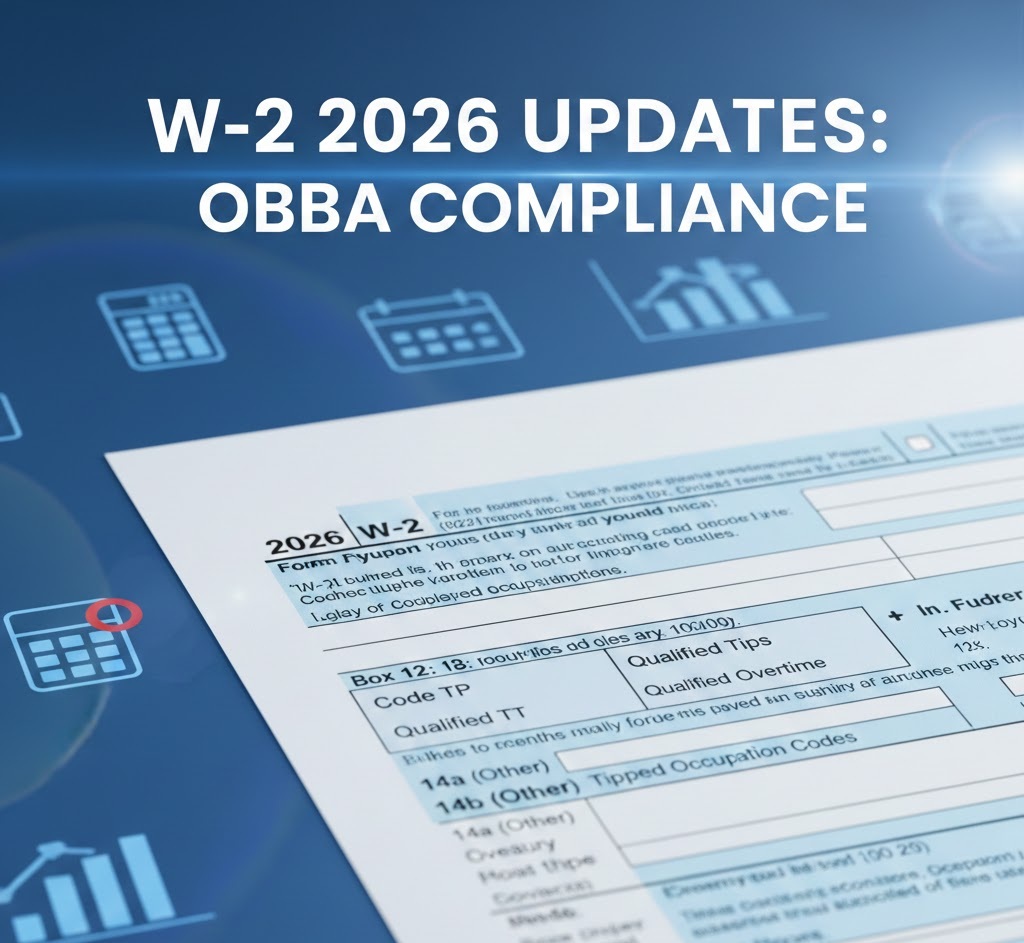
One of the biggest changes in the Form W-2 Updates for 2026 is the expanded use of Box 12 codes. Traditionally, Box 12 has been used to report various employee benefits and compensation types, such as 401(k) contributions or nonqualified plans. In 2026, employers will also need to capture and report additional wage categories separately.
This means wages like qualified tips, certain overtime compensation, and other federally defined income types will require distinct Box 12 codes rather than being lumped in with regular wages. Tracking these separately throughout the year — rather than at year-end — is critical for accurate reporting.
2. More Detailed Wage Classification
Along with new Box 12 codes, Form W-2 updates emphasize more granular wage classification. For example:
Regular earnings
Bonuses
Overtime
Tips
Other compensation categories
Payroll systems must be configured to distinguish these categories accurately. When employers report wages precisely, employees receive clearer, more accurate W-2 forms, and the IRS can more easily match reported wages against information returns such as Form 1099s.
3. Alignment With Tax Law Changes
Recent federal tax legislation affected how certain types of compensation are treated for tax and reporting purposes. The Form W-2 Updates for 2026 reflect these changes, requiring specific reporting adjustments that align with updated federal tax definitions. OBBBA provisions — which influence items like qualified tips and overtime amounts — are now part of the wage reporting conversation.
Incorporating these legislative adjustments into payroll processing ensures compliance, reduces IRS mismatch notices, and improves year-end reconciliation.
Common Challenges With W-2 Reporting
Even under normal circumstances, employers encounter challenges in Form W-2 preparation. The 2026 updates add complexity in a few key areas:
Payroll System Limitations
Payroll software that isn’t updated with the latest Form W-2 changes can’t generate correct wage statements. Employers should confirm that their systems support the new reporting codes and logic well before the end of the year. Waiting until year-end to discover software limitations can lead to rushed corrections and errors.
Inconsistent Tracking of Wage Components
Separate tracking of qualified tips, overtime, and other income types isn’t simply a year-end task. If payroll teams don’t track these categories throughout the year, data cleanup and reconciliation become time-consuming and error-prone. Building these categories into the regular payroll workflow prevents costly mistakes.
Employee Misunderstanding
Employees receiving W-2s with new codes may be confused if they haven’t been adequately informed. It’s important for HR teams to proactively communicate changes in reporting categories and explain what these new entries mean on an employee’s tax return.
Best Practices to Navigate Form W-2 Updates in 2026
Employers who prepare early and strategically will find the Form W-2 Updates manageable. Here are practical steps to handle the transition smoothly:
1. Review IRS Guidance Early
The IRS provides detailed instructions that accompany Form W-2 and its updates. Reviewing these instructions early gives payroll teams and HR leaders time to understand new requirements, update internal documentation processes, and adjust workflows for the year ahead.
2. Update Payroll Software Promptly
Check with your payroll vendor to ensure that 2026 Form W-2 changes are incorporated into software updates. Once updates are available, test them with sample data to confirm accurate calculation and reporting before mass processing begins.
3. Train Payroll and HR Staff
Make sure the team responsible for payroll processing understands the new reporting categories and how to handle them. Training ensures fewer mistakes and faster resolution of questions throughout the year.
4. Communicate With Employees
Inform your workforce about the 2026 changes and explain any new codes or wage categories they might see on their W-2s. Clear communication helps reduce confusion and support requests during tax season.
5. Maintain Detailed Records
Maintain accurate payroll records throughout the year — including detailed breakdowns of wages, tips, overtime, and benefits. Precise documentation reinforces accuracy and supports defense in the event of an audit.
Important Deadlines to Keep in Mind
For tax year 2026, employers must deliver Form W-2 to employees and file copies with the Social Security Administration (SSA) and IRS by January 31, 2027. Missing the deadline may trigger penalties, so aligning payroll calendars and internal reconciliation timelines with this deadline is crucial.
How Form W-2 Accuracy Benefits Employers and Employees
Accurate wage reporting benefits both sides of the payroll process:
Employees gain trust in their documentation, ensuring they file tax returns without withholding issues.
Employers lower the risk of IRS notices, penalties, and mismatches during federal reconciliation.
Payroll teams reduce the need for corrections and post-filing adjustments.
Overall, understanding and implementing the Form W-2 Updates for 2026 fosters compliance, supports employee confidence, and contributes to smoother year-end operations.
Final Thoughts: Plan Early, Report Accurately
The Form W-2 Updates 2026 reflect broader trends toward detailed, transparent wage reporting. While these changes add complexity, they don’t need to be overwhelming. Employers who plan early, adopt updated payroll practices, and communicate clearly with their teams and workforce will navigate the changes successfully.
Year-end payroll doesn’t have to be stressful — accurate planning and proactive compliance make all the difference. With preparation and attention to detail, your organization can confidently implement these updates and produce accurate, IRS-ready Form W-2s for 2026.
Comments
Log in or sign up to join the conversation.