
If you're stepping into the forex market, understanding Forex trading signals can completely transform how you trade. Forex trading signals are trade recommendations that tell you when to buy or sell a currency pair, including entry price, stop-loss, and take-profit levels.
These signals act like a shortcut for traders—especially beginners—helping them make informed decisions without deep technical analysis. Whether generated by professionals or automated systems, Forex trading signals are widely used to identify profitable opportunities in real-time.
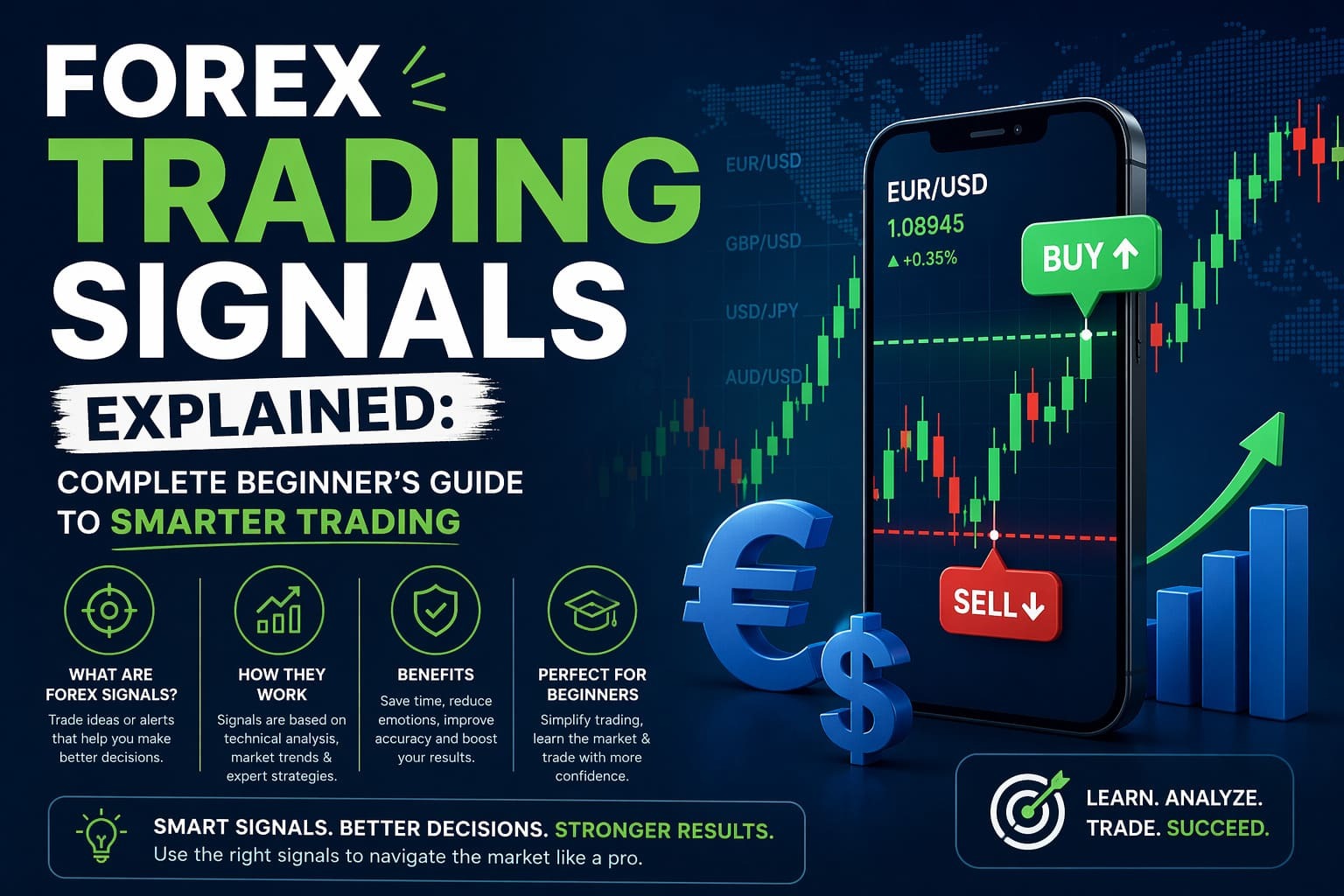
What Are Forex Trading Signals and How Do They Work?
Forex trading signals are alerts or suggestions that guide traders on when to enter or exit a trade. These signals typically include:
Currency pair (e.g., EUR/USD)
Buy or sell direction
Entry price
Stop-loss (risk control)
Take-profit (target level)
These components make Forex trading signals a complete trading plan delivered in seconds.
Signals are generated using:
Technical analysis (charts, indicators)
Fundamental analysis (news, economic data)
Algorithmic or AI-based systems
This combination helps traders identify high-probability setups without spending hours analyzing charts.
Types of Forex Trading Signals You Should Know
1. Manual Forex Trading Signals
Created by expert traders who analyze the market and share trade ideas based on experience and strategy.
2. Automated Forex Trading Signals
Generated by software or trading bots using algorithms and real-time data.
3. Free vs Paid Signals
Free signals: Basic insights, often less reliable
Paid signals: More detailed analysis and higher accuracy potential
No matter the type, Forex trading signals should always be combined with proper risk management.
Why Forex Trading Signals Are Popular Among Traders
There’s a reason why Forex trading signals are widely used across the globe:
Save time on market analysis
Help beginners learn trading strategies
Provide real-time trade opportunities
Reduce emotional decision-making
For many traders, signals act as a learning tool while improving trading discipline.
How to Choose the Best Forex Trading Signals Provider
Not all signals are equal. When selecting a provider, consider:
Accuracy and past performance
Transparency of results
Risk management strategy
Delivery speed (Telegram, app, email)
Customer reviews and reputation
If you're looking for reliable options, exploring 5 Best Forex Signal Providers can help you compare top services and find one that fits your trading style naturally.
Pros and Cons of Forex Trading Signals
Advantages
Easy to follow for beginners
Saves research time
Access to expert analysis
Disadvantages
No guaranteed profits
Risk of unreliable providers
Overdependence can limit learning
Even the best Forex trading signals are not foolproof—market risks always exist.
Tips to Use Forex Trading Signals Effectively
To get the most out of Forex trading signals, follow these tips:
Always verify signals with your own analysis
Use proper risk management (SL/TP)
Avoid blindly copying trades
Test signals on a demo account first
Track performance regularly
Final Thoughts on Forex Trading Signals
Forex trading signals are powerful tools that can simplify trading and improve decision-making. Whether you're a beginner or an experienced trader, using the right signals can enhance your strategy and save valuable time.
However, success depends on choosing a reliable provider and combining signals with your own market understanding. If used wisely, Forex trading signals can be a strong addition to your trading toolkit.
Comments
Log in or sign up to join the conversation.