


Diversifying into foreign bond markets has been a win for US investors this year, based on a review of a set of ETFs through yesterday’s close (Aug. 27). The strongest gains have come from the riskier segments of overseas fixed income and from inflation‑linked securities, which together have delivered most of the lift for international bond portfolios from a US‑based perspective.
Tied for first place in 2026: high‑yield bonds issued in emerging markets (HYEM) and foreign inflation‑linked government bonds (WIP), each up 5.1% year to date. In both cases, the gains are well ahead of several US bond benchmarks.
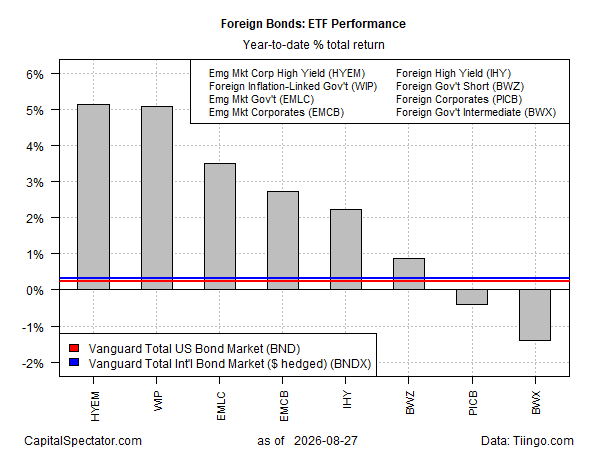
The standard US benchmarks have been easy to beat this year. The Vanguard Total Bond Market ETF (BND), a proxy for government and investment‑grade corporates, is essentially flat, posting a fractional 0.2% rise. US junk bonds (JNK) have done better, rising 2.8%, but that’s still well behind high‑yield equivalent in emerging markets (HYEM).
Concerns about inflation globally have lifted inflation‑linked bonds, both internationally and in the US. But here, too, the foreign equivalent (WIP) is outperforming the US counterpart (TIP) by a wide margin: 5.1% vs. 1.1%.
The foreign‑exchange factor is also supporting foreign‑bond strength this year, particularly in emerging markets. A trade‑weighted measure of the US dollar in foreign‑currency terms has slipped 1.4% so far this year, based on Federal Reserve data. Notably, the slide in the dollar versus emerging‑markets currencies is deeper, down 2.9%. All else equal, a weaker dollar translates into higher prices for offshore assets after conversion into dollar terms.
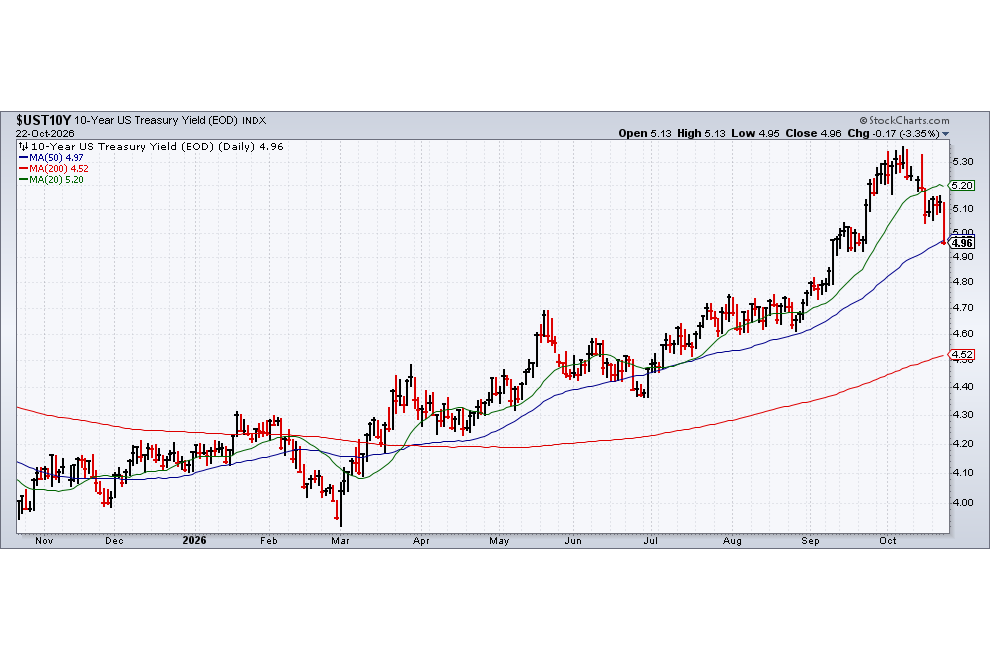
Higher yields in some foreign bond markets have also been a draw. But with US yields rising lately, headwinds for foreign fixed income may be strengthening.
The 10‑year US Treasury yield, for example, has trended higher in recent months, closing at 4.67% in yesterday’s session — up from just below 4% at the end of February.
If rising US yields pose a threat, foreign bond markets aren’t yet reflecting it, based on recent ETF behavior. High‑yield securities in emerging markets (HYEM), in particulare, continue to show a strong upside bias.
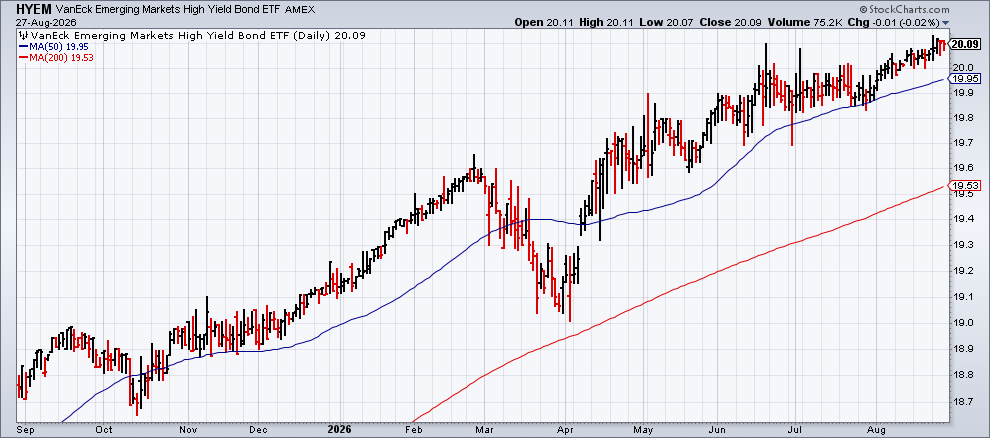
Where global bond markets go from here may depend on US yields. If competition from American securities continues to strengthen via higher rates, the allure of foreign bonds could fade.
Fed funds futures are still pricing in modest odds that the Federal Reserve will leave its target rate unchanged at next month’s FOMC meeting, but the market expects at least one hike by year‑end.
Today’s upcoming speech from Fed Chairman Warsh, who’s set to speak at the central bank’s Jackson Hole meeting, may or may not clarify the outlook. Next week’s market reaction to Warsh’s remarks, on the other hand, could offer an early read on what’s in store for the fall.

Comments
Log in or sign up to join the conversation.