

On the surface, the US banking system looks pretty solid. But in reality, much is going wrong, including:
Unreported Government Bond Losses
US banks hold nearly $5 trillion of government paper. Over the past year, rising interest rates have driven bond prices down.
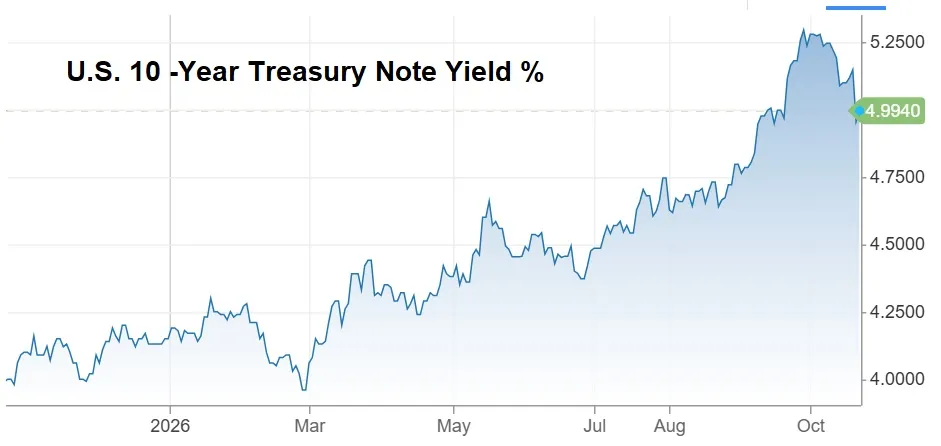
That leaves banks with massive unreported losses on their balance sheets. Eventually, those losses will migrate to earnings reports, potentially spooking depositors and causing bank runs.
The higher interest rates go, the bigger these unreported losses become.
Sub-Prime Auto Loan Delinquencies
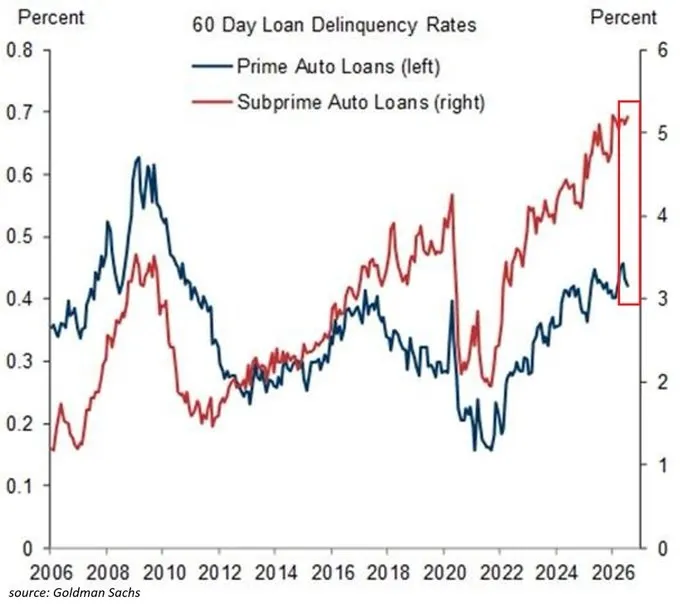
Car prices are rising, and various bank-like entities have been more than willing to put low-quality borrowers into new cars through “car mortgages”—loans with terms that approximate the car's expected life.
Total US auto debt is now a record $1.71 trillion, and subprime loans are going bad at a rate exceeding that of the Great Recession.
Empty Office Buildings
The value of US commercial loans held by banks is twice what it was in 2007.
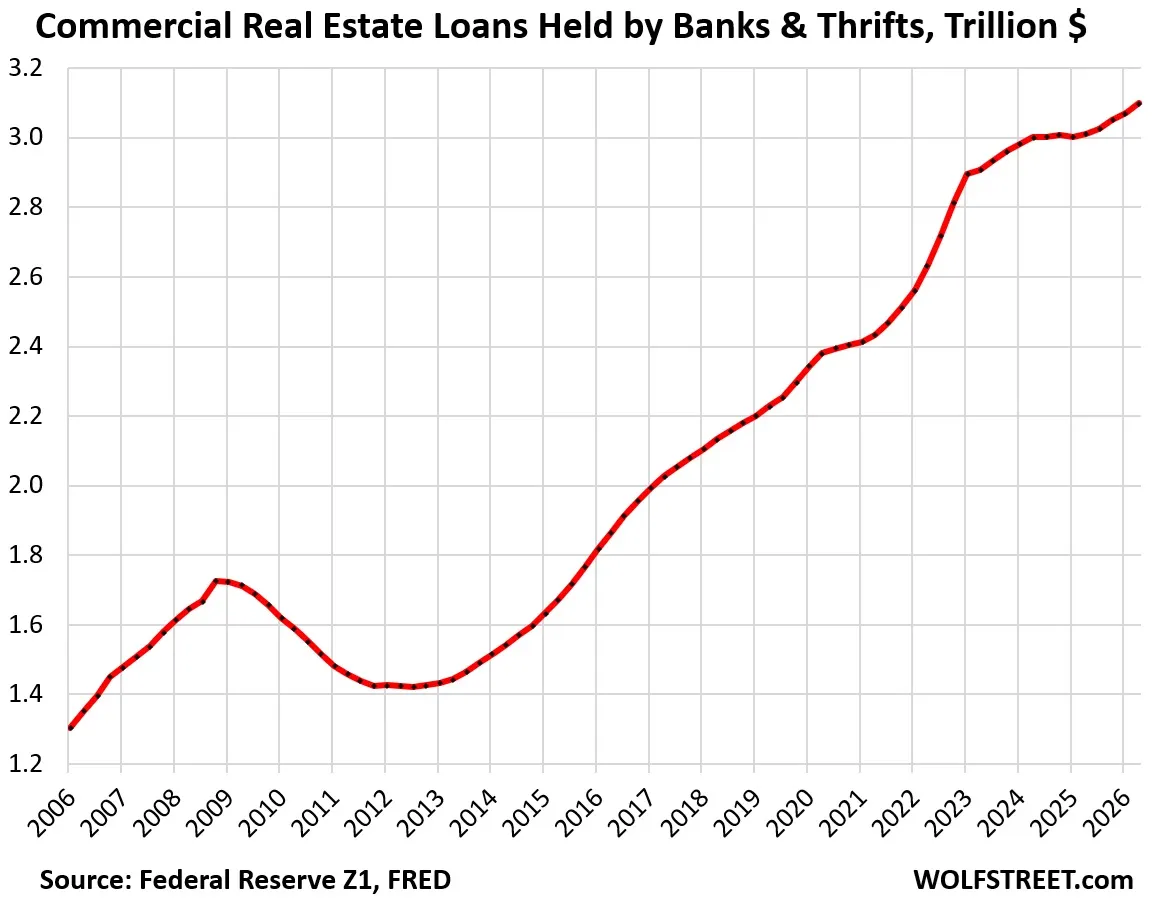
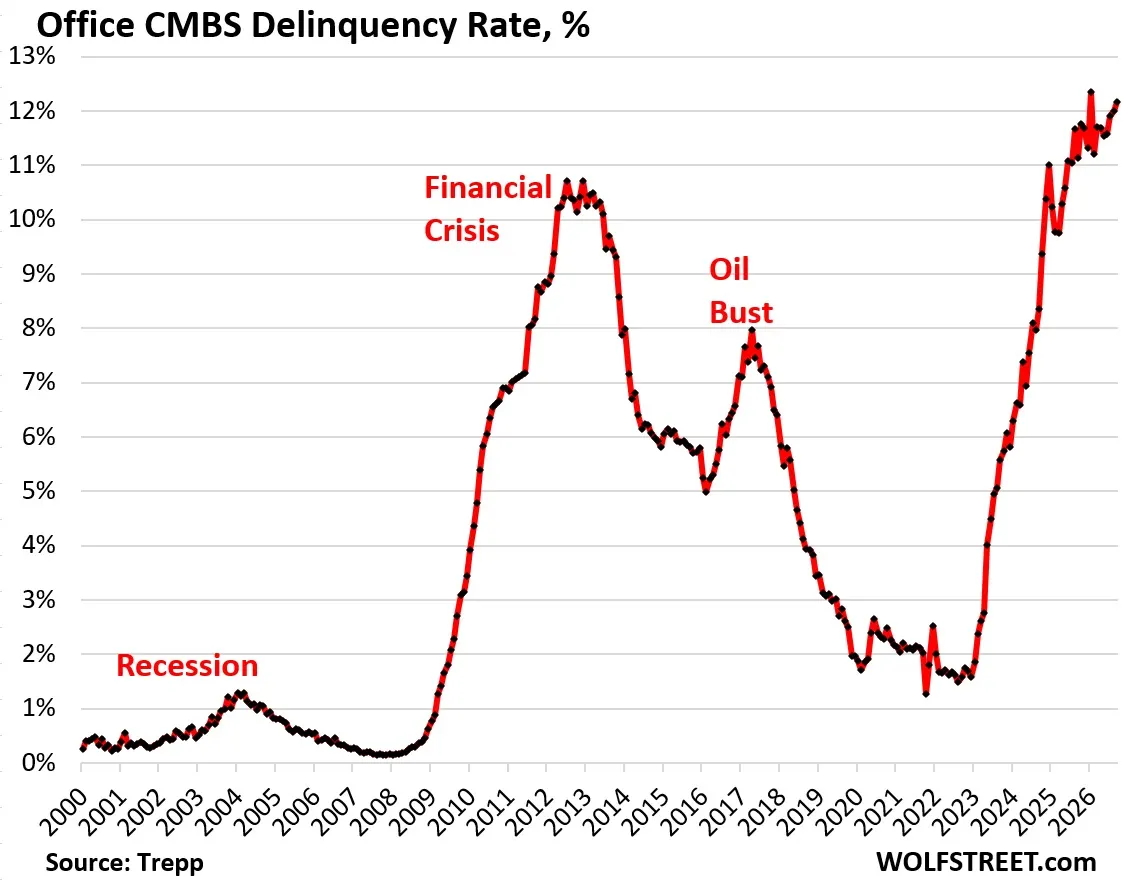
Some commercial real estate sub-sectors are healthy, and some are not, with one already in “bust” territory. Office buildings never recovered from the pandemic remote-work spasm. Occupancy rates are low, cash flow isn’t covering debt service, and delinquencies now exceed GFC levels.
AI Causes Banking “Security Nightmare”
Unauthorized AI agents are reportedly already accessing US bank accounts
(Engadget) Unauthorized third-party AI agents are accessing US bank accounts, according to a report by Axios. Some of these agents are even taking actions that appear to be independent of user instructions, though this is based on unnamed sources within several banking institutions.
Many AI agents, including the cute and cuddly Muse, can access a user’s bank account to perform actions on their behalf. This is already a security nightmare, as most banks mandate that humans log in to their own accounts. The problem is compounded when these agents start to buy things or shift money around. The potential for scams and fraud is off the charts.
Private Credit AI Bubble
This is the big one. As the AI boom took off, the debt needed to build hundreds (maybe thousands?) of data centers caused mainstream banks to shy away.
So private credit companies — unregulated, unmonitored “shadow” banks — stepped in. They bought or created insurance companies and took most of the new AI debt onto their balance sheets.
Along the way — in what might, in retrospect, come to be seen as an epic blunder — mainstream banks helped fund the private credit companies. This put the banks back on the hook, one step removed, for the AI bubble.
Now various marginal players in the AI space are encountering financial turbulence. See:
CoreWeave’s market confidence erodes as bond yields spike and stock sinks
Credit stress is threatening to unwind the AI bull. All eyes are on Oracle to hold the line
And this:
Big Tech’s AI Debt Deluge Might Be Even Worse Than Previously Reported
(Daily Caller) - Big Tech could be carrying substantially more financial exposure tied to artificial intelligence than investors realize, S&P Global (SPGI) warned Monday as concerns mounted over the debt financing Wall Street’s AI boom.
Technology companies are increasingly relying on outside investors, financial guarantees and complex financing arrangements to fund their enormous data center expansion. Those arrangements can leave substantial obligations outside conventional debt disclosures, making it difficult to determine who ultimately bears the risk if anticipated AI profits fail to materialize.
S&P Global’s head of digital infrastructure, Mark Habib, warned that interconnected financing arrangements could conceal additional liabilities.
“It is safe to assume that there is more (debt) out there that we are not seeing,” Habib said during a Monday roundtable in London.
S&P estimates that Amazon (AMZN), Microsoft (MSFT), Alphabet (GOOGL), Oracle (orcl), Meta (meta) and SpaceX (spcx) will collectively spend more than $7 trillion on AI-related capital expenditures between 2025 and 2030. The agency also projected negative free operating cash flow for the group in 2026 and 2027 as investment outpaces internally generated funds.
Goldman Sachs (GS) projected that global hyperscaler debt issuance would reach $420 billion in 2027, more than 60% above its 2026 estimate. The bank also found that hyperscalers accounted for just 40% of AI-related credit issuance, suggesting the industry’s borrowing extends far beyond the technology giants themselves.
And Then There’s Europe
France and Germany are home to some of the world’s biggest banks. And, well, how to put this…Europe is committing cultural/financial suicide, and its banks are looking a lot less secure.
Catherine Austin Fitts recently posted a warning about US banks, which ended with:
And the situation in Europe is even worse.
Société Générale (SCGLF): -27%
BNP Paribas: -24%
Barclays (BCS): -23%
Deutsche Bank (DB): -21%


Comments
Log in or sign up to join the conversation.