

Since the somewhat snooze-worthy April 29th FOMC statement (more of whatever it takes... forever... and it's going to be bad), The Fed has issued its semi-annual "risks" report, warning very clearly of elevated asset valuations. But that hasn't stopped "investors" buying stocks and selling bonds...
(Click on image to enlarge)
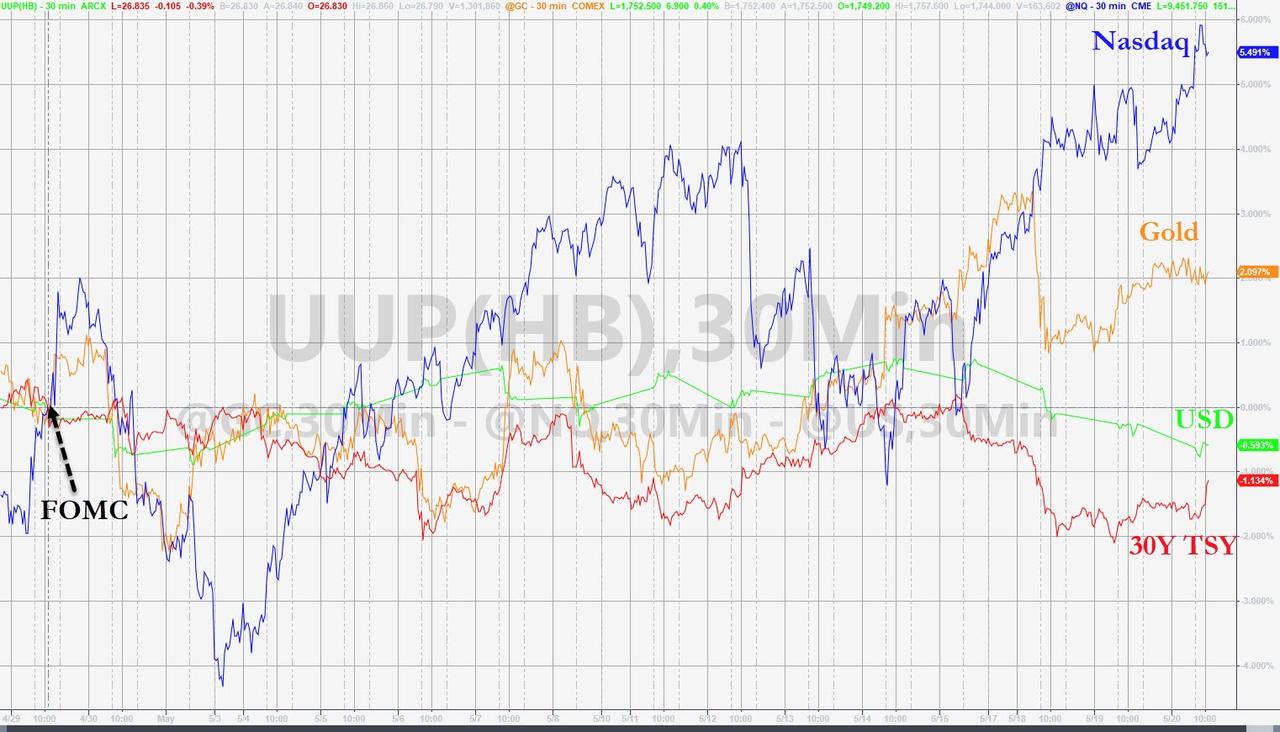
Gold (and silver) also rallied as the dollar leaked lower since the relatively dovish (if its possible to get any more dovish) statement.
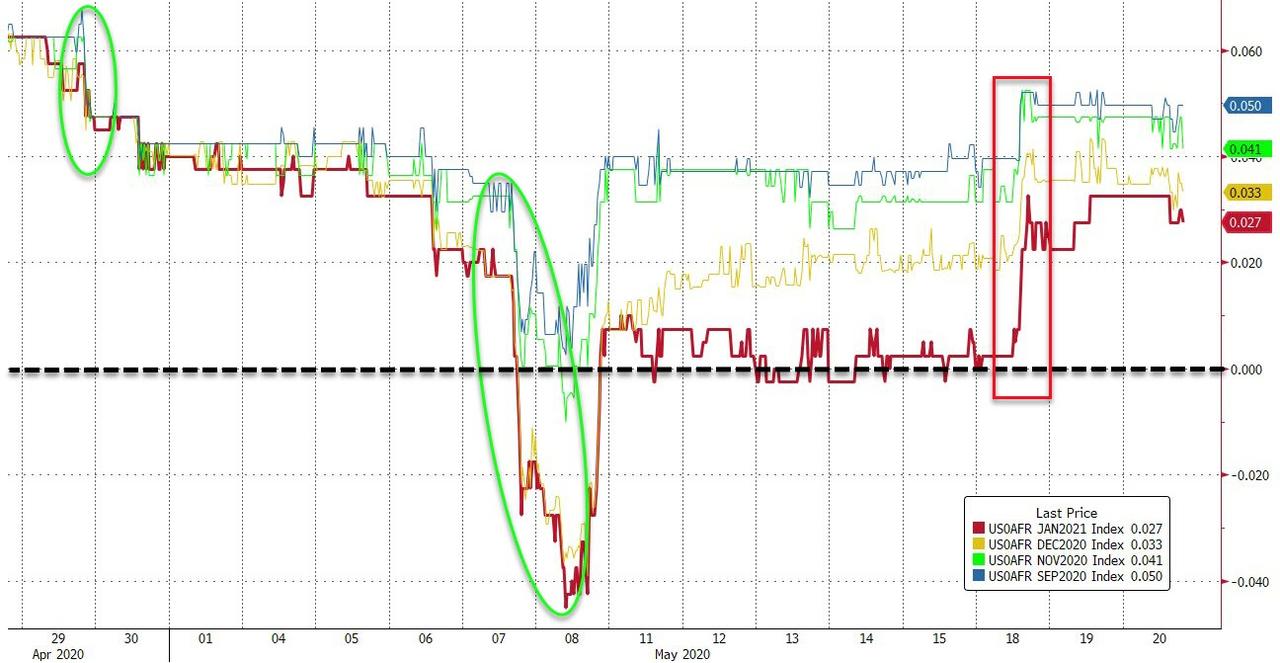
And despite The Fed's desperate efforts to talk down the possibility of negative rates, expectations for such rates have increased since the last FOMC...
(Click on image to enlarge)
Source: Bloomberg
Realistically, given that the minutes follow a presentation on Tuesday from Chair Powell and also many officials have spoken on the record in public since the meeting, the room for new developments is small.
In fact, as Joseph Trevisani, Senior Analyst at FXStreet, argues, "discussions in the edited minutes may seem somewhat out of date as the national conversation in the almost three weeks since the meeting has rapidly moved from the revelations of the economic debacle to the apparent success of several states in reopening parts of their economies and considerations about the criteria for opening the others.”
Additionally, The Fed took the historic step of beginning purchases of ETFs invested in corporate bonds on May 12, so any discussion of that at the April meeting could be informative; and that has happened as The Fed has already wound its unlimited bond-buying program down to $6 billion of daily Treasury purchases, from a peak of $75 billion in mid-March.
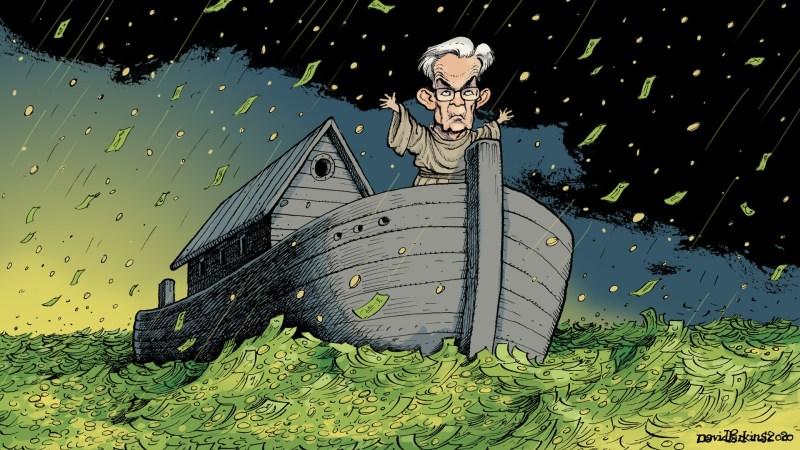
Of course, we don't truly expect any mention of the increasingly difficult-to-rationalize dichotomy between improving financial conditions (as a result of the Fed and the U.S. government’s massive stimulus) and the ongoing pain in the real economy; but it would be nice to see some rational thinking at the table. As Julian Emanuel, BTIG’s chief equity and derivatives strategist, warned, "The Fed’s Bigger Boat cannot substitute for the consumer’s need to feel safe enough to send kids to college, eat in restaurants, or get on an airplane."
But, the minutes really focused on Federal Reserve officials' growing distress at the economic implications of the coronavirus pandemic last month, which sent unemployment soaring and froze swaths of commercial activity.
Some Fed officials said "forward guidance could be more explicit" with "more clarity needed on bond buys" which have been tapered...
"A few participants also noted that the balance sheet could be used to reinforce the Committee’s forward guidance regarding the path of the federal funds rate through Federal Reserve purchases of Treasury securities on a scale necessary to keep Treasury yields at short-to medium-term maturities capped at specified levels for a period of time. "
On the virus' impact:
"Participants noted that the coronavirus outbreak was causing tremendous human and economic hardship across the United States and around the world. The virus and the measures taken to protect public health were inducing sharp declines in economic activity and a surge in job losses. "
Additionally, Fed officials "raised concerns that banks could come under greater stress."
Participants were concerned that banks could come under greater stress, particularly if adverse scenarios for the spread of the pandemic and economic activity were realized, and so this sector should be monitored carefully. Participants saw risks to banks and some other financial institutions as exacerbated by high levels of indebtedness among nonfinancial corporations that prevailed before the pandemic; this indebtedness increased these firms’ risk of insolvency.
Notably no mention of negative yields.



Comments
Log in or sign up to join the conversation.