

Introduction
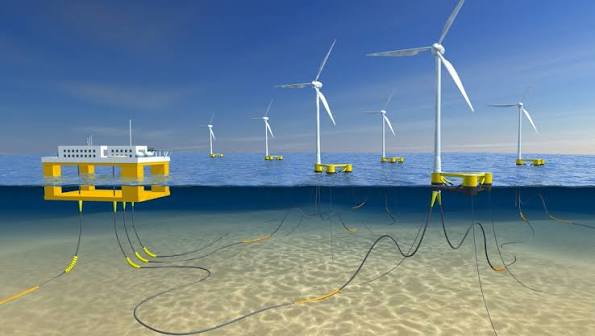
The global transition toward cleaner and more sustainable energy sources is accelerating investment in offshore wind power. Among the technologies gaining increasing attention, floating wind turbines are emerging as an important solution for expanding wind generation into deeper offshore areas where conventional fixed-bottom turbines are difficult or uneconomical to deploy. By allowing turbines to operate in deeper waters with stronger and more consistent wind resources, floating wind technology can significantly broaden the geographical potential of offshore wind energy.
According to TechSci Research, the Global Floating Wind Turbine Market is projected to grow from USD 3.87 Billion in 2025 to USD 32.97 Billion by 2031, registering a CAGR of 42.91% during the forecast period. This exceptional growth reflects rising investments in renewable power infrastructure, favorable government policies, increasing decarbonization commitments, and technological progress across floating offshore wind systems.
The market is also benefiting from the growing availability of turnkey solutions and specialized services covering engineering, installation, operations, maintenance, and technology integration. These developments are making floating wind projects increasingly accessible to governments, utilities, energy companies, and offshore operators.
Corporate sustainability commitments are another important factor supporting market expansion. Multinational corporations are increasingly setting ambitious carbon-reduction targets and investing in renewable energy projects. For example, Equinor has established a goal of reducing its carbon emissions by half by 2050 while expanding its renewable energy activities, particularly offshore wind. Its offshore wind ambitions include potentially reaching 6,000 MW within six years and 16,000 MW within fifteen years.
As governments and businesses intensify their efforts to reduce dependence on carbon-intensive energy sources, floating wind turbines are expected to become increasingly relevant within the global renewable energy ecosystem.
Industry Key Highlights
The Global Floating Wind Turbine Market is expected to increase from USD 3.87 Billion in 2025 to USD 32.97 Billion by 2031.
The market is projected to expand at a remarkable 42.91% CAGR during the forecast period.
Above 5 MW was the leading capacity segment in 2022.
Spar-buoy foundation accounted for the dominant foundation segment in 2022.
Deep water is expected to become the leading depth segment through 2028.
North America is expected to emerge as the dominating regional market, supported by growing renewable energy development.
Government funding, decarbonization targets, technological advancement, and offshore wind investments are creating substantial opportunities.
Floating foundations can unlock offshore locations that are unsuitable for conventional fixed-bottom wind turbines.
Request For Sample Copy of Report For More Detailed Market insight
Main Drivers
Expansion of Renewable Energy Infrastructure
The global push toward renewable electricity is one of the strongest forces behind floating wind turbine adoption. Governments are introducing incentives, funding programs, regulatory frameworks, and clean-energy targets to accelerate renewable power generation.
Offshore wind represents an attractive component of this transition because large-scale projects can generate significant electricity without requiring extensive land resources. Floating technology further expands the addressable offshore area by allowing turbines to operate beyond locations where conventional foundations can be installed.
Increasing Corporate Decarbonization Commitments
Large corporations across the energy and industrial sectors are under increasing pressure to reduce greenhouse gas emissions. Many organizations are therefore shifting capital toward renewable energy and cleaner technologies.
Floating offshore wind provides an opportunity for companies with established offshore capabilities to leverage existing expertise in marine engineering, subsea operations, and energy infrastructure while supporting long-term decarbonization objectives.
Stronger Offshore Wind Resources
Deep offshore areas can provide highly attractive wind conditions. Compared with some nearshore locations, deeper waters may offer stronger and more consistent wind speeds with fewer physical obstacles affecting wind flow.
Higher-quality wind resources can translate into improved power-generation potential, making floating wind projects increasingly attractive as turbine technologies become more efficient and project economics improve.
Limited Continental Shelf Availability
In countries where the continental shelf is narrow, opportunities for fixed-bottom offshore wind development may be restricted. Floating foundations can overcome this geographical limitation by enabling turbines to be positioned farther offshore in deeper waters.
This capability is particularly important for countries seeking to expand offshore renewable capacity despite limited shallow-water areas.
Advancements in Floating Wind Technology
Innovation in turbine design, floating platforms, mooring systems, anchoring technologies, installation methods, and offshore operations is helping improve the feasibility of floating wind projects.
The growing availability of turnkey project solutions also allows developers to access integrated engineering and operational capabilities, reducing some of the complexities associated with developing floating offshore wind farms.
Emerging Trends
Shift Toward Higher-Capacity Turbines
The floating wind industry is increasingly moving toward larger turbine capacities. The above 5 MW segment dominated the market in 2022, reflecting the economic appeal of deploying high-capacity turbines in large offshore projects.
Larger turbines can generate more electricity from individual installations, potentially reducing the number of turbines and associated infrastructure required to achieve a particular project capacity.
Growing Adoption of Deep-Water Wind Farms
Deep-water deployment is becoming a defining characteristic of floating wind technology. The deep water segment is expected to dominate the market until 2028, supported by the availability of larger offshore areas and favorable wind conditions.
Floating systems enable developers to explore sites that would otherwise remain inaccessible to fixed-bottom technologies.
Development of Advanced Floating Foundations
Foundation technology remains central to the evolution of the floating wind industry. Spar-buoy, tension-leg platform, and semi-submersible designs each provide different approaches to achieving stability offshore.
The Spar-buoy foundation segment dominated the market in 2022. Its deep-draft cylindrical structure uses ballast toward the bottom, helping establish a low and stable center of gravity. This configuration contributes to platform stability and can reduce the need for complex dynamic stabilization mechanisms.
Integration with Broader Clean-Energy Strategies
Floating wind is increasingly being considered as part of wider renewable energy strategies rather than as an isolated technology. Developers can potentially combine offshore wind generation with other energy technologies and infrastructure to improve energy-system flexibility.
This broader integration is expected to strengthen the strategic value of floating wind projects as countries seek diversified renewable energy portfolios.
Greater Focus on Offshore Project Optimization
As project developers move into deeper and more challenging environments, there is increasing emphasis on optimizing turbine positioning, mooring systems, installation procedures, maintenance strategies, and offshore logistics.
Digital technologies and advanced engineering tools are expected to play a growing role in improving project performance and reducing operational complexity.
Real-World Use Cases
Utility-Scale Offshore Electricity Generation
The primary application of floating wind turbines is large-scale renewable electricity generation. Floating wind farms can supply power to national and regional grids while expanding offshore generation capacity beyond shallow-water zones.
Power Supply for Coastal Regions
Coastal regions with strong electricity demand and limited land availability can benefit from offshore wind projects. Floating turbines can be deployed farther from shore while utilizing high-quality offshore wind resources.
Decarbonization of Offshore Operations
Floating wind technology can also support the decarbonization of offshore industrial activities. Energy-intensive offshore operations may increasingly use renewable electricity to reduce dependence on conventional fossil-fuel-based power sources.
Renewable Energy Development in Deep Seas
Countries with extensive deep-water offshore areas can use floating platforms to access previously unavailable wind resources. This makes floating technology particularly valuable for nations with limited shallow-water development opportunities.
Large-Scale Future Energy Projects
As turbine capacities increase and floating foundation technologies mature, floating offshore wind farms could become an important component of national clean-energy expansion strategies. Their ability to utilize expansive offshore areas gives developers greater flexibility when selecting future project locations.
Competitive Analysis
Siemens Gamesa Renewable Energy S.A.
MHI Vestas Offshore Wind A/S
ABB Group
General Electric Company
Nordex SE
Goldwind Science & Technology Co., Ltd
Envision Energy Ltd
Ming Yang Smart Energy Group Co., Ltd.
Hitachi Group
Suzlon Energy Ltd.
Customers can also request for 10% free customization on this report.
segmentation
By Foundation
The market is segmented into:
Spar-buoy Foundation
Tension-leg Platform (TLP) Foundation
Semi-submersible Foundation
Others
The Spar-buoy Foundation segment dominated the market in 2022. Its ballast-supported configuration provides a stable structure with a lower center of gravity, making it a significant technology within floating offshore wind development.
By Capacity
The market is divided into:
Up to 1 MW
1–3 MW
3–5 MW
Above 5 MW
The Above 5 MW segment dominated the market in 2022. Large-capacity turbines can offer greater electricity generation potential and can improve the investment proposition of utility-scale offshore wind farms by producing more power from individual turbine installations.
By Depth
The market is categorized into:
Shallow Water
Deep Water
The Deep Water segment is expected to dominate through 2028. Floating foundations make it possible to develop offshore wind resources in areas where water depth prevents conventional fixed-bottom installations.
By Region
The global market is segmented across:
North America
Asia-Pacific
Europe
South America
Middle East & Africa
North America is expected to be the dominating region, supported by increasing promotion of renewable electricity generation and growing interest in offshore wind infrastructure.
4 FAQ
1. What is the expected size of the Global Floating Wind Turbine Market by 2031?
The Global Floating Wind Turbine Market is projected to reach USD 32.97 Billion by 2031, increasing from USD 3.87 Billion in 2025.
2. What is the CAGR of the Global Floating Wind Turbine Market?
The market is expected to register a 42.91% CAGR from 2025 to 2031, reflecting rapid investment and technological development in floating offshore wind.
3. Which capacity segment dominated the floating wind turbine market?
The Above 5 MW capacity segment dominated the market in 2022, supported by the increasing development of larger-scale offshore wind projects and the potential for higher electricity generation from larger turbines.
4. Why is deep water important for floating wind turbines?
Deep water provides extensive offshore development opportunities without the depth limitations associated with fixed-bottom foundations. Floating platforms can operate in deeper seas, where stronger wind resources and wider development areas can support large-scale renewable energy generation.
Contact US:
Techsci Research LLC
420 Lexington Avenue, Suite 300,
New York, United States- 10170
Tel: +13322586602
Email: [email protected]
Comments
Log in or sign up to join the conversation.