

First-Party Data vs Third-Party Data: Understanding the Key Differences
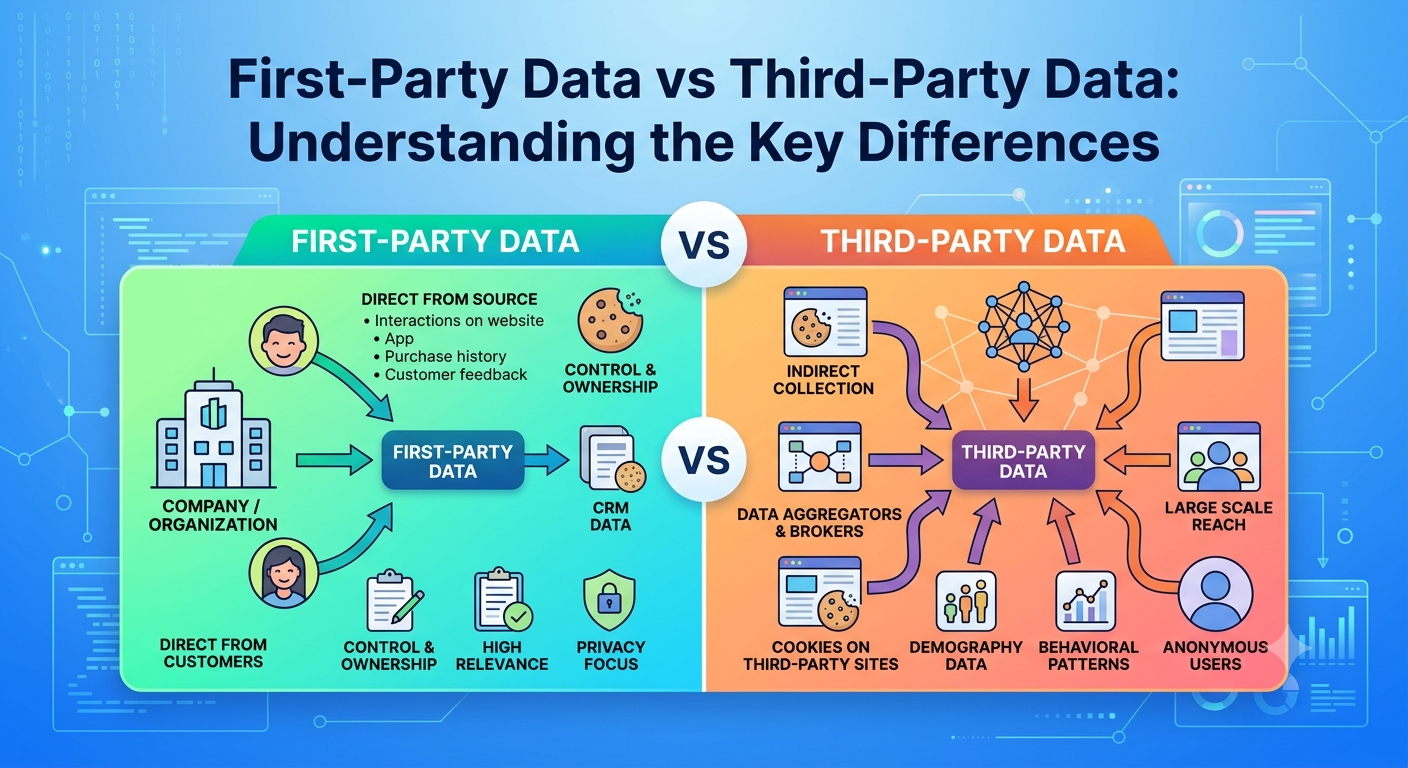
Data plays a critical role in modern B2B marketing, helping businesses understand their audience, personalize campaigns, and make informed decisions. However, not all data sources provide the same level of accuracy or reliability. The two most common categories are first-party data and third-party data, each offering unique advantages and limitations.
Understanding the differences between these data types helps organizations build more effective and privacy-conscious marketing strategies.
What Is First-Party Data?
First-party data is information collected directly by a business through its own channels and customer interactions. Common sources include website visits, form submissions, email engagement, webinar registrations, content downloads, CRM records, and customer purchase history.
Because businesses collect this data directly, it is generally more accurate, relevant, and aligned with customer behavior.
What Is Third-Party Data?
Third-party data is collected by external organizations and made available for marketing purposes. It often includes demographic, firmographic, behavioral, and interest-based information gathered from multiple sources.
This type of data can help businesses expand audience reach and identify new prospects beyond their existing customer base.
Key Differences Between the Two
The primary difference lies in the source and reliability of the information. First-party data reflects direct customer interactions and supports highly personalized marketing efforts. Third-party data offers broader market coverage but may vary in accuracy, freshness, and relevance.
As privacy regulations continue to evolve, many organizations are placing greater emphasis on first-party data to build trusted customer relationships.
Choosing the Right Data Strategy
Rather than relying exclusively on one data source, businesses often combine multiple datasets to improve audience understanding. First-party data provides deep customer insights, while carefully selected third-party data can support market expansion and prospect discovery.
Maintaining strong data governance and regular validation helps ensure marketing decisions are based on reliable information.
Building Better B2B Marketing with Quality Data
Successful B2B marketing depends on reaching the right audience with relevant messaging. High-quality data improves personalization, campaign performance, and lead qualification while supporting long-term customer engagement.
By understanding the strengths of both first-party and third-party data, organizations can create a balanced marketing strategy that drives better targeting, stronger demand generation, and sustainable business growth.
Comments
Log in or sign up to join the conversation.