

Best known for its sleek smartphone app and commission-free trading, Robinhood is now breaking into the cryptocurrency game. Adding to its platform that already supports publicly traded companies’ stocks and exchange-traded funds, the fintech startup will start allowing users to exchange Bitcoin (BTC) and Ethereum (ETH) come February. The app has become a popular trading option for millennials, accumulating an active user body of over 3 million.
Backed by $176 million in venture capital funding by an impressive lineup of investors that includes Google Ventures and Andreessen Horowitz, the financial services company is now valued at over $1 billion and made a big splash with its announcement to support cryptocurrencies. Bitcoin and Ethereum, are the first and second most valuable digital currencies by market cap, respectively.
Robinhood earns revenue through collecting interest on cash and securities in user accounts and margin lending.
Those who visit the “Robinhood Crypto” landing page are greeted with a neon-lit headline beaming “Don’t sleep”, referencing the cryptocurrency market’s round the clock operating cycle in contrast to traditional markets that open and close at set times.
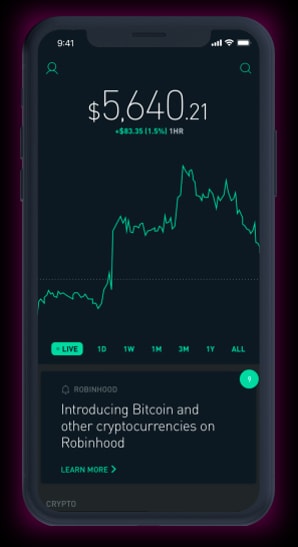
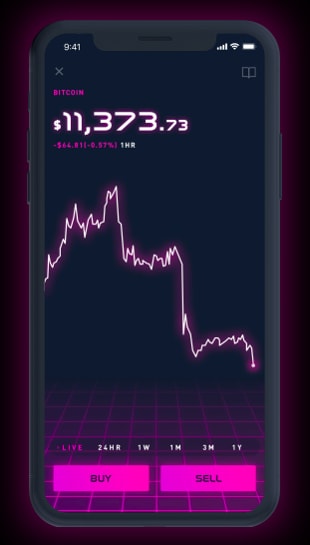
While Robinhood co-founder Vlad Tenev said in October 2017 he didn’t expect a major transition from traditional stock to cryptocurrencies, the move makes sense for the budding company on a number of levels. From a demand standpoint, Techcrunch reported, “100,000 of Robinhood’s users were regularly searching for crypto pricing and trading in the app, and 95% of those surveyed said they’d invest in cryptos if the product supported it.”
Further, cryptocurrencies, especially Bitcoin, are currently being used more as investment vehicles than they are true currencies for payments, so adding elements of the sector into its asset trading platform is seemingly a logical fit.
Most compellingly, perhaps, is the gaping market opportunity standing before Robinhood. While it’s too soon to say for certain, the development is likely to introduce some much-needed competition amongst user-friendly cryptocurrency marketplaces. For much of the recent past, Coinbase has singlehandedly dominated the entryway into retail cryptocurrency investing. The San-Francisco based unicorn has served more than 13 million customers and done $50 billion in digital currency exchanged.
(Click on image to enlarge)
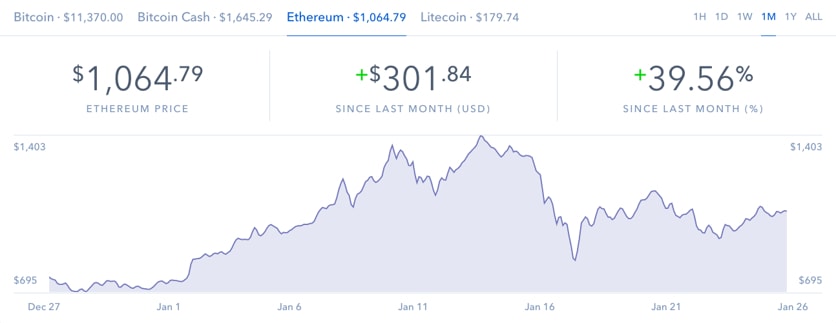
Even though hundreds of Bitcoin exchanges and even ATMs exist, what has allowed Coinbase to stand out from the rest is its platform’s clean finish and user-friendly emphasis, a far cry from the much more intricate looking industry standard. Coinbase’s simplistic approach affords casual investors and cryptocurrency speculators more confidence in making purchases, a higher likelihood of consumer satisfaction, and less need for customer support.
(Click on image to enlarge)
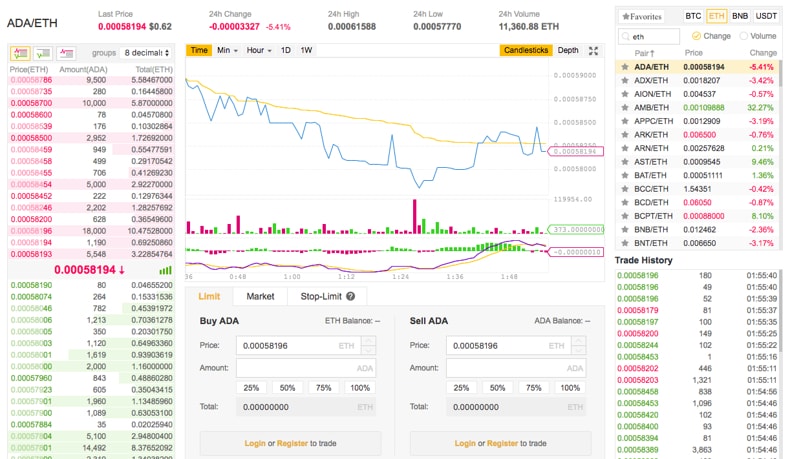
But the standout features that have enabled Coinbase to essentially monopolize mainstream retail cryptocurrency investing, especially in the US, are arguably equally as existent on Robinhood’s platform. In addition to similar graphical display, the two companies have comparable user-end functionality to draw the parallel one step further. And where Robinhood seemingly has the edge is that users won’t have to pay any commission when buying and selling, whereas Coinbase charges users in the US 1.5%-4% in fees per transaction.
Robinhood will be outsourcing its cryptocurrency operations to other large institutions and act as a broker on behalf of its users. It is therefore presumable, yet unconfirmed that prices may be slightly hiked to factor in the cost of Robinhood’s extension to these partners.
This development will likely benefit retail investors more than anyone else, as competition in the space will likely bring about a number of potential user-end benefits. For example, direct competition to Coinbase’s user body that craves the simple interface could result in the company lowering fees, adding more digital assets not offered on Robinhood, offering better customer support, or other increased user-end perks to retain its consumers.
Coinbase currently offers Bitcoin Cash (BCH) and Litecoin (LTC) in addition to Bitcoin and Ethereum.
At least initially, only users based in California, Massachusetts, Missouri, Montana, and New Hampshire will have access to the cryptocurrency component of the app. Robinhood’s website says more states are expected to be added in the near future.
In addition to Bitcoin and Ethereum, the app will allow users to track a number of other cryptocurrencies, including Ripple, Monero, NEO, Stellar, Bitcoin Cash, and Bitcoin Gold. In the coming months, these altcoins may become available for trading as well. At the time of this writing, nearly 400,000 people had signed up to receive early access to the crypto-enabled app.
The sector saw its market cap drop below $415 billion on January 17 but has rebounded 28% to $530 billion since.

Comments
Log in or sign up to join the conversation.