

Most fiber and textile startups don't fail because the idea was bad. They fail somewhere between the lab bench and the factory floor the point where a promising prototype meets the much harder reality of consistent, cost-effective, large-scale production. A fiber that behaves beautifully in a small batch can behave completely differently at ten times the volume, and by the time that gap becomes obvious, a founder has often already committed capital, time, and investor confidence to a process that simply doesn't scale. This is precisely the gap that specialised fiber consulting exists to close.

Why Startups Underestimate the Scale-Up Problem
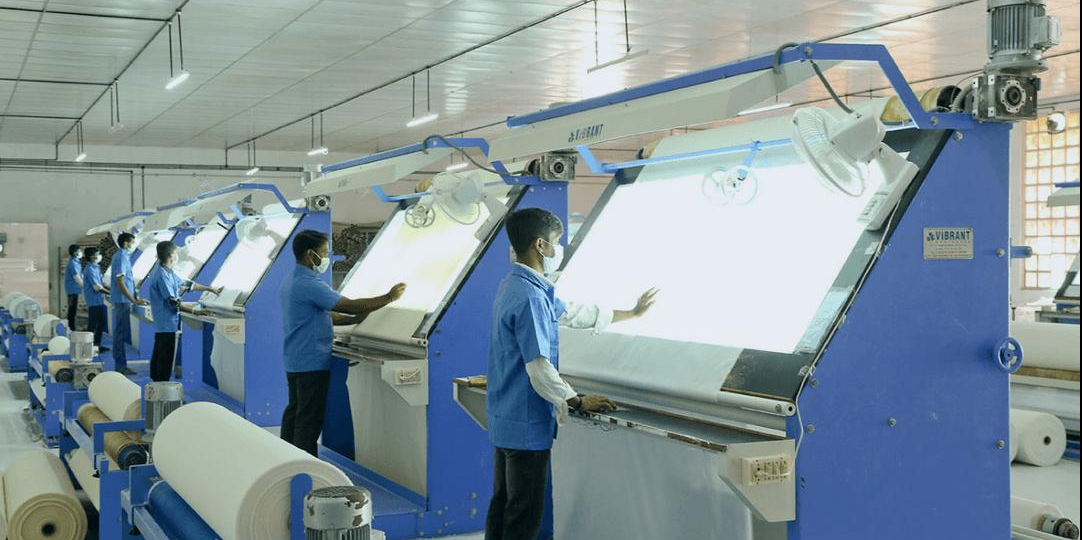
Early-stage fiber development tends to happen in controlled, forgiving conditions: small equipment, hand-adjusted parameters, and a level of process babysitting that simply isn't possible once volumes increase. Variables that were invisible at prototype scale raw material inconsistency, solvent recovery costs, equipment throughput limits, quality control at speed all surface at once during scale-up, and they surface expensively.
A founder with deep expertise in the fiber itself doesn't necessarily have the manufacturing, materials science, or supply chain background needed to navigate that transition. That's not a knock on technical founders; it's simply a different skill set, and it's exactly where an experienced fiber consultant earns their fee many times over by catching problems before they become six-figure mistakes.
What Fiber Consulting Services Actually Cover
A good fiber consultation isn't a single meeting or a generic feasibility report. It typically spans the full journey from prototype to production line, including:
Raw material sourcing and precursor selection, including cost and availability at scale
Process optimisation identifying where a lab-scale method needs to change for industrial equipment
Quality control frameworks and testing protocols that catch defects before they reach a customer
Regulatory and compliance guidance specific to the fiber's end application (textile, medical, filtration, industrial)
Manufacturing partner identification and technical due diligence on potential production facilities
Cost modelling that reflects real production economics, not lab-scale assumptions
The best fiber consulting services treat these as connected problems rather than isolated deliverables, because a decision made at the sourcing stage almost always has downstream consequences for cost, quality, and manufacturability.
The Case for Bringing in a Fiber Consultant Early
There's a common and costly assumption among early-stage founders that consulting is something you bring in later, once the product is proven and funding is secured. In fiber development specifically, this is often backwards. Many of the most expensive scale-up failures trace back to decisions made at the prototype stage a precursor material that's cheap in small quantities but unavailable at volume, a process step that works in a beaker but has no industrial equivalent, a fiber property that can't actually be tested or certified for the intended market.
Engaging a fiber consultant during prototyping, rather than after, means these constraints get factored into the R&D process itself rather than discovered during a costly pilot run. It's a smaller, cheaper conversation to have early than a full re-engineering effort later.
Fiber Science Consulting vs. General Manufacturing Consulting
It's worth being specific about what sets fiber science consulting apart from general manufacturing or operations consulting. Fibers behave according to their own set of rules spinning behaviour, solubility, tensile properties, thermal stability, and how a material responds to activation, dyeing, or coating processes are all governed by materials science that a generalist consultant simply won't have deep expertise in. A background in fiber chemistry and polymer science allows a specialist to diagnose why a process is underperforming at a molecular level, not just at a process-flow level, which tends to produce more durable fixes rather than short-term workarounds.
This distinction matters most at the prototype-to-pilot transition, where the failure modes are usually rooted in material behaviour rather than logistics or equipment scheduling.
What to Look for in Textile Material Consulting
Startups evaluating potential partners for textile material consulting should look beyond general credentials and ask a few pointed questions:
Has the consultant worked with fibers in the same category natural, synthetic, regenerated, or functional/technical fibers?
Can they speak to both the materials science and the practical manufacturing side, or only one?
Do they have experience with the specific scale-up stage the startup is facing pilot line, first commercial run, or full production?
Can they provide references or case studies from comparable scale-up projects, even if under NDA in general terms?
A consultant who can answer these clearly, rather than defaulting to generic reassurances, is usually the safer bet for a startup that can't afford a costly false start.
Scaling Smart, Not Just Fast
The pressure to move quickly is real for any startup, particularly one competing for investor attention or a narrow market window. But in fiber development, speed without the right technical guidance tends to produce the opposite of what founders are chasing delays, rework, and burned capital when a process that looked ready for production turns out not to be. The founders who scale successfully are usually the ones who treat fiber consulting not as an optional expense, but as a core part of the R&D budget from day one.
Whether the immediate need is a single fiber consultation to validate a scale-up plan, or an ongoing engagement through pilot production, getting the right technical partner involved early is consistently the difference between a fiber that stays a promising prototype and one that becomes a manufacturable product.
Comments
Log in or sign up to join the conversation.